You could say we are going into Kharif with a bit more of a cushion this time around. The Centre has put the books on the table: with a requirement of 390.54 lakh tonne, the supply side is covered. As June and the start of planting approaches, the message from the top is one of readiness to see to it that there are no input bottlenecks to put the sowing schedule at risk. “We have 200.12 lakh tonne in the bank,” says Aparna S Sharma, Additional Secretary with the Department of Fertilizers. That is more than you would normally see before the season – usually it’s about a third. The Department of Agriculture has put the Kharif 2026 tab at 390.54 lakh tonne.
Supply cushion ahead of sowing
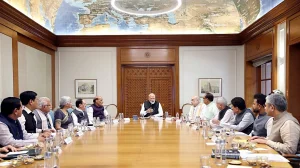
It is a stronger safety net, built on domestic output in the wake of the last crisis and some imports to make up the rest. “The overall stock position of fertilizer in the country remains comfortable,” Sharma puts it. And the government is on top of it. “We are reviewing the availability of finished goods and raw materials. It is stable and well managed,” she told an inter-ministerial room the other day. Here is how the government sees the situation: – 390.54 lakh tonne for Kharif. – 200.12 lakh tonne in the vaults. – We are at over 50 per cent of demand. – A pre-season norm is closer to 33 per cent. – 95 lakh tonne made here in India. – 22.60 lakh tonne brought in from abroad. – 13.5 lakh tonne of DAP on hand. – 9 lakh tonne of NPK complexes.
Production and import mix
The Centre is running a two-pronged approach: more from our own plants and the right kind of imports. Since the trouble we had, we have put out 95 lakh tonne and seen 22.60 lakh tonne come in, for a total of 117.6 lakh tonne in new stock.
As for what is on the shelf, 13.5 lakh tonne of DAP and 9 lakh tonne of NPK are already in the country. “That will be enough to see us through the peak of Kharif,” says Sharma.
Policy oversight and preparedness
Inputs for making fertilisers are in good shape, the Department of Fertilizer will have you know. They are on the case. The Empowered Group of Secretary has met nine times to keep tabs on the whole chain, from raw material to the end user.
Domestic capacity and dependency trend
There is a change in the way we do things. Last year, 73 per cent of what was called for was produced at home. Urea, DAP, NPKs and SSP have all been on the up, from 433.29 lakh tonne in 2021 to 524.62 lakh tonne in 2025.
But we still have to go to the world for a lot of urea and di-ammonium phosphate. Urea has gone from 225 lakh tonne in 2014-15 to 306.67 lakh tonne now, yet we still had to import over 100 lakh tonne in the last fiscal to make ends meet.
Pricing and subsidy backdrop
Prices are where they should be. A 45kg bag of neem-coated urea is Rs 242; DAP at 50kg is Rs 1,350. The Centre is putting up the money to back it.
For 2026-27, the budget for subsidies is Rs 1.71 lakh crore. You can expect the import bill to get steeper with global rates as they are, so the onus is on policy to not let the farmer down on either price or product.
What it means for farmers and the market
Walking into June with these numbers, the Centre wants to make sure there are no jolts when it comes time to apply. With DAP and NPK in the pipeline and the reviews happening, the hope is to take some of the guesswork out of the field as the monsoon sowing gets under way.
Industry is watching. The figures show we are minding our capacity but also being realistic about where we need to source from. Should world prices hold firm, it will be up to the domestic side and better coordination to keep things steady at the retail counter.