There are 16 vessels on their way to India that can’t get through the Strait of Hormuz, but New Delhi is insistent that what we need for this sowing season is in hand. The fertilisers ministry has made it known they have the buffers and new orders to protect farm work from any hiccups on this vital waterway.
Government stance and demand outlook
We’re looking at 38.39 million tons of fertiliser being put to use in the field this season, says the ministry. “At present, we see no major challenge to the availability of fertilisers in the current sowing season,” Bandana Preyashi, a joint secretary, told us at a presser.
‘At present, we see no major challenge to the availability of fertilisers in the current sowing season,’ she said.
What is stuck and where
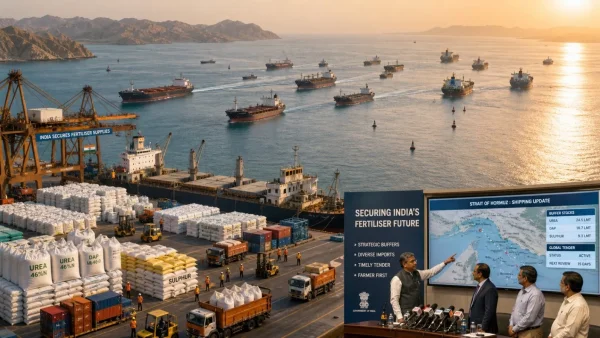
You have the Strait of Hormuz, which is a must-use for shipping. Right now, 16 of our ships with crop nutrients are sitting in that corridor, the ministry puts it.
That includes eight with 330,000 metric tons of urea and four with 257,000 tons of di-ammonium phosphate. Then you have one with ammonia and three with 110,000 tons of sulfur.
Buffer strategy already in motion
India has been ahead of the curve to cover summer needs. We’ve brought in 5 million tons of the like, urea included, and turned up the volume on local manufacturing as well.
We’ve also put out a global tender for 1.7 million tons of urea, just to be on the safe side if the sea lanes take longer than expected.
Why supply risk looks contained
If you put together the early buys, the domestic output and the size of the urea tender, it’s easy to see why the government is so sure of itself. It’s to make sure a late voyage doesn’t put a crimp in what happens in the fields.
The idea is to not let port or ship delays dictate when we can sow.
Operational focus over the next few weeks
For the time being, it’s a matter of juggling the incoming stock with regional needs. The sowing window is what it is, so once these ships are through, how well we move product from the port inland will be key.
Get the allocation right and farmers won’t have to worry when they need to apply.
Implications for the farm supply chain
The word from the top is: business as usual. We have the stock and the pending tender to give us some room to manoeuvre. The ministry seems to be in no rush to add more tonnage when we have what we need to keep the line open.
It’s about keeping the home market even while the rest of the world is in flux.
Official signals and next steps
They have been very clear on how they plan to handle things in the near term. The ministry’s line is one of making sure we don’t run short during the sowing cycle.
Here is the bottom line from the government:
– No worries on availability for now
– 5 million tons in the country already
– A 1.7 million ton urea tender on the table
– More being made here at home
What to watch next
It comes down to two things: whether the Hormuz hold-up is resolved and how the urea tender goes. If the ships start moving, the pressure is off; if not, the tender is our option.
Expect the ministry to fine-tune where things go to make sure the farm gate is well supplied.