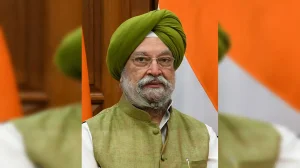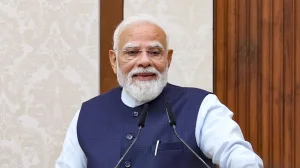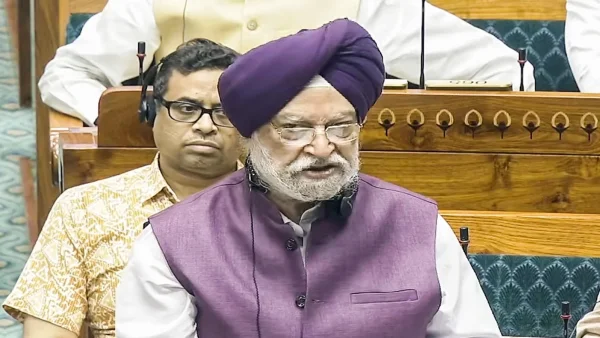
Hardeep Singh Puri, the Union Minister, told the Lok Sabha that India doesn’t have a shortage of LPG, and that production is up 28%. The recent jump in demand is because of people buying out of worry, not a failure of supply. The government is working to steady supply and stop people from storing up fuel, to make sure the country has energy even with problems around the world.
Puri went to ease the increasing worry of the public about fuel, saying to the Lok Sabha there isn’t a fuel shortage in the country. He explained that refineries are working at very high levels, and LPG production in the country has gone up a lot to meet the higher demand. The rush for cylinders, the minister said, was from panic-buying and not a supply problem.
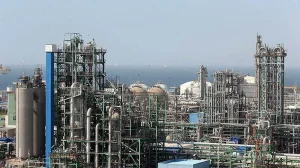
Puri said that India has enough energy and safe supply arrangements despite serious trouble in global energy markets. He made it clear that electricity for homes and businesses is still completely safe, and the energy system is being carefully looked after to keep things going. He stressed that enough fuel oil, petrol, diesel, kerosene, and aviation fuel is available all over the country. He added that refineries are working at nearly full capacity – at times even over 100% – to give some protection against problems from outside.
The minister noted the objections from the opposition, but asked political leaders to not spread false rumours. ‘Now isn’t the time for made-up stories,’ he said, and that the public needing to have confidence is important to prevent demand rises that put pressure on the final stages of getting fuel to people.
Navigating The Strait Of Hormuz Disruption
Worldwide trouble has made energy flow through the Strait of Hormuz tighter – a route which normally carries about 20% of the world’s crude oil, natural gas and LPG. The fighting has limited commercial ships going through this narrow passage, making waves across markets. India has, in the past, depended on this route for a large part of its energy imports. Puri said that about 45% of crude oil imports used to go through the area affected. As a result, India has sped up finding other sources to protect the economy and people from supply shocks.
‘Getting crude oil from places not in the Hormuz area has risen to around 70% of crude imports, from 55% before the fighting began,’ he said. India now gets crude from 40 countries, compared to 27 in 2006-07. This wider range of sources lowers the risk of transit, and gives refineries more freedom when some routes are blocked.
The natural gas markets have also been tested. A large plant in Qatar has said it cannot fulfil its contract, affecting about 30 MMSCMD of imports. Puri said that production in the country is staying near 90 MMSCMD, and the shortfall has mostly been made up for by getting fuel from other places.
Gas Allocation And Continuity For Priority Sectors
Under the Natural Gas Control Order of March 9, supply is being given to homes and important services first. Piped gas to homes and CNG for cars are getting all they need. Businesses and factories will get up to 80% of their average use over the last six months.
Fertilizer plants – important for farming – will get up to 70% as planting time gets closer. Refineries and petrochemical plants are taking a controlled cut, so that the more important sectors can be fully supplied. Hospitals and schools are on a supply that won’t be stopped.
Steps To Stabilize LPG Supply And Curb Hoarding
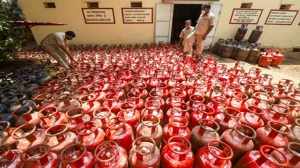
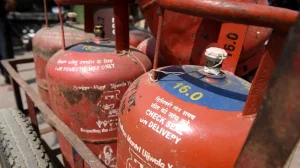
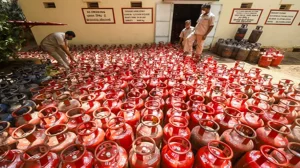
The government has told refineries to make as much LPG as possible to support the 330 million homes that use cylinders. Puri said that LPG production in the country has gone up by 28% in the last five days. More shipments are being arranged from places other than the usual Gulf states – including the United States, Norway, Canada, Algeria, and Russia.
Reports from the field show that the problems in some areas come from worried buying and distributors storing up fuel. The minister called it a twist in demand: a quick rise in orders that makes delivery times impossible, even when there is enough supply. He stated the quick increase in bookings in certain areas shows a problem with how people want to buy, not with making or getting enough LPG.
To get back to usual booking habits, officials have set a lowest wait of 25 days between LPG orders in cities, and 45 days in country and far-off areas. This is done to stop people from getting too much at once, make the lines for deliveries smoother, and be sure all people who are supposed to get it, can get it.
Delivery Confirmation And Stopping Illegal Sales
The Delivery Authentication Code – DAC – system is going from being used by 50 percent of customers to around 90 percent. With DAC, a gas bottle isn’t marked as having been given to the customer until the customer says they got it, using a one-time code sent to the phone number they have on file. This makes it a lot harder to steal or pretend to deliver bottles.
Despite the increase in orders, it still takes the usual 2.5 days from the time you order to the time it gets to you – the same as before the current problems. The government has also begun to control LPG that’s for business use in this situation, reducing the chances of people buying too much to hide and then selling it on the black market, which would hurt homes and businesses that really need it.
Other Fuels To Lower Stress
To ease the stress on the LPG supply, other fuels are being used. Kerosene is being sold at public places and stores, and fuel oil is being sold to factories and businesses when it’s possible. Doing this leaves more LPG for homes and important places like schools.
Puri stressed that the well-being of customers is still the most important part of the plan. Schools are still open, shipping is still working, and important services are still being provided. He asked people to buy what they need, and to get their news from official places – not from what people are saying on social media.
Prices, Help With Costs, And What Customers Feel
Even though prices around the world have gone up, the government says it has kept customers from having to pay the full amount of the prices from other countries. From July 2023 to March 2026, the price from Saudi Arabia went up about 41 percent. But in the same time, the price of LPG for PMUY – a government program – went down 32 percent, to 613 rupees for a 14.2 kg bottle in Delhi.
A bottle for a home that isn’t part of the PMUY program costs 913 rupees, after a recent 60 rupee increase – less than the 987 rupees it was thought to cost on the open market. Of the 134 rupees per bottle increase that world conditions mean there should be, the government paid 74 rupees. For a PMUY home, the extra cost is less than 80 paise a day.
Looking at other countries shows how much Indian customers are being protected. LPG costs 1,046 rupees in Pakistan, 1,242 in Sri Lanka, and 1,208 in Nepal. Oil companies have been given permission to get 30,000 crore rupees to cover losses that are thought to be about 40,000 crore rupees in 2024-25.
India is dealing with what Puri called the worst energy problem in the world in modern times. The country has gotten oil from many places, changed how it imports, and given the most important kinds of use the gas they need. On LPG, making more has been started and checking for illegal sales has been made wider to keep cylinders going to homes.
What To Expect: Stay Cool, Buy As Usual, And Check Official News
For customers, the advice now is simple. Don’t order out of fear, keep to your usual buying times, and use the phone numbers you have on file to say you got your delivery. These things keep delivery times certain and stop fake shortages that put pressure on local sellers.
The government says it is always watching how much refineries make, when things will be imported, and how things get to the last stop. While risks from world politics still exist, people who make policy say that making many different sources and giving to certain uses will keep the supply going. In the weeks to come, people being steady will be as important as what the country does.
For now, what the government says is clear: there isn’t a fuel shortage in the country. With LPG production up 28 percent and ways to control demand in place, the system is made to meet real need. Buying responsibly and being careful about false information will help keep kitchens working and the country’s economy going.