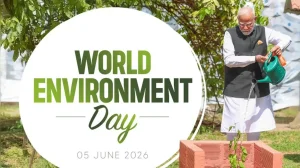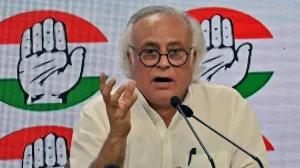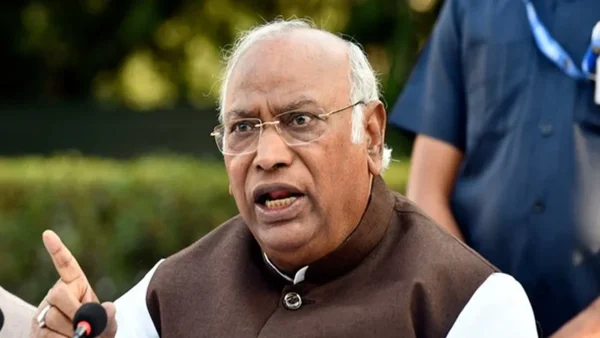
It was 5 June 2026 and World Environment Day had a political edge to it. Congress president Mallikarjun Kharge was in no mood to mince words as he accused the Modi administration of eroding India’s environmental governance. With project clearances and other records to back him up, he put out a warning: even with the heat on and climate threats on the rise, India is ceding ground ecologically.
There is a chasm between what is being put forward and what is actually happening, according to Kharge. In the 11 years or so, close to 1,91,922 hectares of forest have been put to the axe, and you can add to that the 1.6 crore-odd trees that have been done in since 2014.
Kharge’s charge and the numbers
Writing on X, Kharge made his case that the Centre is cooking up an illusion of progress with some creative accounting and redefined terms. It gives the look of forests on the up, but in truth the natural world is being whittled down.
He has an issue with the way the India State of Forest Report does its bookkeeping. By leaning on satellite figures for canopy density, they are lumping in everything from rubber and oil palm to orchards and bamboo – any tree-covered patch over a hectare – and in doing so, the loss of biodiversity is put out of sight.
Projects at the heart of the dispute
To make his point, Kharge zeroed in on a few projects and corridors that are making waves. Take the Great Nicobar in the Andaman and Nicobar Islands: he says the project there is on course to put an end to some 10 lakh trees and do lasting harm to a delicate ecosystem.
Then there are the green belts in central India. In Chhattisgarh’s Hasdeo Arand, a coal mining venture is about to bring down 5 lakh trees in an area rich in wildlife. Over in Madhya Pradesh, he says you can put the number of trees lost to mining and new infrastructure at around 7 lakh.
The kind of losses you see in one part of the country are adding up in others. In Rajasthan, a host of development work is putting 1.5 to 4 lakh trees in the Aravalli at risk. In Maharashtra, the coastal road and some mining are taking out 45,000 trees and mangroves. And in Odisha, the Bharatmala project has already seen 50,000 felled.
He also has a bone to pick with the highways in Uttar Pradesh, where he says a lakh of trees have been made to vanish, and with the expansion in Assam, which has cost nearly as many in the last four years alone. In his view, this is just one piece of a larger pattern of ecological ruin that has been going on all over the country.
Governance under a microscope
For Kharge, what we are seeing is an undoing of hard-won institutional progress. He put it down to the legacy of Indira Gandhi’s time as prime minister, when India first put in place its environmental rules with the Wildlife Protection Act (1972), the Water Act (1974), the Forest Conservation Act (1980) and the Air Act (1981).
Then came the Congress-UPA era, which he said put more teeth in those safeguards. You had the 2006 Forest Rights Act and EIA Notification, the 2008 National Action Plan on Climate Change, and the 2010 National Green Tribunal – all of which, in his telling, made for sturdier legal ground.
The current administration, however, is another story. Kharge’s charge is that they have chipped away at these protections, making a point of moving projects along with faster clearances and looser procedures. “It is one of the harshest things we have seen done to our ecological wealth in a long time,” he said.
The question of definitions
You could say the row is as much about how you define a forest as it is about the number of trees. Kharge’s point is that by lumping in plantations, the government is obscuring the kind of irreplaceable damage being done to thick, biodiverse woods. The evidence, he says, is there: natural forests are giving way to plantations and odd little fragments.
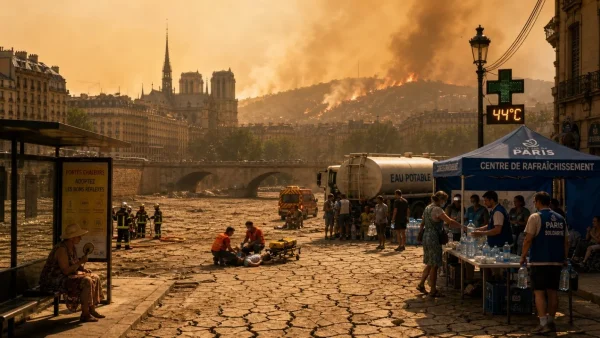
There is also a dissonance between what is being sold to the public and what is happening on the ground. The Prime Minister will tell you to stay hydrated to make do with the heat, but Kharge would have it that the state is the one making the calls that put the climate and ecology under strain in the first place.
Where he stands now
Kharge has laid out a few non-negotiables for any serious environmental policy in India. To get conservation and development to coexist without losing your future, you need:
– A firm hand on the rule of law
– To work with local communities, not be at odds with them
– An understanding that you can’t have one without the other
He has some numbers to back up his case, ones he thinks should be front and centre for policymakers:
– 1,91,922 hectares of forest gone in a decade and a bit
– Over 1.6 crore trees put to the axe since 2014
– In Assam alone, close to a lakh in four years
– And roughly the same in Uttar Pradesh
The government will tell you forest cover is up. But if you’re counting in bamboo groves and orchards as well as the real thing, you’re not getting the full story on the health of the ecosystem, and that is where we need some straight talk.
Speaking on 5 June 2026, he was calling for a change in direction, one that is rooted in science, the law and the rights of people. The choice is plain: stand up for what is left or be in for some rougher times ahead.