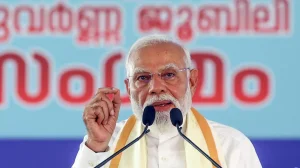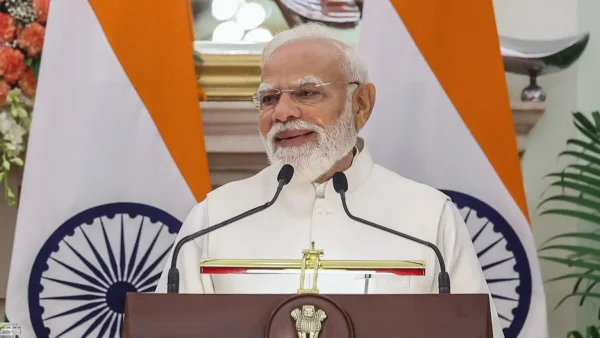
“When public works are put on hold, you are not only losing money but also short-changing people on basic services,” the Prime Minister said, putting his warning on the table as he led the 51st PRAGATI review on May 27, 2026. He went over seven projects in nine states that add up to some Rs 30,000 crore and made it clear we need to see more rooftop solar and no-nonsense waste management, right away.
Why the review matters now
You could think of PRAGATI as the government’s digital nerve centre for moving projects along, keeping an eye on flagship schemes and dealing with grievances. In this last session, the PM told the various ministries and state representatives to put a pin in any bottlenecks and stick to the schedule, per an official readout.
There is a reason the Railways, Power and Road sectors were in the crosshairs: a delay in one of those has a way of making itself felt in the rest of the economy. The Prime Minister called for a kind of Centre-state coordination that is tighter, and for execution in mission mode, so the public doesn’t have to wait for results.
States put on the clock: monthly social scheme audits
We are now up and running with a new way of doing monthly reviews for social sector schemes in the states, at the behest of the Prime Minister. Swachh Bharat Mission is the first to be put under this regular, state-run microscope.
It is meant to put some teeth into accountability and get things sorted at the district and state level. The point was made in no uncertain terms: nip slippages in the bud or you will be left with higher costs and nothing to show for it.
Urban energy push: rooftops and canals
One of the big items on the agenda was renewable power in our cities. The Prime Minister has asked the states to pick up the pace on rooftop solar for everything from housing blocks to public buildings. The thinking is to do this in a focused way to put a dent in electricity bills and be more secure on energy.
He was also for getting creative with our canals – putting panels on them and over them. As the statement puts it, it is a way to make the most of the land, keep water from evaporating and put out clean power without getting in anyone’s way.
Logistics reset: Vadhavan as multi-modal benchmark
The Vadhavan Port is coming up and the Prime Minister was firm on one thing: it should be an integrated gateway for logistics, not just a port by itself. We want an ecosystem where you can move from one form of transport to another without a hitch.
That means you have to be able to get there by coastal ship, inland waterway, freight corridor, highway, high-speed rail or even by air. If you tie it all together, as he put it, you will see logistics costs come down and trade will be more competitive.
Water and sanitation: from assets to outcomes
Then there is the Ken-Betwa Inter-linking Project, which was held up as an example of how to work with other states on water. The PM encouraged them to look for more of these in river-linking, recharging groundwater and so on, for the long haul.
When it comes to urban sanitation, he was of the view that Swachh Bharat Mission-Urban 2.0 has to be about numbers you can measure, not just building things. States have been told to get on with solid waste and GOBARdhan plants so their capacity is in line with the waste being produced.
To make sure there is no dallying, here is what the government expects from the agencies on the ground:
– Get more rooftop solar up in cities and on public property
– Put in solar on and around the canals
– Make Vadhavan a true logistics hub
– Move the needle on waste and GOBARdhan facilities
– Do your monthly reviews of social schemes in the states
– Clear out project roadblocks and do it on time
The Prime Minister had a word of caution: every time you put something off, it gets more expensive and the development doesn’t happen. “Each one of these delays has a direct bearing on the lives of the people and how we use public resources,” he was quoted as saying.
These are not small projects; at some 30,000 crore, they are key to the economy and the well-being of the public. So the onus is on the ministries to make sure there are no gaps in coordination and to watch the milestones like a hawk.
With PRAGATI looking over the shoulder of the monthly state reviews, the Centre is after a quicker fix for problems and less of a let-down at the last mile. You can see the intent in the focus on renewables and sanitation that is based on what is actually delivered.
Now it is a matter of how fast the states get on board with the solar, the canal experiments, the port and the waste. The orders have been given and, as the Prime Minister has made plain, the dates are not up for discussion.