Artemis II is a turning point in human space travel, going from robotic tests to astronauts traveling further than just around the Earth. Four crew members will go around the Moon and come back, making sure the important systems work as they should before a lunar landing and eventually human trips to Mars.
Program Context and Purpose
Artemis II comes after Artemis I, a 25-day test flight with no one on board which showed that the Orion spacecraft and the Space Launch System worked in the conditions of deep space. Using the information from Artemis I, engineers improved Orion’s “brains”, its heat shield, and how it will operate for long periods. Artemis II will now put people into the same flight plan that was already proven safe.
Artemis II won’t actually land on the Moon, but will go around it on a “free-return trajectory”. This means the spaceship will naturally curve around the Moon and head back to Earth. This path is safer for testing the life support, steering, and hands-on controls in deep space, and it doesn’re put the crew in as much danger.
Space Launch System and Orion Spacecraft Details
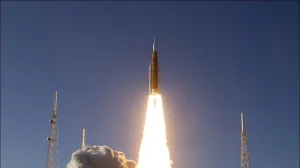
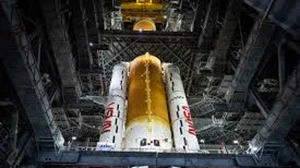
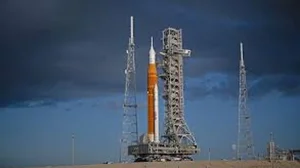
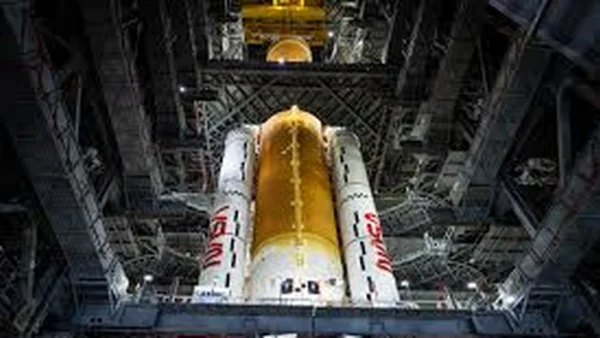
The mission will start at the Kennedy Space Center with the SLS, NASA’s strongest rocket. Orion will separate from the SLS, go into a very stretched-out orbit around Earth, and then do a “translunar injection” (a push of the engines) to start its trip to the Moon. It will carry the crew systems and equipment that have been tested since Artemis I.
Orion is made up of a crew cabin, a service section, and a heat shield that can withstand the very high speeds of coming back into the Earth’s atmosphere. Engineers will constantly be watching the engines, power supply, and temperature controls. They’re expecting the whole mission to last about 10 days, from the launch until Orion splashes down in the Pacific Ocean.
Mission Timeline and Key Phases
The mission starts with launching and detaching from the rocket, then doing initial checks on the orbit. Within the first one or two days, the astronauts will test the life support, engines, communication, and navigation. These early tests will show that Orion is working as expected with people on board.
A very important “translunar injection” engine burn will send Orion towards the Moon, and onto the free-return path. As the spacecraft goes around the Moon, the crew will test the hands-on controls and communicating in deep space, while being exposed to the radiation and temperatures of beyond Earth orbit.
The trip back will involve continuing to check the systems and doing experiments. Coming back into the atmosphere will make Orion go very fast, testing the heat shield in a real situation before it splashes down in the Pacific Ocean. A team will then get the crew and the spacecraft for a thorough examination after the flight.
Crew Composition and Onboard Objectives
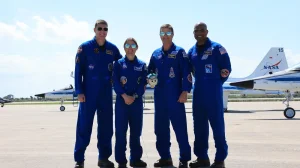
The crew consists of four people: Reid Wiseman (in charge), Victor Glover (pilot), Christina Koch (mission specialist), and Jeremy Hansen (mission specialist, from Canada). Each astronaut has experience with complicated space work and checking the systems, which are both important for long trips in space.
Their main goals are to confirm that the life support, communication, steering and hands-on flying will work near the Moon. The engineers will use what the crew says and the data they collect to improve plans and equipment before Artemis III, which is the planned landing mission later in the 2020s.
Implications for Lunar and Mars Exploration
Artemis II is a place to test the technology and how people will function that are needed for a long-term presence on the Moon and eventually trips to Mars. Successfully demonstrating long-lasting life support, steering, and the systems for returning to Earth will make a landing and longer journeys less risky.
The mission also demonstrates that many countries and private companies are working together to explore space. The information from Artemis II will affect how spacecraft are designed, how missions are run, and what rules are made for future human spaceflights, bringing NASA closer to having a continuing program on the Moon and a realistic plan for Mars.