Artemis II is the first time people will fly on NASA’s SLS rocket and Orion spacecraft. It is meant to prove the crew systems work in deep space and to practice the work needed for the Artemis program’s future lunar landings. It will take astronauts past low Earth orbit to test life support and how to find their way around in real flight conditions.
What Artemis II Will Do
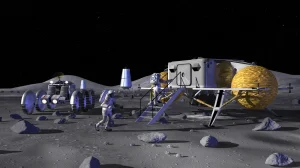
A main goal is to show Orion can keep a crew alive during a long trip to the Moon. Those planning the mission will look at environmental controls, the spacecraft’s electronics, communication, and what the crew does. The data from this flight will be used directly in Artemis III, which is intended to put astronauts back on the Moon’s surface.
The Artemis II Astronauts
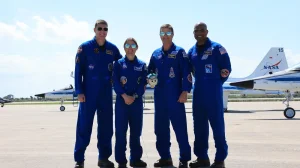
The crew of four has three U.S. astronauts – Reid Wiseman, Victor Glover, and Christina Koch – and Canadian astronaut Jeremy Hansen. The fact that people from different countries are taking part shows that more and more nations are joining in human space travel beyond Earth orbit.
For roughly ten days, the team will go around the side of the Moon that we never see from Earth. They will test working in orbit around the Moon, practice passing on navigation and communication, and confirm that Orion’s systems can handle the stresses of a Moon landing.
Getting Ready at Kennedy Space Center
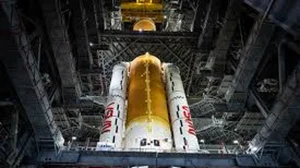
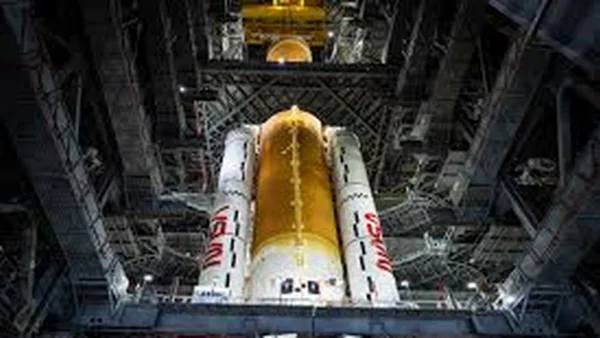
Engineers are finishing the last of the work to put everything together inside the Vehicle Assembly Building at the Kennedy Space Center. The SLS and Orion are set to be moved to the launch pad on March 19, before the April 1 launch date. Before it lifts off, teams will do pad tests and system checks.
Problems, Fixes, and Time Limits
NASA has said teams had intended to do more tests on the pad, but won’t do another full ‘wet dress rehearsal’ once the vehicle is on the pad. Officials said the rocket won’t be filled with super-cold fuel again until an actual launch is tried, and what happens next will depend on the hardware being ready.
The rocket had to be taken back to the Vehicle Assembly Building earlier, after a leak of helium was found when it was first being prepared. Engineers sorted out the problem and said the repairs were good before they restarted getting it ready to roll out. NASA people said they were sure the problem had been fixed and that work was going as planned for the planned move to the pad.
Artemis II had been put off earlier, partly because of problems with the heat shield on the unmanned Artemis I flight, and other difficulties in getting everything to work together. The agency set itself an in-house deadline of launching Artemis II before May 1, 2026, and leaders have stressed taking care, as they try to balance the need to keep to the schedule with safety and making sure the mission succeeds.
Those managing the mission are very clear about managing risk. They have looked at system data and put in place ways to lower known risks. As one of the program’s people in charge said, new rocket programs usually have a lot of doubt about them, so NASA is concentrating on finding out how things could go wrong and using controls to give the best chance of success.
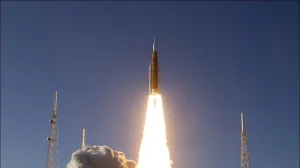
The last checks will be a full launch countdown which fills the rocket with super-cold fuel, checking the information sent back to the ground, and making sure the launch pad’s systems are working. NASA has said it will only go ahead when engineers are sure that all the hardware and software are ready for flight.
This mission will be very important in deciding what happens next in exploring the Moon. By showing that people can work in orbit around the Moon, Artemis II aims to answer the technical and operating questions that are between the agency and its aim of getting astronauts back onto the Moon’s surface.