Nissan has said it will release the Gravite – a seven-seat MPV – in India, and it’s going to be properly shown off on February 17th, 2026. The release was put off from what was first planned, but people should be getting them in March. Nissan sees the Gravite as a good-value, three-row family vehicle which mixes useful room with a high-quality interior.
How it Looks and What it Shows
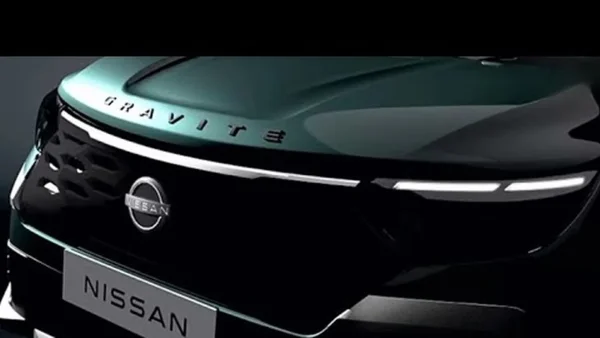
The Gravite gets its general shape from MPVs less than four metres long, though it has the Nissan look to it. You can look for LED daytime running lights in the headlights, a grille with chrome on it, and a hood with the Nissan name on it where you can see it. The designers have also given us a glimpse of back lights split by a line going across, and a badge in the middle of the back door. The MPV is going to have bars for the roof, new bumpers, new alloy wheel designs, and a few paint colors – teal, white, silver, black, and grey – among them. These features are meant to give the Gravite a better look, while still giving buyers the usefulness they want in this class of vehicle.
A Good Interior and Comfortable Three Rows
Inside, Nissan is saying the cabin will seem better than you’d expect for the price; the company will probably put a lot of work into how comfortable passengers are in all three rows. There are reports of a digital display for the driver, and a touchscreen for the entertainment system which will work with Apple CarPlay and Android Auto – making it easier and more connected for families to use every day. Useful features that are likely to be included are wireless phone charging, a push-button start, controls on the steering wheel, and air vents for people in the back seats. The third row will probably be able to be taken out, so owners can have either seven seats or a lot of boot room for long drives.
Safety and Technology Details
Safety seems to be important, with news reports saying the Gravite might offer six airbags, ABS with EBD, traction control, and hill-hold assist. A tyre pressure warning system and ISOFIX mounts for child seats should also give families peace of mind. Technology will likely be useful, rather than showy. A touchscreen of around 8 inches, a digital display for the driver, and basic ways to connect are what we’re expecting. The way the seats can be arranged, and the air vents in the back, are meant to make long journeys and school runs more comfortable.
Engine, Gearbox, and How it Drives
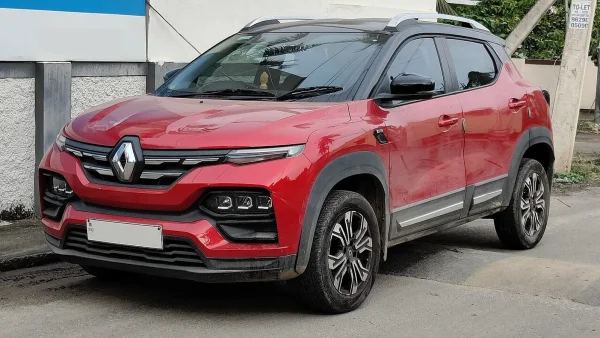
The Gravite is expected to have a 1.0-litre three-cylinder petrol engine, the same as in the Renault Triber. It’s thought to produce about 71 hp and 96 Nm of torque – numbers which favour fuel economy and driving around town, over flat-out speed. Gearbox options are likely to be a 5-speed manual and a 5-speed automated manual (AMT). These gearboxes should appeal to both drivers who like a traditional gear change and those who want something easier. A turbocharged version might come out later for people who want more power on motorways.
How Much it Will Cost, What it Is, and What it Will Do to the Market
Nissan is planning to price it aggressively, with estimates of a starting price of around Rs 7 lakh, and the best versions going up to Rs 12-15 lakh. This puts the Gravite nicely between upmarket hatchbacks and bigger MPVs, giving people a good way to move up. The Gravite is aimed at buyers who want good value and flexibility in the under-four-metre, seven-seat class – a market shaped by tax breaks which make small MPVs reasonably priced. It will go head-to-head with models like the Renault Triber, and get buyers who might also be looking at the Maruti Suzuki Ertiga and Kia Carens. Nissan is going to build the Gravite in India on the CMF-A platform. If the company supports the model with prices that are good in competition, and good after-sales service, the Gravite could become a practical, sensible family car for Indian buyers who value space, economy, and a high-quality interior.