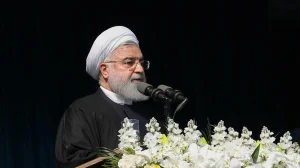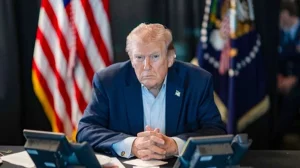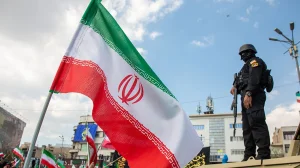
Mojtaba Khamenei, Iran’s new Supreme Leader, is said to have agreed to talk to the United States. This suggests a possible path to a diplomatic solution in a conflict that has been going on for a very long time. President Trump said he is giving a five day period for conversations and that the U.S. will hold off on attacking energy facilities while they are happening.
Details of the reported negotiation offer
According to reports from people in Israel, Mojtaba Khamenei has given permission for discussions with the U.S. with the goal of finding a way to lessen fighting. This comes after many weeks of a lot of military activity throughout the region.
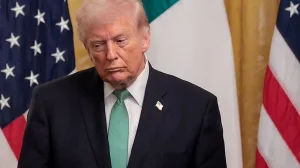
Trump told the press that the talks started fairly recently, and important people working for the U.S. government have been speaking directly to Iranian officials. He said the discussions have been serious and that both sides have largely agreed on some important things in the first exchanges.
Conflicting official statements from Tehran
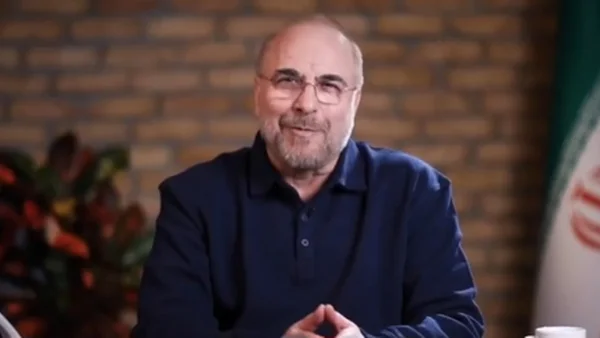
However, Iranian government officials tell a different story, saying they have had no talks with the United States, directly or through another country. The person who runs Iran’s parliament posted on social media that no talks have happened and warned that made-up reports could be used to change the prices of money and oil.
These completely opposite statements show how secretive important diplomatic efforts usually are. Being unclear can be useful for many reasons: it can appear as if you are willing to find a compromise, but also protect your position at home and remain somewhat unpredictable.
Trump’s five-day energy truce and its purpose
President Trump stated the U.S. will allow five days for the talks to get somewhere, and that attacks on Iran’s electrical system will be delayed during that time. He also said the Strait of Hormuz might be opened to ships again pretty soon if the negotiations go well, and even suggested the U.S. and Iran could jointly be in charge of the waterway.
The decision to not immediately attack oil facilities appears to be to lower the chance of things getting worse quickly. Iran had warned that if its electricity system was attacked, it would respond by attacking power facilities connected to U.S. bases and important countries in the region.
Regional security incidents during the diplomatic window
Even while people talk about negotiations, fighting has continued. Several waves of missiles hit parts of Israel, with effects in the north and an explosion in the center of Tel Aviv which caused slight injuries and damage to property.
At the same time, attacks in the southern parts of Beirut targeted facilities belonging to an armed group linked to Iran, and this resulted in civilians being hurt. Also, air defense activity in Kuwait damaged electrical lines and caused missile warnings in nearby countries.
These events show just how easily a fragile peace between talking and fighting can be broken. Even as leaders attempt to have discussions, what is happening on the battlefield and through other groups can quickly destroy progress.
Economic fallout and oil market reaction
Oil markets responded almost immediately to the mixed messages. The price of oil briefly went down to under $100 a barrel after the U.S. said they would talk, because people hoped things would calm down and oil would be available again. But then prices went back up, with the international standard price going over $100 again because of the continuing violence and uncertainty.
The Strait of Hormuz is a very important, narrow passage for ships. Around one fifth of the world’s oil and liquefied natural gas travels through it. If it was blocked for a long time, prices would likely go up a lot and the world’s supply chains would be put under pressure, making a settled agreement very important to many countries for economic reasons.
Outlook and implications for policy makers
If the negotiations continue, those involved will have to deal with a complicated combination of requests from each side about safety, the economy, and politics. Actions to build trust, like temporarily stopping attacks on energy facilities, could give more time for larger agreements about safety on the seas and lessening conflict in the region.
People who make decisions about policy need to be ready for situations to change quickly. This could mean a quick agreement that makes shipping easier and calms down the market, or it could mean the talks fail and attacks start again and oil prices become more unstable. Watching carefully, having plans for what to do if things change, and working together diplomatically with countries in the area and around the world will be very important in the coming days.