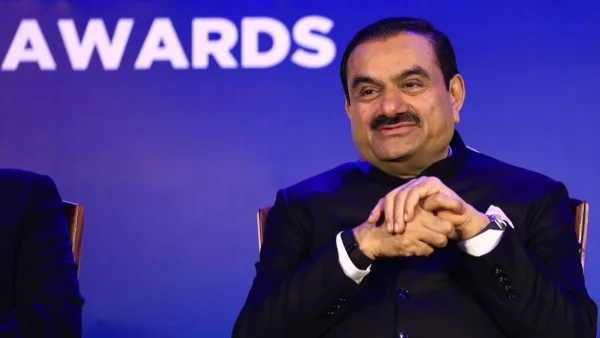
In a move that wraps up a week of quick resolutions with US regulators, the DOJ has closed the New York prosecution for securities and wire fraud. The department has asked a federal court to let the indictment against Adani and his nephew Sagar be dismissed “with prejudice” – in other words, the case is done and can’t be brought back. A filing from the DOJ puts it simply: they will not be putting any more time or resources into this.
Key official actions at a glance
It’s the culmination of a few different matters. The SEC has come to civil terms with both Adanis over some investor disclosures on Indian solar ventures. The numbers on paper are $6 million and $12 million in payments, with no one admitting or denying any fault. Then there’s the Treasury’s Office of Foreign Assets Control, which has put to rest some claims about Iranian sanctions. Adani Enterprises is on the hook for $275 million, but in return for what filings describe as a good deal of cooperation and some upfront disclosures, the court has seen fit to drop the criminal side of things.
Here are the core steps that reset the legal landscape:
– DOJ sought dismissal ‘with prejudice’
– SEC civil settlements: USD 6 million and USD 12 million
– OFAC settlement payment: $275 million
– No FCPA charges for Gautam and Sagar
Why prosecutors stood down
Talk to those in the know and you’ll hear that the prosecutors just didn’t have the evidence or the US ties to make the case stick. They’ve been at it for months with the various American law firms for the Adanis – Sullivan & Cromwell, Nixon Peabody, Hecker Fink, to name a few.
The defence made its play on jurisdiction. In an April 7, 2026, submission to the Eastern District of New York, Adani’s counsel put forward the view that the SEC was overreaching by applying its laws extraterritorially to a situation with all-Indian defendants and an all-Indian issuer.
What the cases alleged
The original cases, put before the courts in late 2024, were about a $265 million pay-off to Indian officials for solar contracts, something the Adanis say was hidden from US money men. The Adani Group has been having none of it. And while the US Attorney’s office in the same district had its own $250 million theory in 2024, not one of the defendants has ever had to stand before a US judge.
What’s more, the counts against Gautam, Sagar and Vneet Jaain were for securities and wire fraud, not the stiffer FCPA or obstruction charges you see with some of the others in the broader file.
Strategic impact and what comes next
Now that the criminal matter is off the table, the immediate risk to the conglomerate’s plans is a thing of the past. The government has called it quits on a prosecution that could have made for some hard going in global markets. Adani’s lawyers have pointed out there were no losses to investors and that bond covenants were met; they also say Gautam had nothing to do with the bond in question. (One former SEC commissioner, Laura Unger, even suggested the authorities were re-packaging weak anti-bribery claims as fraud.)
You could say it shows where US enforcement can and can’t go when the action is happening overseas. For the Adani Group, it’s a chance to stop litigating and get on with the work. The dismissal with prejudice is final. Between that and the deals with the SEC and OFAC, the chapter that opened in 2024 is firmly in the rear-view mirror.