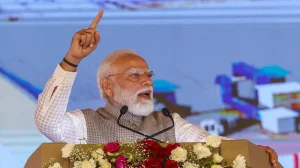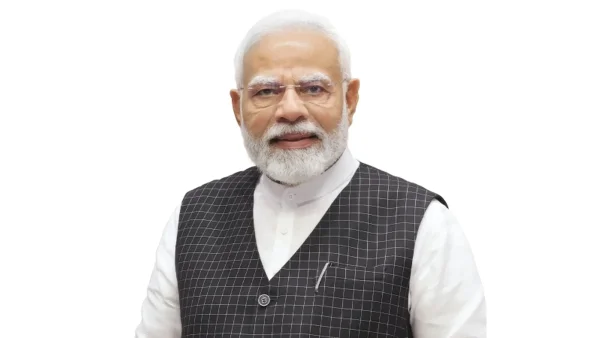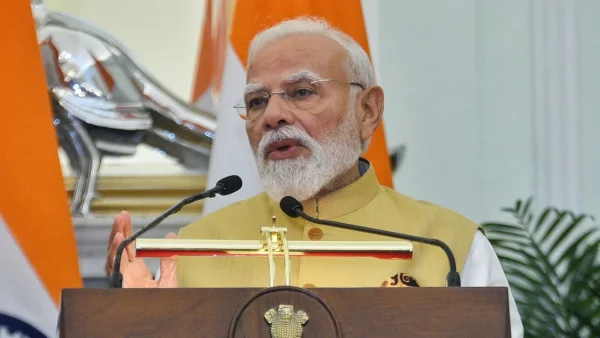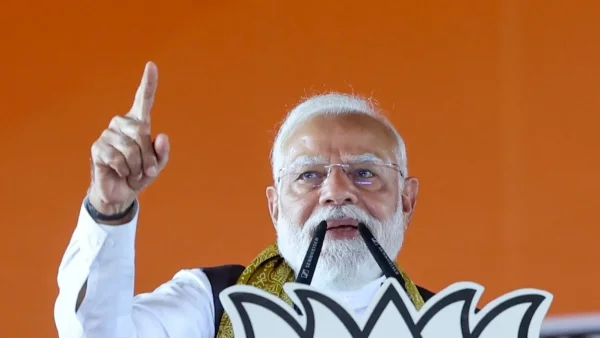
On Saturday, Prime Minister Modi will address three rallies in West Bengal. This is the third time he’s visited since the Election Commission said when the election would be held, and it shows how hard the BJP is trying to strengthen their position in the central and northern areas of the state.
Rally schedule and locations
He is scheduled to speak in Katwa (Purba Bardhaman), Jangipur (Murshidabad), and Kushmandi (Dakshin Dinajpur). These places were chosen because they are important districts where the BJP hopes to get more support and connect with a wide range of people who are eligible to vote.
Jangipur is particularly significant because most of the people there are Muslim; this is a deliberate attempt to reach out to this group of voters. Katwa and Kushmandi are considered crucial places to fight for in central and northern Bengal, giving the BJP opportunities to challenge the current ruling party at a local level.
Campaign themes and messaging
Recently, the Prime Minister’s speeches have been about law and order, people supposedly coming into the country illegally, and the economic problems of some of the state’s industrial areas. These ideas are at the heart of what the BJP is saying to voters as they attempt to decide what issues are most important.
Modi also mentioned six things he promises to do during earlier rallies, presenting them as a completely different way of running things. This combination of criticizing how things are being done and making promises about what he will do is meant to attract voters who are worried about being safe, getting jobs, and public services.
Political context and recent activity
He began his campaign in the state on April tth in Cooch Behar, and continued with meetings on April 9th in Haldia, Asansol, and Suri. These meetings brought up the slowing of industry and what the campaign calls the problem of “illegal immigration,” keeping attention on what the campaign sees as failings of the current administration.
The Prime Minister has been very clear about the Special Intensive Revision (a look at the voting lists), and he pointed to the surrounding of judges as proof of problems with how things are being run locally. By mentioning this, the BJP is trying to show how they are different from the current government in terms of law and order.
Election timetable and stakes
West Bengal will choose 294 members for their assembly in two rounds of voting, on April 23 and April 29. The votes will be counted on May 4, so there isn’t much time left for final campaigning and getting people to the polls.
The BJP managed to win 77 seats in the assembly in 2021 and now wants to turn that into enough seats to actually be in charge of the government. Initial polls suggest the current party has a small advantage, but this could change because both parties are working very hard to get the support of voters.
Target regions and electoral strategy
Central and northern West Bengal are the main focus of the BJP’s efforts; they believe they can win more support in these areas by directing their message at those areas. The campaign is changing what they say to appeal to people’s concerns about finding work, women being safe, how the government is run, and corruption.
This detailed approach includes dealing with the specific problems of each community and making the BJP’s organization at the grassroots level better. The BJP hopes the Prime Minister’s frequent and public visits will build support and get more people who haven’t made up their minds to vote.
Implications and outlook
The three rallies in one day are intended to create a lot of energy for the campaign all at once, to make the key points clearer, and to sway voters in areas where the outcome is uncertain. How much impact the rallies have will depend on whether voters believe what is being said, how well the BJP is organized at a local level, and what the current government is also saying.
With the election only a few days away, the next week will show if these high-profile visits will change the opinions of voters who are undecided, or will simply get the people who already support a party even more enthusiastic. No matter what happens, the increased campaigning shows how important this election is, and how important West Bengal is to both parties.