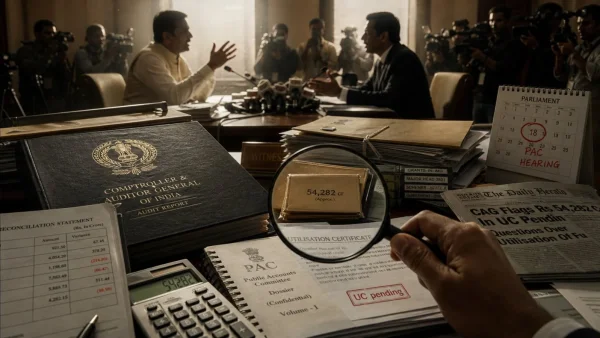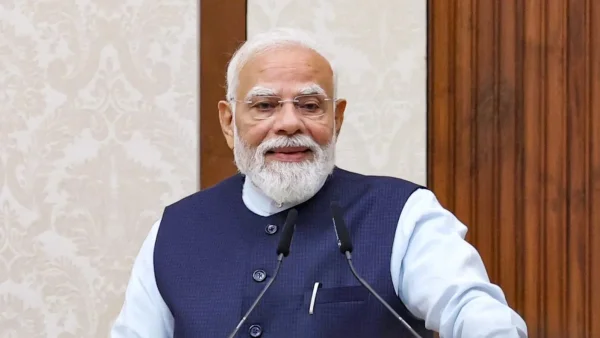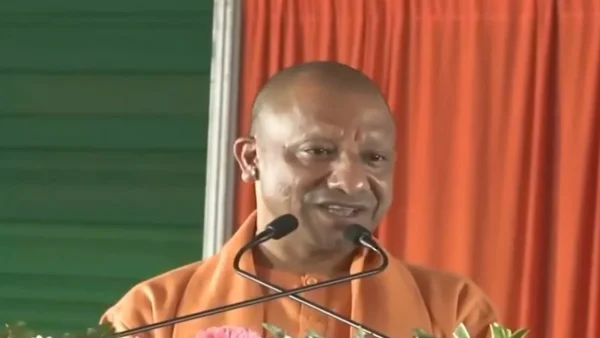
A fresh political controversy has erupted over government expenditure on advertisements after reports claimed that the Uttar Pradesh government spent nearly ₹7,000 crore on publicity over the past eight years, drawing comparisons with the Union government’s reported advertising expenditure of around ₹6,000 crore over approximately eleven years.
The figures, widely circulated on social media and cited in media reports, have prompted opposition leaders to question whether taxpayer money is being used primarily to inform citizens about government schemes or to promote the image of political leaders.
The ruling Bharatiya Janata Party (BJP), however, maintains that government advertisements are an essential tool for spreading awareness about welfare programmes, public health initiatives, infrastructure projects, and citizen services.
What Is the Controversy?
The debate centres on the scale of public money being spent on government publicity campaigns.
Critics argue that while informing citizens about government schemes is a legitimate function, extensive advertising campaigns featuring political leaders and slogans often blur the line between public information and political branding.
They question whether such expenditure is justified when sectors like education, healthcare, employment, and rural development continue to face funding and implementation challenges.
Supporters counter that in a state as populous as Uttar Pradesh, mass communication is necessary to ensure people are aware of government schemes and know how to access them.
Government’s Stand
Government advertisements are commonly used to publicise:
Welfare schemes.
Health and vaccination campaigns.
Farmer assistance programmes.
Disaster preparedness.
Infrastructure projects.
Recruitment drives.
Public safety messages.
The government argues that effective communication is an integral part of governance and helps improve the reach and impact of public programmes.
Officials have consistently maintained that informing citizens about available benefits is a public responsibility, not political promotion.
Opposition Raises Questions
Opposition parties have seized upon the reported expenditure, arguing that governments should prioritise improving public services over expanding publicity campaigns.
They have demanded greater transparency regarding:
The total amount spent on advertisements.
The media platforms receiving the advertisements.
The criteria for selecting campaigns.
Independent assessment of the effectiveness of such spending.
Critics argue that taxpayers have the right to know whether these campaigns are delivering measurable public benefits.
Why Government Advertising Matters
Government advertising is funded through public money and is intended to communicate information that affects citizens.
Public finance experts note that such campaigns can play an important role in increasing awareness about welfare schemes and public services.
However, they also emphasise that expenditure should be proportionate, transparent, and subject to public scrutiny.
The issue is not whether governments should advertise, but whether the scale and nature of spending represent the best use of public resources.
The Broader Debate
The controversy has once again brought attention to a larger question about governance priorities.
Many citizens argue that while communication is important, visible improvements in public services ultimately speak louder than advertising campaigns.
Others point out that governments need effective outreach to ensure that eligible beneficiaries are aware of schemes and services.
As a result, the debate extends beyond political rivalry and touches upon broader issues of transparency, accountability, and public expenditure.
The Bigger Question
Government advertisements remain a legitimate part of public administration, but they also attract close public scrutiny because they are financed by taxpayers.
As political parties continue to trade accusations over publicity spending, the central question remains unchanged:
How much should governments spend on informing citizens, and where should the line be drawn between public awareness and political promotion?
The answer to that question is likely to remain at the centre of India’s debate on public spending and accountability for years to come.