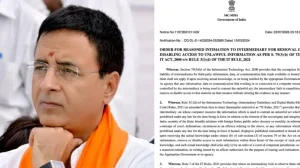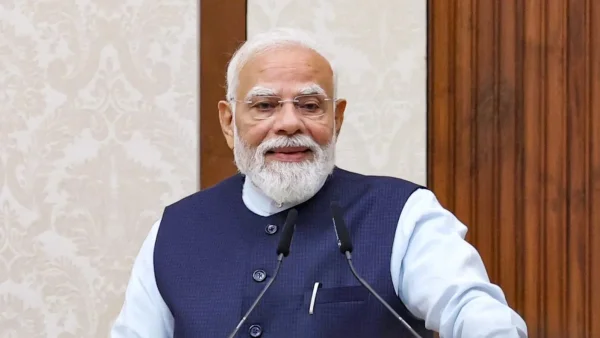
A temporary disruption involving a social media post featuring Prime Minister Narendra Modi has sparked political controversy after reports that the government sought an explanation from Meta.
While technical glitches on digital platforms are not uncommon, the episode has quickly become more than a story about a missing video. It has reignited a broader political question:
Why do some issues appear to receive immediate official attention while others take much longer to see action?
For critics, the incident symbolizes a mismatch between the urgency shown on matters involving political communication and the pace of response to long-standing public concerns.
The Politics of Priorities
Every government must decide where to focus its administrative energy.
Supporters argue that ensuring the integrity of official communication on major digital platforms is a legitimate concern, especially when millions rely on social media for government announcements.
Critics, however, contend that citizens naturally compare the speed of government responses across different issues.
Whenever reports of paper leaks, farmer distress, prolonged protests, or other public grievances dominate headlines, people often ask:
Why do some matters seem to move faster through the system than others?
Whether that perception is fair or not, it has become a recurring feature of political debate.
Why Public Perception Matters
In governance, perception can be almost as important as policy.
Citizens do not judge governments only by what they do—they also judge what appears to receive the highest priority.
If a technical issue involving a high-profile political figure attracts immediate attention, while other public issues are seen as progressing slowly, comparisons are almost inevitable.
That does not necessarily mean the government is ignoring other concerns, but it does shape public perception.
The Digital Age Changes Expectations
Governments today operate in an era where information spreads instantly.
A platform outage lasting minutes can become national news.
At the same time, unresolved social and economic issues can remain in public discussion for months.
This contrast often fuels criticism, particularly on social media, where symbolic incidents can overshadow more complex policy debates.
A Little Political Irony
In today’s India, it sometimes feels as though a disappearing video can trend faster than a disappearing file.
A social media glitch lasts a few minutes.
The political debate about priorities lasts much longer.
The irony is not that governments respond to digital issues—it is that citizens expect the same urgency for issues affecting their daily lives.
The Government’s Perspective
Governments routinely engage with digital platforms on matters relating to content, cybersecurity, misinformation, and official communications.
From that perspective, seeking an explanation for a disruption affecting an official account can be viewed as part of routine governance rather than evidence that other issues are being neglected.
Supporters argue that addressing one issue does not prevent authorities from working on others simultaneously.
The Opposition’s Argument
Opposition parties and critics often frame such incidents differently.
They argue that the speed with which governments react to matters involving political communication should be matched by equally visible urgency on issues such as education, agriculture, employment, and public welfare.
Their criticism is less about one video and more about what they describe as unequal administrative priorities.
The Bigger Question
Every government faces competing demands and limited administrative resources.
The challenge is not simply responding quickly—it is convincing citizens that the issues affecting their lives receive the same seriousness as those affecting political leaders or institutions.
In a democracy, public trust is shaped not only by decisions but by priorities.
Citizens may disagree on policies, but they generally expect one principle to remain constant:
The concerns of ordinary people should never appear less urgent than the concerns of those in power.