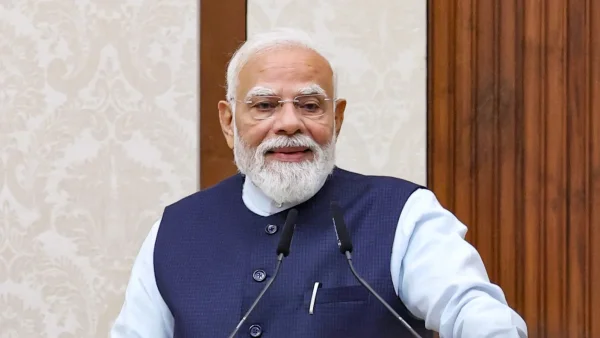
On Tuesday, as Prime Minister Narendra Modi was on the phone with Iran’s President Masoud Pezeshkian, India made a point of putting some cover over its trade and energy routes. He put his weight behind de-escalation in the area and the right to navigate the Hormuz Strait. It was a reminder of how much New Delhi has at stake in any kind of tenuous truce meant to cool things down.
Why the call is of interest to India
You can trace the security of the sea lanes in the Hormuz straight back to India’s bottom line: fuel prices, when your ships arrive, and overall economic health. If there is a flare-up, it doesn’t just stay there; it has a way of affecting the remittances and well-being of the millions of Indians with jobs in West Asia.
Time and again, India's stance has been one of holding back, talking it out and taking the practical measures needed to let business and people be safe.
What the leaders had to say
Per the official word, President Pezeshkian gave PM Modi the run-down on what’s been happening and where they stand after a sort of regional accord to put the brakes on hostilities. For his part, Modi was pleased with the headway and put it on the record that diplomacy is the only way to settle these matters.
He made a case for the kind of steady work required for any peace to hold, with an eye on keeping commerce and navigation free in the Hormuz. In a short post online, he put it simply: he was hoping for some lasting calm and once more pointed to the need for freedom in the strait.
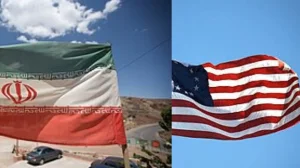
All this is happening as there are moves to keep a fine line between Iran and the U.S. from fraying after months of hard feelings. For India, you can’t have one without the other: no escalation means safe passage for our energy and trade.
Tehran remains in the conversation
Even with the conflict, New Delhi hasn’t let the lines of communication with Tehran go cold. There have been two calls between Modi and Pezeshkian in the course of the crisis. On top of that, External Affairs Minister S Jaishankar has been in touch with his counterpart, Abbas Araghchi, more than five times to talk shop on the region, the safety of our people and how to de-escalate.
There has been contact on the multilateral front as well. When Araghchi was in town for the BRICS Foreign Ministers’ Meeting, he met with both the PM and the EAM. We also had Iran’s Deputy FM Saeed Khatibzadeh at the Raisina Dialogue, and a top hand from their Supreme National Security Council for some words with NSA Ajit Doval at the BRICS meeting.
We’ve seen some give and take in places like the BRICS Energy Ministers’ forum. And on a more human note, India has made it possible for non-essential crew from the IRIS Lavan to make it home.
Where New Delhi stands
If you listen to the call, here is what comes across as the priority:
– Let the table, not the field, be where you work out your differences
– Make sure the Hormuz is open for all to use
– Put in the work to see that the region is stable
A look at what’s in store
Iran had put out an invite for Modi to the funeral of Ayatollah Ali Khamenei, who was in the crossfire of a US-Israeli strike. India will be in the room in the form of Bihar Governor (Retd) Lt Gen Syed Ata Hasnain and MoS Pabitra Margherita.
The service in Tehran is set to start at 6 am on July 4 at the Imam Khomeini Grand Prayer Grounds. There are more to come in Qom on the 7th, and the burial in Mashhad on the 9th.
Sending someone is a sign of how much we value being in the room with Tehran when it counts. It is in step with the way we do things in West Asia – making sure we have a good word with the Gulf, with Israel and with Iran to look after our own.
And then?
There is a sense of optimism, but a careful one. New Delhi is happy with the understanding, but the fact that it is pushing for more effort shows it knows a lull in the fighting has to be earned and kept alive by politics.
So for us, it is a matter of supporting the talks, making sure the sea is secure and not stepping back from anyone in the region who has a say in the stability of an area that is so important to our economy and our people abroad.