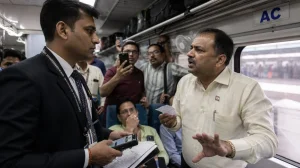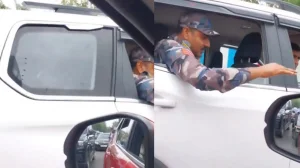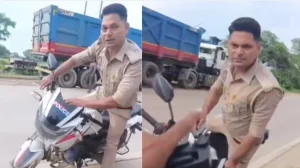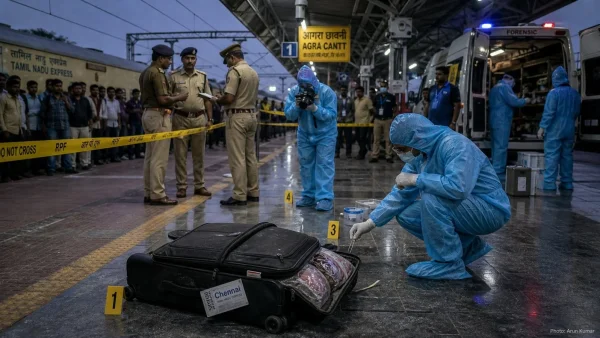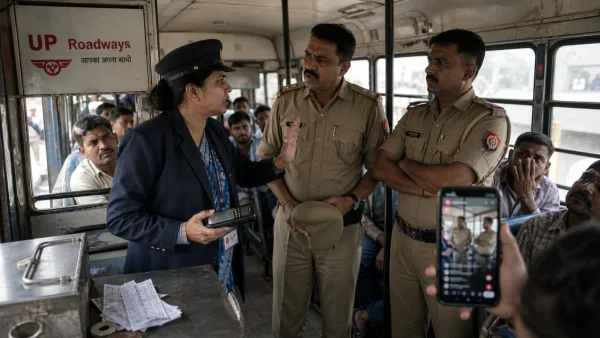
A video circulating on social media has sparked controversy after it allegedly showed Haryana Police personnel travelling on a UP Roadways bus without purchasing tickets, leading to an argument with a female conductor.
According to claims accompanying the video, the conductor requested the personnel to buy tickets, after which an altercation allegedly took place. Social media users have accused the police personnel of refusing to pay the fare and behaving rudely.
The authenticity of the video and the complete circumstances of the incident have not been independently verified. Authorities have not yet issued an official statement regarding the matter.
The Central Question: Are Police Allowed to Travel Free?
The controversy has prompted an important question.
Do police personnel have the legal right to travel free on state transport buses?
The answer depends on the rules framed by the respective state governments.
In some states, certain categories of police personnel are granted free or concessional travel while on official duty. Such benefits, where they exist, are governed by government notifications or transport department policies.
If no such provision applies, police personnel are generally expected to purchase tickets like any other passenger.
**Public Servants Are Expected to Follow the Same Rules
Police officers are entrusted with enforcing the law.
Because of that responsibility, citizens often expect them to set an example by complying with public rules and regulations.
If allegations of refusing to pay fare or behaving improperly are found to be true after an inquiry, such conduct could undermine public confidence in the institution.
At the same time, conclusions should not be drawn solely from a viral video before the facts are verified.
The Role of Bus Conductors
Conductors are responsible for:
Issuing tickets.
Collecting fares.
Preventing revenue loss.
Ensuring compliance with transport rules.
If a passenger is not entitled to free travel, the conductor has a duty to request payment.
They also deserve to perform their work without intimidation or abuse.
Should There Be an Inquiry?
If the incident is genuine, authorities may examine:
Whether the personnel had an official travel exemption.
Whether they were travelling on duty or privately.
Whether any misconduct occurred during the interaction.
Whether transport rules were followed.
A factual inquiry is essential before assigning responsibility.
The Bigger Question**
The debate extends beyond one bus journey.
Citizens generally expect that the law should apply equally to everyone—whether a passenger is a civilian, a government employee, or a police officer.
If free travel is legally permitted, it should be exercised according to the rules.
If it is not permitted, the fare should be paid like every other commuter.
Ultimately, public trust in law enforcement depends not only on enforcing the law but also on being seen to follow it.