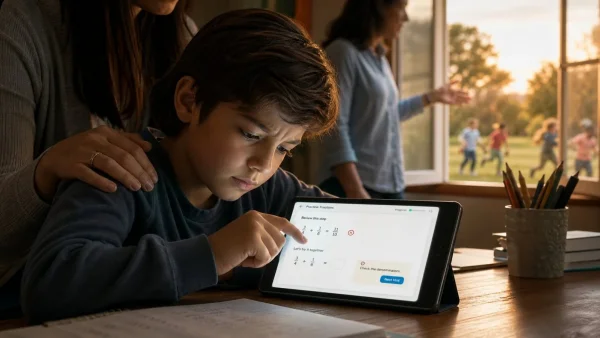
More and more schools are finding that smart learning tools have an unexpected consequence: students are becoming afraid of making mistakes and need to be sure they’re right. Because AI programs instantly correct work and give rewards for speed, both teachers and parents are noticing kids becoming anxious and aiming for impossible perfection. Now the real problem isn’t getting hold of the technology, but making sure children are emotionally strong.
What the research says about children and AI
Information from 2026 all points to the same thing. A study in the Journal of Child Psychology and Psychiatry in 2026 showed that spending too much time with very structured, digital systems that give lots of feedback can lessen a child’s ability to deal with uncertainty, and this can cause anxiety and perfectionism.
The American Academy of Pediatrics said in 2026 that playing without a lot of rules, time with family and doing things ‘in real life’ are still extremely important for developing a child’s ability to control their behavior, bounce back from difficulties, and get along with others. At the same time, a report from MIT Sloan Management Review in 2026 said AI can act as if it understands your feelings, but it doesn’t actually have feelings.
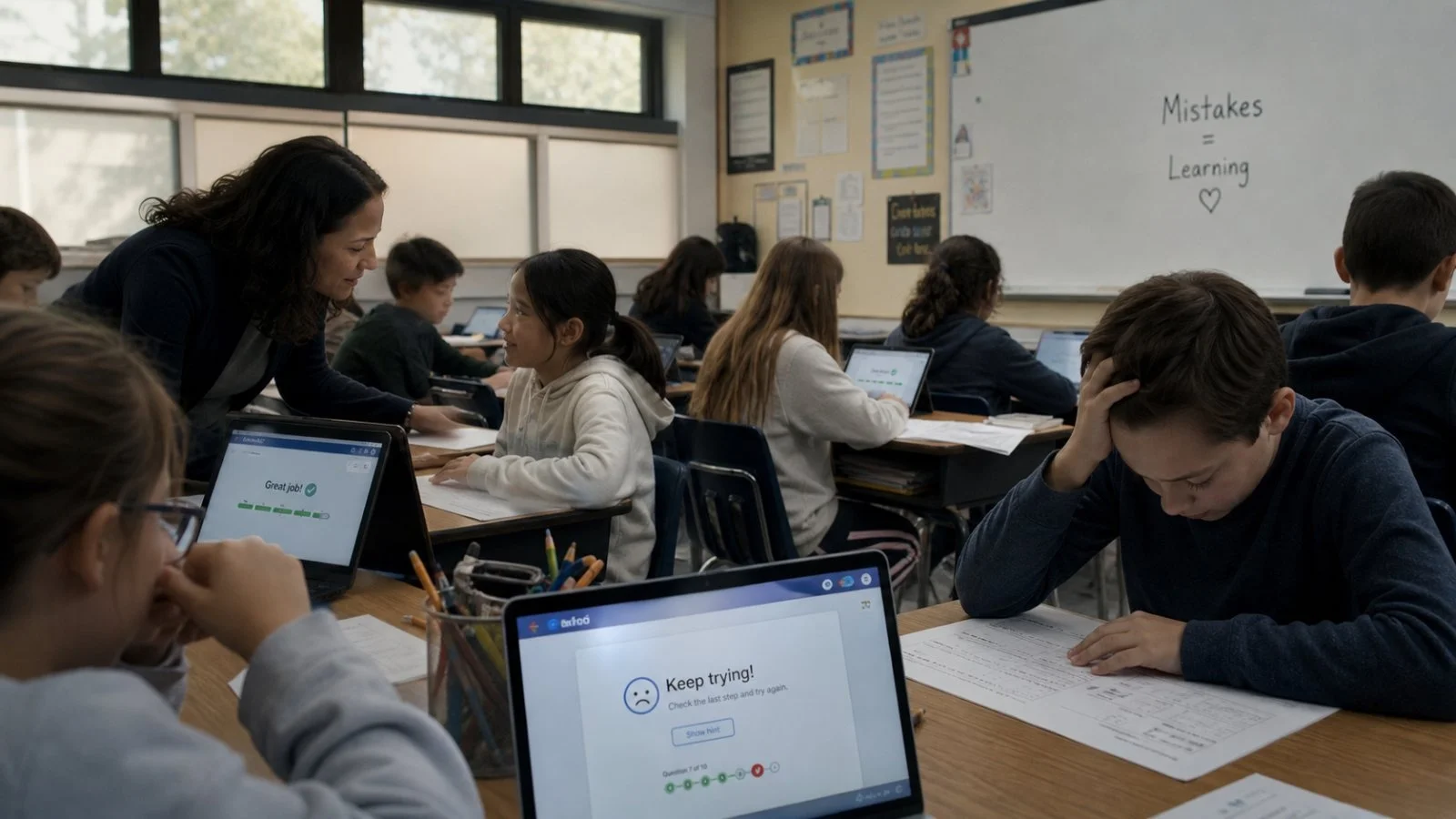
Inside classrooms: when smart tools become certainty machines
Learning apps today customize lessons, point out mistakes right away, and constantly monitor how a student is doing. Shyam Gupta, who runs Emotion of Life, says this kind of environment can gradually reduce how much a child experiences uncertainty, and uncertainty is a vital part of becoming resilient.
Gupta doesn’t believe technology causes Obsessive Compulsive Disorder, but he thinks a world run by AI can push children towards checking things over and over, having strict habits, and being uncomfortable with not knowing. He describes how children might wash their hands repeatedly because something just doesn’t ‘feel right’, or keep redoing work even when they’ve been told it’s good enough.
These habits get stronger when children think that doing something perfectly will keep them safe. Gupta is certain that children are protected by feeling emotionally safe, not by pressure. They need situations where making mistakes is normal, how they feel is valued, and it’s okay to not know something.
To help families and schools recognise early patterns, educators highlight these signals to watch for:
– Rigid routines that feel compulsory
– Excessive checking for reassurance
– Fear of making even small mistakes
– Distress when plans change unexpectedly
Skills machines cannot teach, and why schools must lead
Schools are facing a more important question: what skills should be given dedicated time in the school day? A 2026 report from the World Economic Forum said that being able to analyze and use technology is becoming more important, but skills like understanding others, leading, and influencing people are still valuable human qualities that computers can’t do.
UNESCO advised education systems in 2026 to focus on moral reasoning, understanding others, and human connection as well as digital skills, as AI becomes more and more part of learning. Professor DC Kiran of Vidyashilp University’s School of Engineering and Technology told the Times of India that emotional intelligence can’t be programmed and is developed through real life, listening and thinking things through.
Professor Kiran added that teaching children about technology should be done at the same time as teaching them how to connect with people, deal with uncertainty, and understand complicated situations. He says empathy, good judgement and self-control are essential for genuine learning and being a good citizen.
Practical steps for institutions
Schools seeking to rebalance AI-rich classrooms are adopting low-cost moves:
– Build in ungraded, open-ended projects
– Pair instant feedback with wait-time reflection
– Assess collaboration and ethical reasoning
– Schedule tech-light, outdoor learning blocks
These ideas show that being curious, having discussions and having a sense of right and wrong are just as important as getting things right quickly. Professor Kiran believes that empathy, thinking deeply and moral judgement will be what makes tomorrow’s leaders stand out and that education should help us remain human, not try to be like machines.
Home as the first lab for resilience
What happens at home, in the small things each day, decides whether technology helps children grow or adds to their stress. A 2026 report from UNICEF said that children’s emotional security, ability to understand others and resilience are mainly formed through good relationships with people who respond to their needs, not by using digital devices, no matter how advanced.
Dr Megha Agarwal, a psychiatrist at Kailash Deepak Hospital, said in an interview with the Times of India that computers can’t teach empathy, communicating or being aware of your feelings. She recommends having meaningful conversations, reading together, really listening to children and allowing them to say how they feel.
Dr Agarwal advises parents to expect children to make mistakes and to praise their effort, not just perfection. When children are encouraged to try, fail and learn, they develop the ability to keep going and be confident when things go wrong. Being creative is also important: while AI can give you ideas, children should be encouraged to use their imaginations and think for themselves, not just passively accept information.
Mealtimes and bedtimes are still valuable. Dr Agarwal suggests having meals without technology and no screens before bed to strengthen relationships and help people relax. The American Academy of Pediatrics’ logically based finding from 2026 about the value of doing things offline supports these habits.
Delay, create, reflect: building EQ daily
Shrishti Jaiswal, from JD Institute of Fashion Technology in Bangalore, says that building emotional strength starts with Emotional Intelligence. She advises prioritizing waiting for things in a culture of ‘click and get’. Rewards should come after effort, so children learn that real satisfaction is something you have to work for.
Jaiswal also thinks 'digital intelligence‘ should be based on ethics. Children need to understand both the good and bad sides of AI and use it to be creative, not as something to do their thinking for them. By balancing screen time with ‘soul time’ – like playing physically and solving problems in the real world – parents help their children become innovators, not just users.
Why this matters for students and institutions now
For students, the danger is subtle: constantly being corrected can make it feel unsafe to be unsure of something. Eventually, this can weaken their ability to cope with difficulties at exactly the time they need it most, whether it’s for exams, working in a group at college, or later on, at work.
For schools and universities, it’s important to have a plan. The 2026 MIT Sloan Management Review finding that AI doesn’t have genuine empathy, combined with the World Economic Forum’s emphasis on influencing others in 2026, shows that human skills need to be taught directly, and can’t just be expected to develop.
The institutional opportunity is clear:
– Treat emotional intelligence as a core outcome
– Audit edtech for reflection and ambiguity
– Create assessment rubrics for empathy and ethics
– Train teachers to model uncertainty tolerance
What comes next
We can expect to see more classrooms where AI-assisted practice is combined with careful thought. Teachers will probably add reflective journals, discussions with classmates and debates about ethics alongside tests that adjust to your level. Families can do the same at home with shared reading, playing without rules and clear boundaries for using devices.
Recent research on parenting from 2026 all comes to the same conclusion: while AI can help with learning, emotional strength comes from relationships and real-world experiences. If schools and parents keep uncertainty, understanding others and ethics as the main focus, children won’t just learn to use technology. They will learn to stay truly human in a digital world.