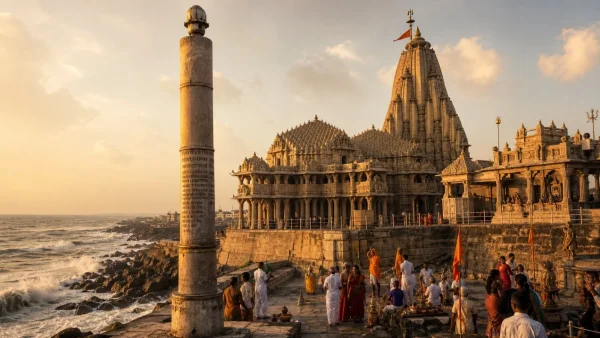
After being completely redone seventy-five years ago, Somnath Temple is being talked about again – not only because of people’s religious devotion, but because of what it stands for. For a lot of Hindus, this first Jyotirlinga on the Arabian Sea coast of Gujarat is a very strong symbol of faith and continuity. It has kept being rebuilt despite invasions, being looted, and difficult political times.
Why Somnath was rebuilt so often
In the past, temples were often used as places to keep valuables. Somnath was one of the richest temples in medieval India, and kings and merchants gave it a lot of gold, silver, and jewels. This wealth led to it being robbed, but the temple’s religious importance made it an even bigger target.
Because it was the first Jyotirlinga of Lord Shiva, Somnath was a key religious authority and important to the community’s sense of who they were. Every time it was rebuilt, it showed that the culture was continuing. Many people believe it was destroyed and rebuilt seventeen times, although historians aren’t sure about that number, most agree it was incredibly resilient.
Here are the drivers that kept the shrine returning to form:
– Reverence for the first Jyotirlinga
– Enormous temple wealth across eras
– Political symbolism for rulers
– Persistent local devotion and patronage
Conflict, raids and restoration across eras
The first problems for the temple probably came in the 8th century with Arab armies invading western India. Local leaders rebuilt it, and the religious ceremonies and pilgrimages that supported the region’s economy and identity were started up again.
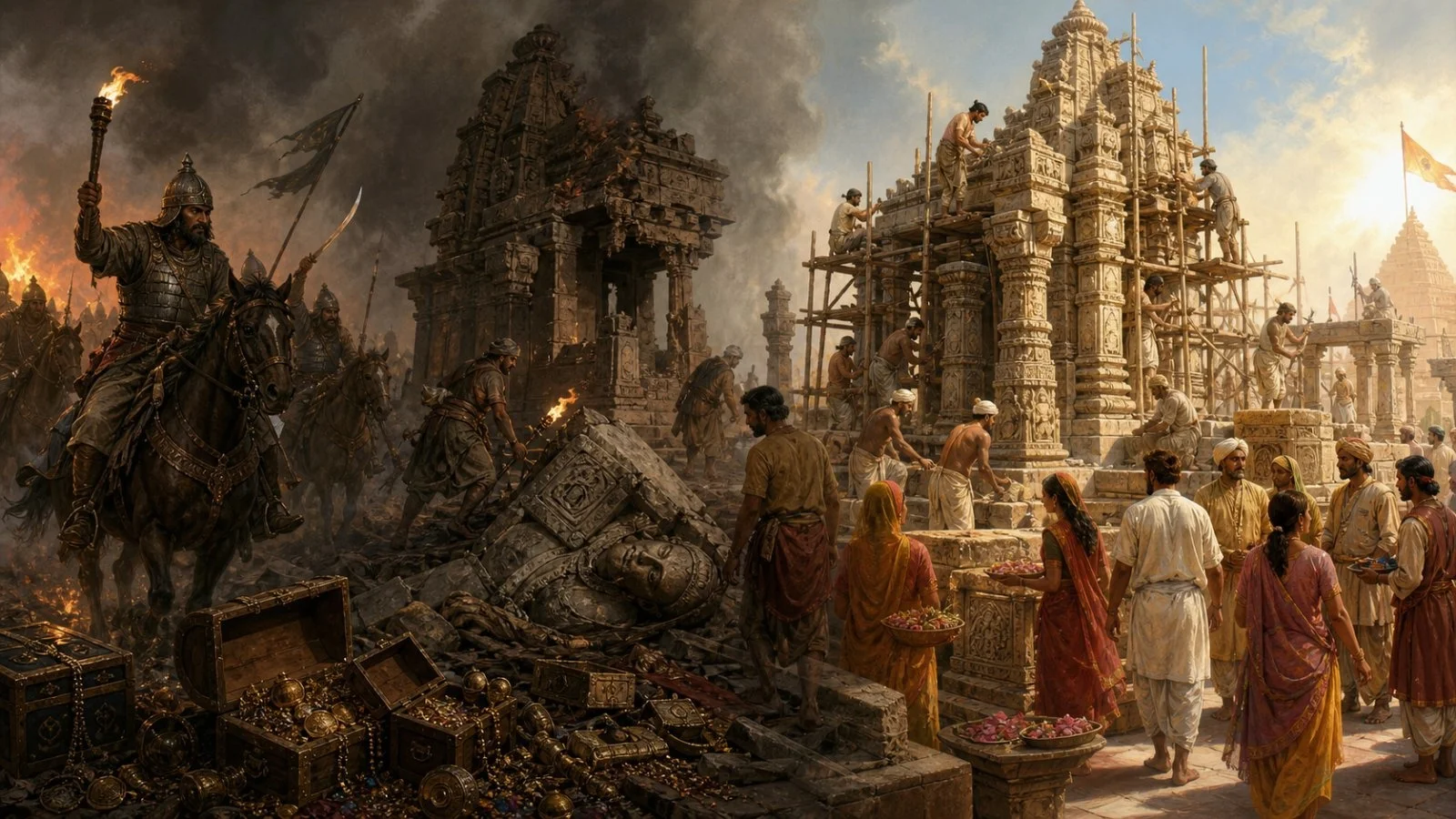
Mahmud of Ghazni’s attack on Gujarat is the most famous. Some say this happened in 1025 AD, others in 1026 AD. People at the time wrote about huge amounts of treasure, gold necklaces, gemstones, and the sacred statue being destroyed. The Solanki rulers rebuilt it and people began to worship there again.
In the late 13th century, attacks linked to Alauddin Khalji once more caused problems for the temple. Over the next few centuries, different ruling groups and fighting repeatedly damaged Somnath. However, the people and Hindu rulers continued to rebuild, and the act of rebuilding became a way of showing they would not be defeated and to celebrate their heritage.
The final major damage in the medieval period came from Aurangzeb, who, according to what’s written down, ordered the temple to be torn down in t06. Even then, people continued to worship at the site, but in a more private way, and the tradition continued, until a time when the nation would once more value it.
After India became independent in 1947, Sardar Vallabhbhai Patel visited the ruins and said Somnath had to be rebuilt. The current temple was rebuilt in the Chalukya style and was opened in 1951 by India’s first President, Rajendra Prasad. It is now both a religious place and a symbol of the country’s strength.
The contested ‘gates’ and colonial politics
Somnath was even used in the stories told by those in power. On November 16, 1842, Lord Ellenborough, the British Governor General, announced the return of what he said were “the doors of the Somnath temple” from Afghanistan as a way of getting back at someone who had insulted Britain. He tried to make British rule seem like it was helping Hindus.
But when the doors were looked at, they were found to be made of cheap pine wood, and weren’t made in India or from sandalwood. The UK’s National Army Museum says they were “made in Ghazni”. Ellenborough was criticized in Britain, with a discussion in the House of Commons in March 1843 and a strong speech by Thomas Babington Macaulay on March 9, 1843.
This story came up again before the temple was opened in 1951. On April 17, 1951, Radio Pakistan (Peshawar) said that about 3,300,000 “independent tribes from Quetta to Chitral” would stop the supposed doors of Somnath from being returned from Afghanistan. Four days later, Jawaharlal Nehru wrote to Liaquat Ali Khan saying this story was “completely untrue” and that the radio broadcast was “extremely irresponsible and a lie.”
Myth, geography and architecture
The original story of Somnath is about Soma, the Moon God. Shiva had freed Soma from a curse, and Soma is said to have built the first temple to him, made of gold. Later versions of the story say it was made of other materials, and finally of stone by ancient Indian kings. The temple is mentioned in the Rigveda and the Puranas; Prabhasa (the temple’s older name) means “place of brightness” or “splendour.”
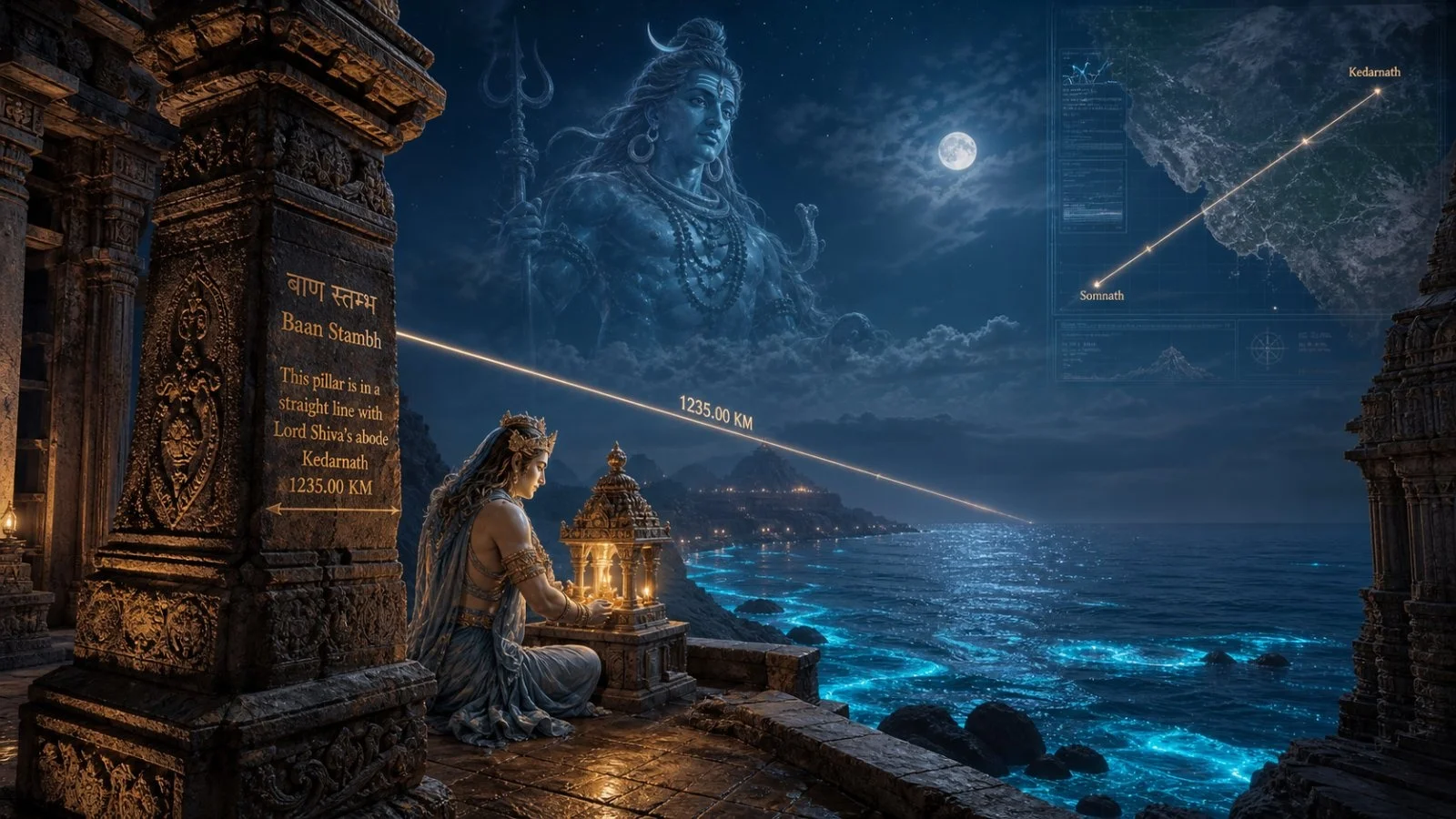
The temple is on the edge of the continent, and the waves crash against the shore. The Baan Stambh (Arrow Pillar) has an inscription saying there is no land between Somnath and Antarctica in a straight line over the ocean. Modern satellite information has shown this to be true. People who travelled in ancient times even said you could hear Somnath’s bells for miles out at sea.
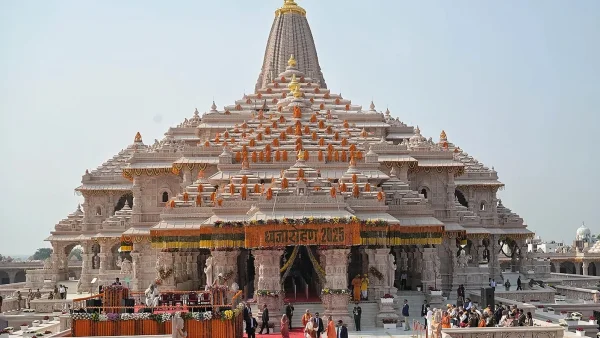
The current building is in the Maru-Gurjara style. The highest point (shikhara) is about 155 feet tall and has a large copper covering (kalash) on top. The walls have many detailed carvings of gods, plants, animals, and stories from myths. The Sabha Mandapa, the main hall for meetings, is based on stories about Shiva. The rebuilding is also said to be in the Chalukya style.
Travel essentials for visitors
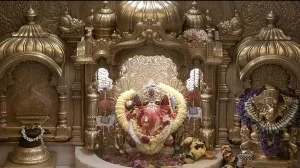
Somnath is a place for religious journeys and a unique experience, where religious ceremonies, history, and being by the sea all meet. The complex also has smaller temples and the Triveni Sangam, where the Kapila, Hiran, and Saraswati rivers are said to come together. People who come to visit usually wash in the rivers to become clean before they see the image of the deity (darshan).
Key timings and tips for a smooth visit:
– The temple opens from 6 AM to 9 PM
– Aarti is at 7 AM, noon, and 7 PM
– Light and sound show runs 7:45 to 8:45 PM
– Photography is barred inside the temple
– Dress modestly; follow security rules
Somnath in Prabhas Patan, Veraval, still attracts millions of people who worship and are just interested in visiting. Whether you go for the Adi Jyotirlinga, the sea views, or the many layers of history, the important thing is that Somnath was worth rebuilding, over and over, because the people decided it had to survive.