Cardiologist has cautioned that a typical part of most office jobs, something people usually don’t worry about, could seriously damage your heart. Common thing people do every day can double your chances of a heart attack, and he says people need to think about how long they sit.
Why this warning matters now
Heart disease is still one of the biggest causes of death, and it isn’ Prolonged sitting triggers what experts call metabolic slowdown. When your body is still, the enzymes that remove fats from your blood decrease, making it more difficult to manage fats and cholesterol. This sets off a chain of events that increases your risk of heart problems.
The World Health Organization’s 2024 information sheet says that not getting enough exercise is a major reason people die from diseases that aren’t contagious, and shows how a lifestyle where you don’t move much can increase the likelihood of dying.
According to the WHO, adults who don’t get the amount of activity they should have a 20 to 30 percent higher chance of dying than people who do move enough. Being inactive also leads to high blood pressure and obesity, both of which are early stages for heart failure.
What the cardiologist is seeing in clinics
In 2022 the WHO pointed to a study which showed that inactivity is related to around $27 billion in direct medical costs around the world each year. Most of this is because of big increases in type 2 diabetes and heart disease, and these conditions are closely connected with spending a lot of time sitting.
“This daily habit doubles your heart attack risk, and most people don’t even consider it.” Cardiologist found the same thing in hundreds of patients: they simply aren’t moving sufficiently.
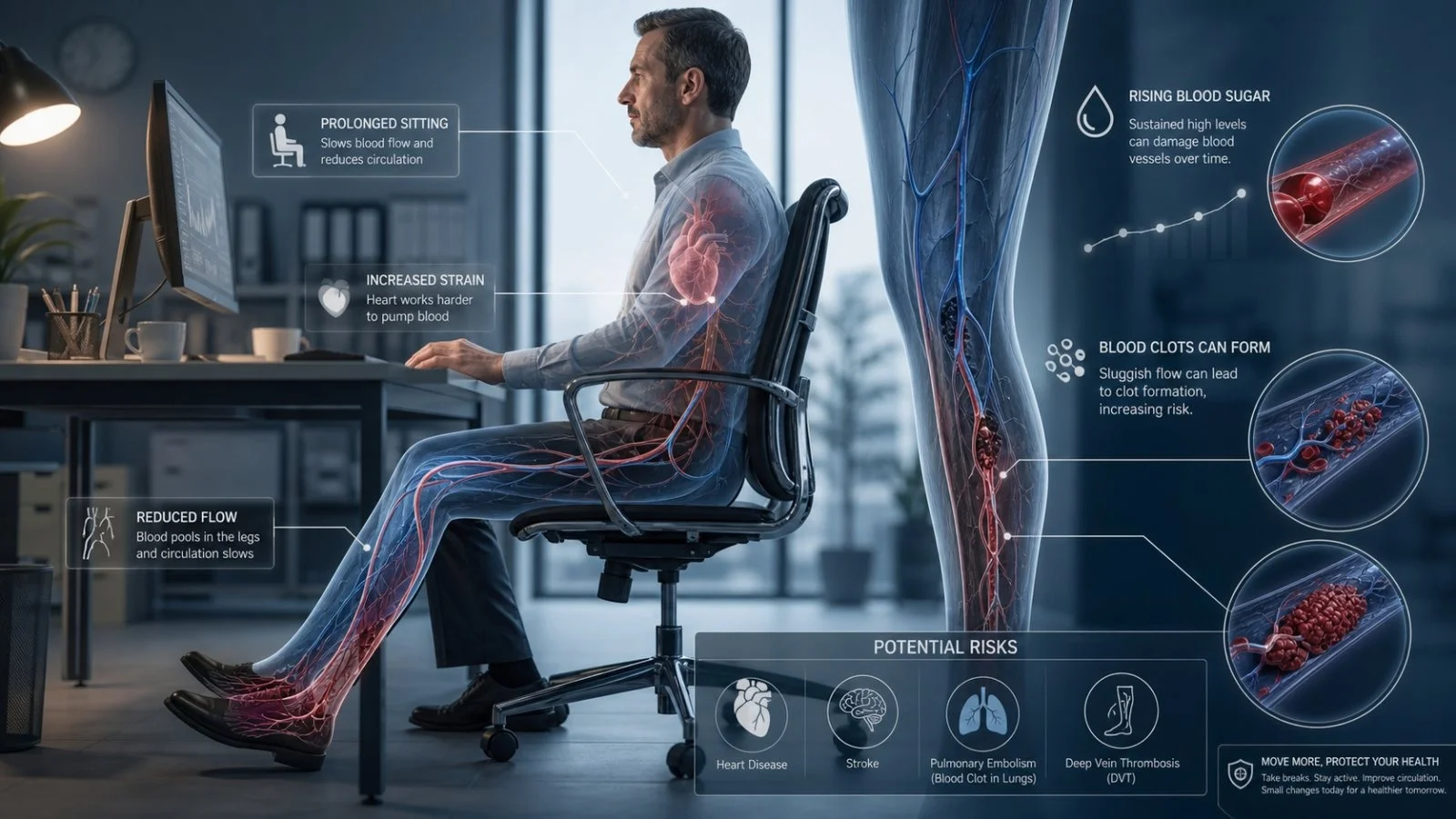
One thing that always appears is people not moving enough. Sitting for a long time slows down blood flow, increases blood sugar, and makes blood clots more likely. This is how the risk of a heart attack or stroke goes up.
The science behind sitting’s hidden strain
Doctor advice is direct, but workable, isn’t suggesting complicated exercise programs, but a change in how you spend each hour, choosing to move a little bit often instead of sitting at your desk for a very long time.
Our bodies are made to be in motion, not to be stuck at desks and on sofas for hours. As blood flow slows, controlling blood sugar becomes harder, and blood clots become more likely. Eventually, these changes contribute to high blood pressure and obesity, both of which are strongly linked to heart disease.
The problem isn’t your job itself, it’s the lack of movement that’s now a normal part of modern life. How we arrange our days can go against what our bodies need, unless we make sure to include movement.
Key effects of long sitting, according to clinicians
Doctors and global data converge on the same concerns. Here are the recurring physiological red flags they highlight:
– Blood circulation slows and becomes sluggish
– Blood sugar rises and is harder to control
– Clot risk increases with immobility
– Cardiovascular risk accumulates over time
The simple shifts that lower risk
Doctor believes the solution begins with small movements. They suggests breaking up long periods of sitting throughout the day, instead of only doing one workout. The point is to stop the stillness from building up.
They recommends a simple routine: “Get up every 30 to 60 minutes. Walk around. Do a few squats. Move your body every day. It really is that easy.” Short, frequent breaks can get your blood circulating and help keep your blood sugar steady without needing any equipment.
These changes are especially helpful for people who work at desks, those who travel to work, and anyone who spends a lot of time looking at screens. Even a little bit of movement can add up to significant protection for your heart.

Micro-moves heart doctor recommends
To help readers act immediately, here are the core prompts he highlights:
– Stand at least once every 30-60 minutes
– Take brief walks between tasks
– Do a few squats to wake up muscles
– Keep daily movement non-negotiable
What this means for your day
Think of the work day as having chances to be active. Getting up to read something, walking while you’re on the phone, or doing 30 seconds of squats can balance out the harm of sitting. It’s not about being perfect, but about being consistent.
You can also use things in your surroundings to help. Put your water far from your desk so you have to get up to get it. Use a timer that goes off frequently to remind you. And if you can, replace a meeting where you sit with a short walk.
It’s also good to think about exercise in a new way. Going to the gym is good, but it won’t cancel out eight hours of sitting. Those short breaks each hour are what really help your heart, and they can fit into any schedule.
The bottom line
Is that sitting for long periods without interruption is a danger to your heart that’s easy to overlook. This has both a cost to your health, and a financial cost, from a higher chance of heart attack and stroke, to the $27 billion in costs linked to inactivity.
The solution is something you can do right now. Stand up, walk around, and do a few strengthening exercises. Do them as often as you check your email. Your heart will ‘feel’ those minutes as being protective.
As doctors’s warning makes clear, the habit of sitting for too long which doubles your risk of a heart attack is something you can stop doing today.