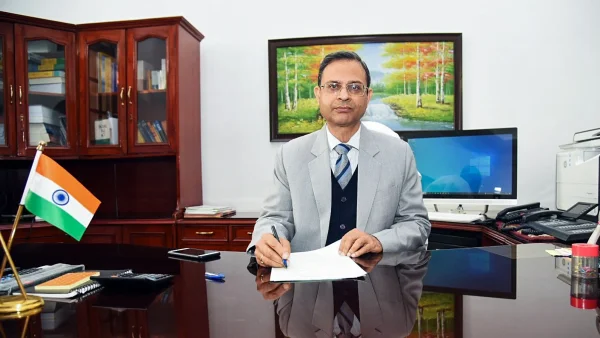
The message to India’s currency markets is unambiguous. If we see speculation building, the RBI will be there to make sure the rupee doesn’t get too wobbly. “We are prepared to do what is necessary,” said Governor Malhotra, to keep price discovery in order. With close to $700 billion at our disposal, we can stabilise matters even as the rupee lingers around 100 to the dollar.
RBI’s line in the sand: volatility, not a level
Malhotra was clear that we don’t stand behind any given exchange-rate number or band. What we’re after is to stave off the kind of high-frequency, abnormal swings and undue speculation that can rattle the forex market. He put it down to the sort of intervention the world is used to, in the service of financial stability.
He made a point of saying the central bank has the means, and the roughly $700 billion in forex to back it up, to counter any disruptive moves. It’s about how the market works and where the price is found, not some target we’ve set for the rupee.
Is the rupee now undervalued?
You could say the currency has been overvalued no more. Since the situation in the Middle East flared up on February 28th, the rupee has softened by some 6%.
In nominal and REER terms, one might make the case it’s undervalued at this point. And when the West Asian tensions run their course, as they have with other external shocks before, we could well see the rupee put in some appreciation.
External balances: pressure points and buffers
There’s no question that if crude stays high, the current account deficit will be put under strain. But Malhotra sees some natural hedges: we have strong services exports, gold imports are coming down, and remittances are holding steady.
Looking at the balance of payments as a whole, he didn’t see cause for alarm. That said, we have to keep working on it – to put our export and energy security in better shape and make it easier to do business here.
Capital flows and rupee internationalisation
Foreign direct investment has been solid, with inflows hitting a record $94.5 billion in 2025-26. The governor is hopeful we’ll see some of the outflows and repatriations tone down from here, which is good for our financing needs.
We also want to see the rupee used more in the world. So we’re in talks with the UAE, Indonesia, Mauritius and the Maldives to set up local currency deals, giving us more to work with than just the dollar for trade.
Policy stance and digital rails
When it comes to rates, there’s no two ways about it: inflation is our first and last call. As long as the numbers allow, we have the leeway to be supportive of growth from a neutral position.
Then there’s the CBDC. We’ve put over 1 crore users on board through 19 banks and a couple of non-banks, so the digital side of settlement is moving along nicely, in step with what we’re doing in the currency markets.
In a nutshell, the RBI’s plan for the near term is this:
– We look after the market, not a rupee figure
– If there’s a lot of speculation, we act
– Our $700 billion in reserves are there for it
– Inflation is what we steer by
Why it matters now
Geopolitics have put the rupee in a tough spot. Malhotra’s way of handling it is to set expectations without making hard promises. It’s a matter of nipping one-way bets in the bud while we keep our options open.
From here, it’s all about what happens in West Asia and where oil goes. Should things quiet down, the RBI is counting on a wider stabilisation, and the fact the rupee is seen as undervalued could be the opening for a bit of a recovery.