A July 12 opening from Sriharikota will see Skyroot put Vikram-1 up for a shot at history, and with it, a turning point in India’s private space ambitions. In a time when there are few smallsat launches to be had, this could well be what rewrites the rules for India in the commercial arena.
Why this is a big deal
‘The moment Vikram-1 is in the air, we’ll have put our foot over a line the private side of the industry hasn’t been on before,’ says Pawan Kumar Chandana, co-founder and CEO of Skyroot.
You can trace the path to this orbital try-back to the policy changes that let the likes of IN-SPACe in, and to the suborbital run of the Vikram-S back in November 2022. Skyroot will tell you that was enough to prove out some 80 per cent of what goes into the Vikram-1.
It’s a step up from a suborbital hop to putting something in orbit, which means you’re no longer just showing what’s possible but offering a service to those who will pay for it. That puts India in the company of not many other countries with their own private orbital hardware.
What to expect from the launch
They’ve put a date on the calendar for the Aagaman maiden flight: any time between July 12 and August 4. Of course, that’s if everything checks out with the final build and tests at SDSC-SHAR in Sriharikota, and the weather and range are in order.
Skyroot has all the pieces in place and stacked on the pad. They are after a 450-kilometre circular orbit at a 60-degree tilt, and they have a combination of local and overseas customer cargo to deliver on this run.
Make no mistake, Aagaman is about the numbers. It’s a way to confirm the engineering before they go to market with a vehicle that can handle 350 kilograms of satellite in low Earth orbit.
There are a few key systems they want to put under a microscope while in flight:
– Propulsion
– Stage separation
– Guidance
– Navigation and control
On the tech front
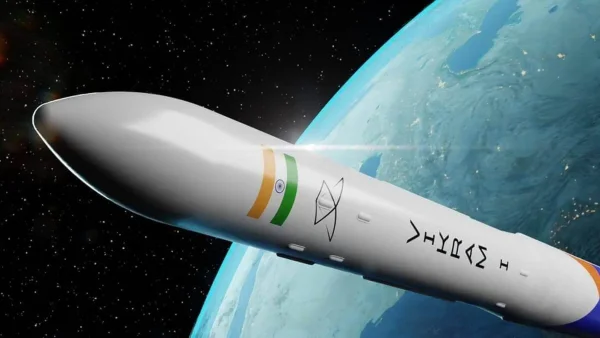
At the size of a seven-storey building, the Vikram-1 is an all-carbon composite with the kind of in-house propulsion you don’t see everywhere. You’ll find 3D-printed engines and high-thrust solid rocket motors in its make-up, all with an eye on being as efficient and quick to produce as possible.
Then there’s the matter of the mission profile. Put aside the suborbital run of the Vikram-S; this one is for orbital insertion. The room for error is a lot slimmer, so you have to be on top of your stage separation, attitude control and guidance to get to the right inclination.
“We want to see how the vehicle does from the moment it leaves the pad and up through the rest of the ascent,” said Chandana. “You can’t get that kind of data on the ground.”
Commercial strategy and competition
Skyroot is after the small satellite segment, which is where the growth is. They aren’t going to tangle with the heavy-lifters; instead, they’re offering something more nimble than a rideshare: a custom mission to an orbit of the customer’s choosing.
Chandana calls it like a “cab or Uber to space” for when you need to get there. “There’s not much launch availability out there in the coming years,” he noted. “So a new vehicle with what we can do is a big deal for the industry.”
They figure on a couple of demo flights to put in some time before they go all-in on commercial work. It’s about building a record, particularly with upstarts like Agnikul Cosmos in the mix.
“The market can handle more than one of us,” Chandana said. “But if you’re first and you’ve got a proven rocket, you have the edge.”
Investor backing and policy tailwinds
On the money side, you have GIC, Temasek, Sherpalo Ventures and BlackRock funds in their corner. That, along with some regulatory changes, has given Indian startups in the launch and satellite space a leg up.
A good Aagaman would be a case in point for India’s commercial space story: more frequent, on-demand and cheaper access to low Earth orbit for anyone in the world.
What to watch next
The rocket is in place at Sriharikota, making July 12 the earliest we could see a liftoff in the window they’ve set. Of course, the weather and range will have the final say until August 4.
For now, Skyroot is calling it a tech demo. Hit the marks and they’ll fine-tune the design and build up to a steady stream of small-sat launches.
As the window opens, keep an eye on:
– The last of the test reviews
– When exactly they light off
– How the orbital insertion and data come back
If Aagaman goes off without a hitch, it will be more than just a win for Skyroot. It could be the start of something for India’s private sector on the world stage.