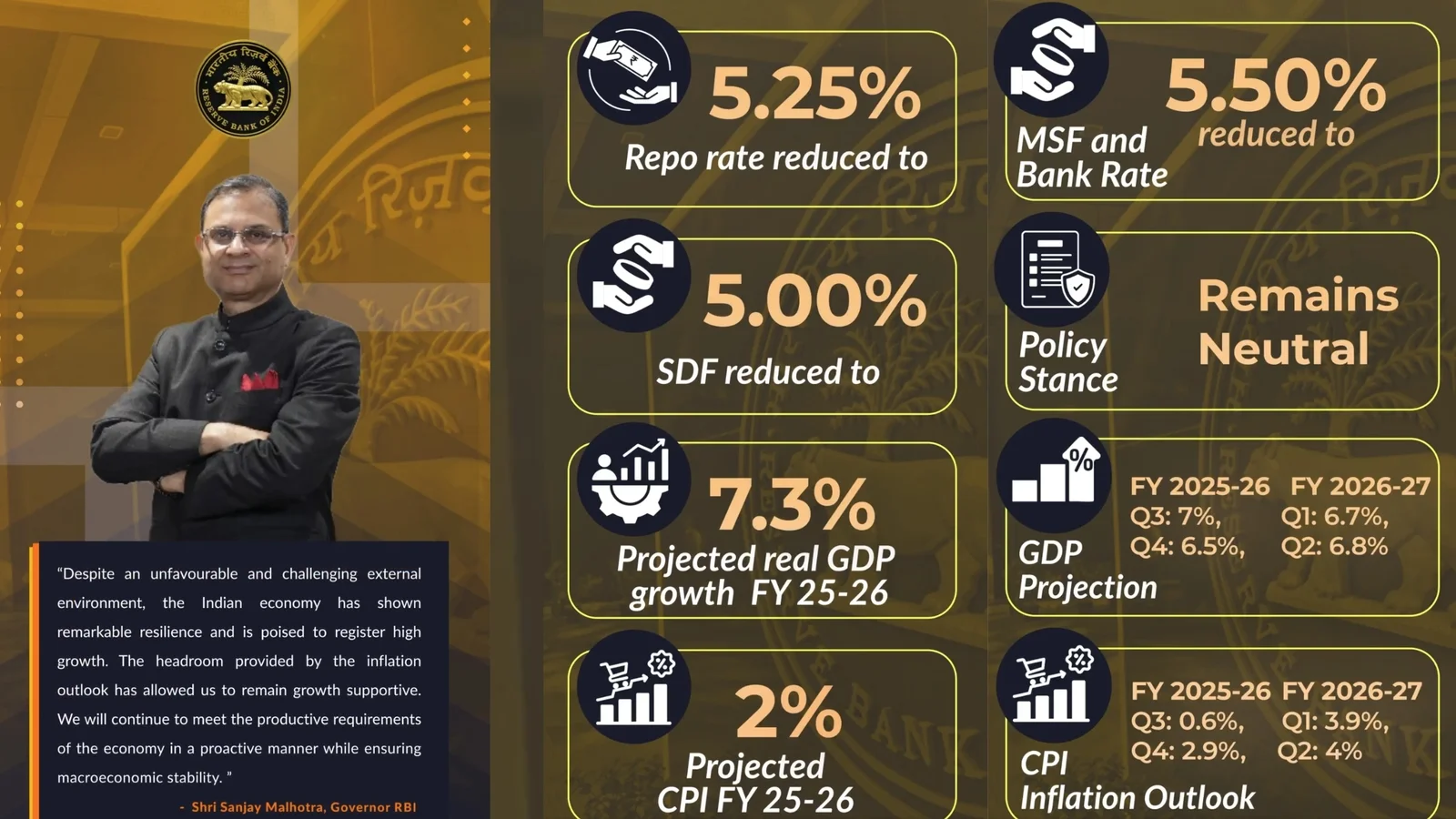
The rate cut was what most people expected, and the Monetary Policy Committee all agreed to lower the repo rate by 0.25% to 5.25% while remaining flexible. This happens with a lot of ups and downs in world trade, a continuing weak rupee, and a definite attempt to help the economy grow without causing prices to go up too quickly.
Repo rate cut: what changes now
The repo rate is the rate at which banks borrow money from the RBI for a short time, using government bonds as security. When the repo rate is lower, banks can get money more cheaply, and this should lead to them lowering the rates they charge you for a loan.
With the policy rate at t5.25%, loans tied to external benchmarks like EBLR should decrease by 0.25%. Over the next few weeks, banks might also lower rates based on MCLR as the effects of the rate change work their way through the system. This means you could pay a little less each month on your house, car, or business loan, making them more affordable and encouraging people to borrow.
The RBI is staying neutral, meaning they could raise or lower rates depending on what happens. This ends two meetings where they didn’t change rates and shows how the RBI is trying to both support growth and keep prices stable.
Growth outlook upgraded
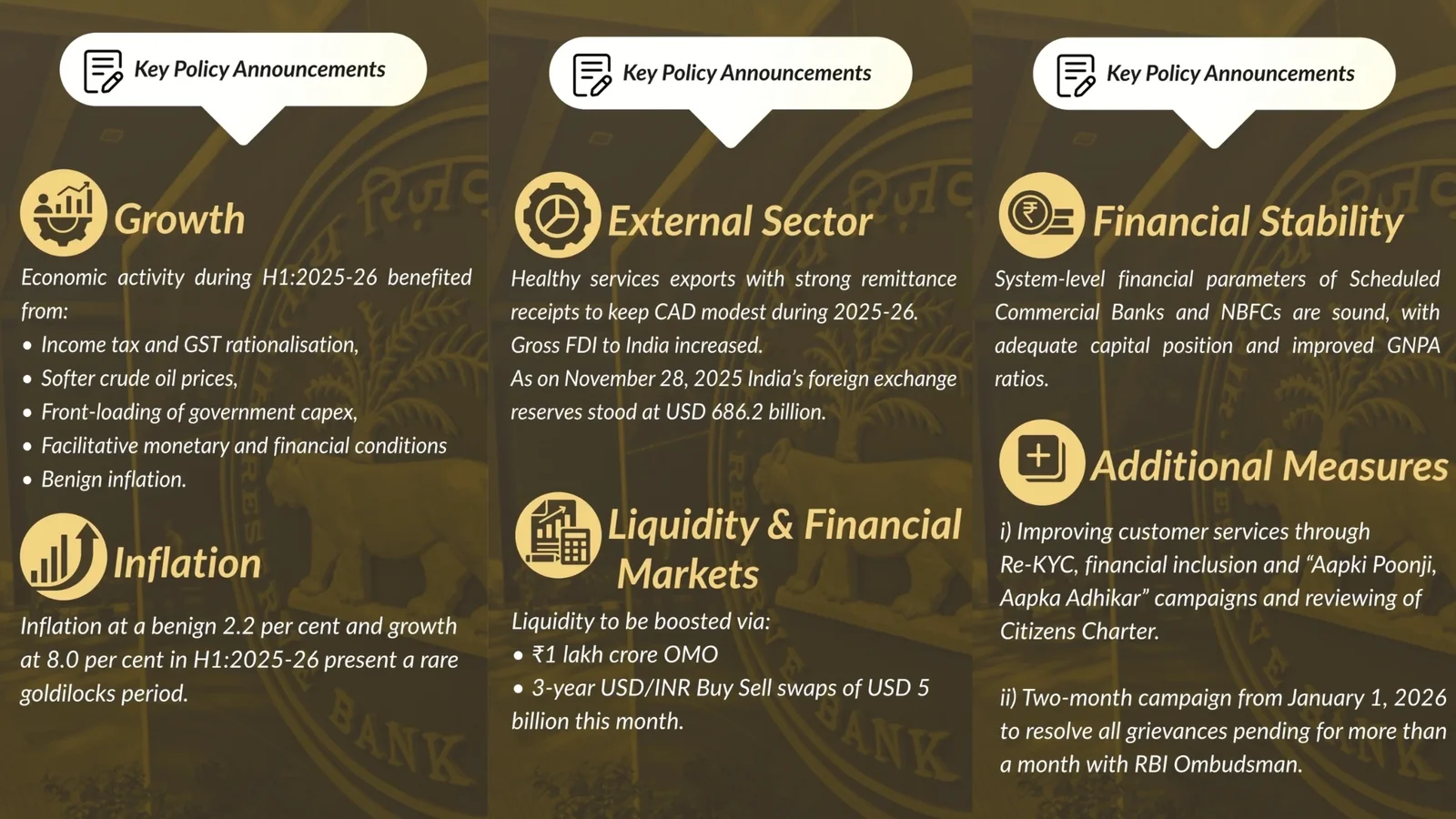
The RBI now thinks the real GDP will grow by 7.3% this year, because things are doing better than expected in many areas. This is up from their previous prediction of 6.8%. The stronger economy, combined with the policies the RBI is following and improved financial situations, are the reason for the improved outlook.
Inflation outlook tempered
They’ve also significantly lowered how much they think CPI inflation will be. They now predict an average CPI of 2.0% for the fiscal year 2026, compared to 2.6% before. They estimate it will be 0.6% in the third quarter, 2.9% in the fourth quarter, 3.9% in the first quarter of the fiscal year 2027, and 4.0% in the second quarter of the fiscal year 2027. This shows that prices will slow down in the short term, then slowly move back to a more acceptable level in the medium term.
Because inflation is predicted to be lower, the Monetary Policy Committee has more room to focus on growth, as long as things on the supply side don’t change and the first round of price increases don’t cause a chain reaction. Remaining neutral gives them options if prices unexpectedly go up.
Rupee measures and liquidity support
The rupee has fallen to over 90 to one US dollar, so the RBI has taken specific actions to stabilize the currency and maintain enough money in the system. They will do a three-year buy/sell swap of $5 billion of US dollars for rupees, and buy 100,000 crore rupees worth of government bonds on the open market.
In total, the RBI is planning to put roughly 150,000 crore rupees into banks in December. These actions will balance out money that has left the country because of interventions in the currency exchange market, make sure the effects of the rate cut reach the economy, and keep the market running smoothly.
Combining the swaps and bond purchases gives the RBI more ways to manage how much the currency changes without making it harder for money to be available in the country. It also helps banks continue to lend as rates fall.
Sector impact: who gains from a repo rate cut
For property, lower home loan rates will make buying a home more affordable and could revive the housing market, especially for moderately priced homes. For cars, cheaper monthly payments will help people buy two-wheeled vehicles and cheaper cars, and having more money available will help dealers get financing. For infrastructure and basic industries, the lower cost of borrowing will benefit large projects and help steel, cement, and building companies. For fast-moving consumer goods and things people buy for the home, easier access to credit could increase spending, and this might even spread to the countryside.
However, banks might reduce the rates they pay on savings accounts and fixed deposits, which could push people to invest in stocks, mutual funds, or property. People with savings should think about how their investments are split as returns change.
Risks to watch
Easier access to money could eventually cause prices to rise if demand grows faster than supply. There are still risks from outside the country, including uncertainty about how the world economy will grow, changes in the price of commodities, and how much the value of currencies change. The RBI’s neutral position shows they are aware of all these competing influences.
Banking ecosystem and consumer protection
Besides rates and money available, the RBI announced a two-month campaign starting in January to deal with customer complaints and strengthen how they handle problems customers have, and to improve service and build trust in the financial system.
What it means for borrowers, businesses, and markets
Borrowers can expect a small but noticeable benefit as banks pass on the 0.25% rate cut to EBLR and eventually to loans based on MCLR. Businesses will have lower borrowing costs and more credit. The markets will benefit from the RBI clearly stating their plans, actively providing money, and steps to stabilize the rupee.
In essence, the RBI’s plan is to achieve three things at the same time: help the economy grow, keep inflation expectations under control, and make the currency more stable. Because inflation is expected to fall and the economy is doing well, the RBI has allowed for easier financial conditions, while still watching out for problems from the global economy and how prices are changing at home.