Trump has put Iran on the table as a new place to put American grain, a way to funnel $12 billion in held-up assets into US farm exports. The problem is, as you might expect, Tehran says Washington doesn’t get to call the shots. This kind of run-in is at the heart of the delicate efforts to put an end to the war in the Gulf.
What he’s on about
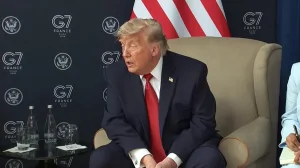
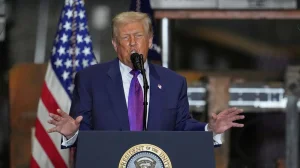
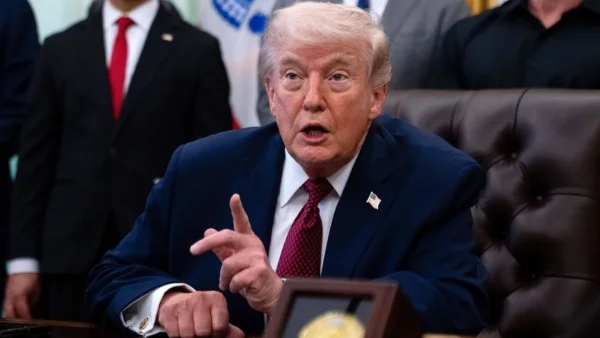
According to Trump, there is a plan in place to take those old, frozen funds and put them toward buying up American wheat, soy and corn for the Iranians. He put it to some growers at the White House as a no-brainer for the farmers: “We’re going to be doing this very big and very soon,” he said.
He made the case again at another get-together with farmers, touting ‘The Lovely Country of Iran’ as a ‘new market coming up.’ He pointed out that they are in a tough spot when it comes to food and that his approach would be a win for both sides – less of a shortage for them, more sales for us.
Put it in writing, he did too: ‘The Money and/or Sanctions that the U.S. Treasury is releasing goes into escrow, controlled by the U.S.A., and will be used for the purchase of food and medical supplies, exclusively from the United States, including Corn, Wheat, and Soybeans from our great American Farmers.’
Tehran has other ideas
You won’t find any Iranian officials who are on board with Washington running the show. Esmaeil Baghaei of the Foreign Ministry was clear: the assets will be put to use with ‘absolute freedom’ to get what the nation needs.
If we are to buy your crops, he said, it will be on ‘price and quality,’ not on whatever Washington puts in front of us. Ali Bahreini, the ambassador in Geneva, put it simply: ‘Iran is the only country that decides what to do with those assets.’
Then you have MB Ghalibaf, the head of Parliament, who just flatly called the notion that we’d be using unfrozen cash for their produce false. You can see where the mistrust is coming from.
Selling it to the home crowd
This is aimed right at the heart of US agriculture. Vice President JD Vance put it like this: if we free up the assets, it will ‘make American farmers richer and feed the Iranian people.’ And under the MOU, there’s to be $500 million in American goods to start with, per Trump.
It’s also a message to his base. Even in the reddest of farm country, there has been some pain in his second term as the government has reined in on some of the old purchase and aid programs, and with them, the steady demand for what they grow.
Market implications
If you go by the numbers, you could be looking at $12 billion moving through a channel that for now is for humanitarian wares only. It makes US grain the way in, without having to open the floodgates to the rest of commerce.
But don’t count on it being a bonanza. Some in the know think the volume will be modest for a while and that the Iranians aren’t in a hurry to part with the suppliers they have.
Where the talks stand
After Trump put his name to a US-Iran understanding in Versailles, we had a first round of talks in Switzerland. On paper, $12 billion in frozen assets are to be let go, but the fine print shows where we are at odds.
Trump is calling it a humanitarian move to put food and medicine on the table. ‘Talks are going well!’ he’ll have you believe. Iran, for its part, is holding the line on sovereignty, which could be a problem before we get to a final accord.
Here is how each side is putting it:
– We want to put US food and medicine in escrow
– They want to do with the released funds as they please
– Farm products are the linchpin of the deal
– We are talking $12 billion in total
The bottom line on hunger and hardball
There is no question things have gotten expensive in Iran. We’re seeing 308 per cent in vegetable oil, 190 in chicken, 170 in rice. Trump says if we point the money at our crops, we are being good neighbours and giving our producers a sure thing.
Will it work or not? That hinges on the escrow. Right now, neither side is ready to back down, even as they feel out a small trade route for the likes of wheat and corn.
It’s a matter of design. Do it right and you have a new, sanctioned market for our farmers and some staples for Iran. But if we can’t agree on who has the keys to that $12 billion, the door may not open at all.