It was a case of one thing leading to another on Dalal Street this Monday. A bit of calm in West Asia had the effect of riling up Indian stocks in the sector by as much as 7%, all in the wake of the U.S. and Iran putting pen to paper on an accord to call off hostilities and unblock the Strait. It was the kind of news to put the fear of oil out of mind and make you think we might be in for a return to form in travel.
Market reaction and the bigger trend
The money came in right away. You saw investors put their chips on the table with airlines and online booking sites, on the theory that with fuel cheaper and routes more predictable, they can put some meat back on their margins. Brent crude gave up 4 per cent after the word got out, and there was a lift in Asian equities to match.
When it comes to aviation, you usually see the effects of geopolitics in your fuel bill and where you can fly first. But with a major chokepoint about to be opened, the story is no longer about being put in a bind. How fast we get to a state of normalcy will tell us how well load factors and yields do in the months ahead.
Winners in Monday’s trade
InterGlobe, behind IndiGo, was up 4.5% to hit Rs 4,920. SpiceJet was even more of a mover, jumping 7.35% to Rs 13.20 as the market made sense of the softer crude and better outlook for operations.
Then there were the travel sites. Yatra Online was up by 5 percent or so. MakeMyTrip and Easy Trip Planners also put in some gains of 3 and 2 percent respectively, which is what you’d expect when the mood is right and you think the curbs on travel are going to be let go.
What the deal signals
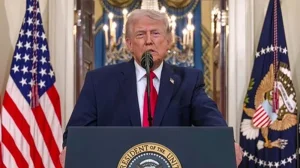
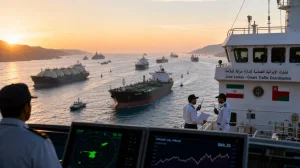
There is a good deal of good feeling in the market, and for good reason. “The Deal with the Islamic Republic of Iran is now complete,” President Donald Trump put it, before adding, “Ships of the world, start your engines. Let the oil flow”. He was clear that the Strait of Hormuz would be ‘toll free’ for vessels.
Trump made it known the U.S. would be standing down from its naval cordon on Iranian waters. And from Pakistan, who put in some good work as a middleman, we have it that the two sides will be in Switzerland on Friday to formalise a memorandum of understanding. It’s a step forward after a long period of friction.
Official statements and timelines
To be on top of what’s being said, here are the salient points:
– The draft has the Strait of Hormuz opening up
– No tolls on passage, per Trump
– End of the U.S. hold on Iranian ports
– An MoU to be put in place on Friday, says Pakistan
– We should see the Strait open in 30 days, with Iran in the driver’s seat
– A 60-day ceasefire is on the table while talks carry on
Operational backdrop for airlines
Carriers have been feeling the heat. All the posturing has meant more rerouting, more cancellations and pricier crew costs, not to mention a dent in the mood for travelling. If you have a leaner balance sheet, these are the kinds of expenses that stick with you.
Take IndiGo, for instance. They called off every flight to and from the Middle East when the war broke out. Not long ago they did the same for Manchester, and you could see how the ripples were being felt across the network.
They’ve also put a stop to services to a string of destinations – Langkawi, Krabi, Ho Chi Minh, Hong Kong and Shanghai – come July 1, 2026, with Siem Reap to follow on the 3rd. These won’t be back until the end of September.
What investors will watch next
Now that the initial sigh of relief is over, traders want to see some proof in the pudding. As the ships get moving and insurance rates maybe come down, it will be interesting to see how capacity holds up and what it means for the September quarter’s numbers.
A few things to keep an eye on in the near term:
– How quickly the Strait of Hormuz gets back to business as usual
– Where crude is heading in the wake of the news
– What the airlines are doing with their schedules and no-shows
– Bookings and the price of a ticket on the important routes
The fine print is part of it too. Mehr, a semi-official outlet in Iran, has the draft calling for the Strait to be open in 30 days under their watch. Deputy Foreign Minister Kazem Gharibabadi has said they will be at the table for a wider agreement during the 60-day lull in fighting.
At the moment, the market is in the mood for some certainty. Get the MoU signed in Switzerland on Friday and the lanes open when they’re supposed to, and you’ll have the wind in your sails from the cost side of things. That’s what happened on June 15, 2026, when the money spoke.