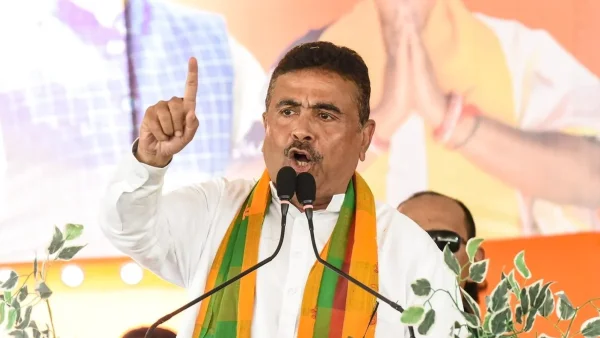
You could call it a new way of doing things in West Bengal – a push to put jobs and enrolment right at your doorstep. The Centre has put down Rs 8,500 crore for the state under the VB-G RAM G, as per Chief Minister Suvendu Adhikari. He made the case for it on June 15, 2026, in the middle of a three-day, state-wide effort to put citizens in touch with their welfare.
What the new allocation means
“We’re not just expanding support for livelihoods, we’re making sure the delivery is tight,” said Adhikari of the Viksit Bharat-Guarantee for Rozgar and Ajeevika Mission Gramin. In his view, this is what has come in place of MGNREGA, and it comes with a firm promise: 125 days of work a year for any rural household.
Then you have the money for roads. Adhikari pointed to the Gram Sadak Yojana, where the Centre has approved Rs 2,400 crore and let go of Rs 1,000 of that already. It’s a two-pronged approach to jobs and hard infrastructure, with an eye on results for those who can prove they are the ones who should be there. Here are the figures from the Chief Minister: – VB-G RAM G: an Rs 8,500 crore pot for West Bengal – Gram Sadak Yojana: Rs 2,400 in the books, with Rs 1,000 in hand – 125 days of guaranteed employment for the countryside – 1,100 Jan Kalyan Shivir camps between the 15th and 17th of June
Jan Kalyan Shivir: three days to get in line
From Nandigram in Purba Medinipur, Adhikari opened up the Jan Kalyan Shivir as the front door to 54 Central and State programmes. If you want to put in an application or see what you’re entitled to, the camps are open from 10 to 5. Word from the ground is that the lines were long on day one for things like Annapurna and Ayushman Bharat. This is the first time the BJP in West Bengal has put on a show of force like this, to have 1,100 venues where you can get everything under one roof.
Getting to the real beneficiaries
Adhikari was blunt about the irregularities he saw in the old regime’s numbers. “We want our benefits to go to the genuine article, not some phony account holder,” he put it at the launch. And it’s not for undocumented migrants, either. He made a point of asking why a family would be given a hand if they don’t put their kids in a proper school, or in one where ‘Vande Mataram’ is part of the routine. You can see the administration is moving to a harder line on who qualifies.
The jobs-infrastructure link
What you have here is a plan that puts labour side by side with building something of value in the village. With 125 days of work on offer and the road money coming in, the Chief Minister is touting a way to put people to work while you fix up the place. There is a bet being made that if you have a physical camp and a deadline, you will sign people up quicker and with less waste. The size of the operation is a tell: they want to make sure the paperwork on the ground matches the database.
What comes next
It’s all in how they do it. The camps are in session until the 17th. We will be looking at the numbers to see how many households from the 54 schemes are on board and how fast they move the applications. As for the roads, with the Rs 1,000 crore already in the till and the rest of the Rs 2,400 crore under Gram Sadak Yojana, you can expect some projects to get off the mark. For the families in the villages, the only thing that matters is whether the 125 days of work under VB-G RAM G is actually delivered. You can read the writing on the wall: more focused welfare, bigger job guarantees, and assets you can see. Should this verification-heavy model hold up, it may well be a new way of doing business in rural West Bengal.