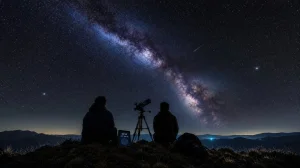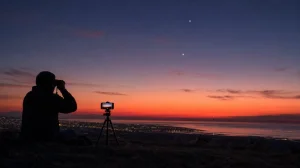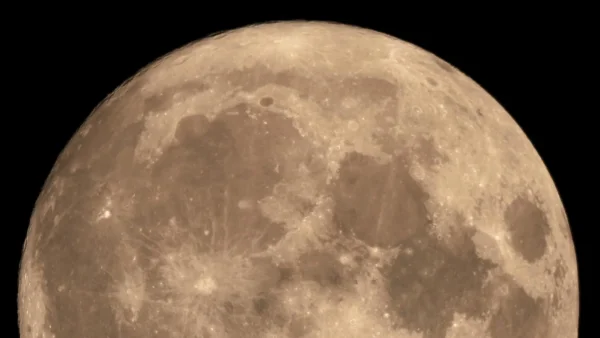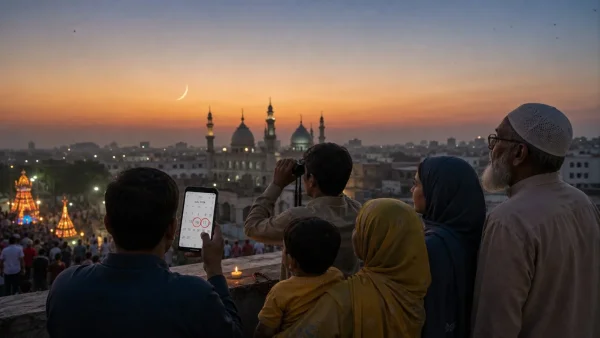
In India, as eyes turn to the west for any hint of a sliver, there is one question to answer: is the crescent out on the 16th or the 17th? It seems straightforward, but it has a lot of bearing on how prayers are arranged, when the public will be in the streets, and the timing of Ashura.
When does Muharram 2026 get under way?
It’s a lunar month, so you don’t have a firm first day until the Hilal, or new crescent, is in view. The calendar has us looking at an evening start on June 16, 2026, with the month running through to the evening of July 15.
Astronomers put forward a two-day possibility. Spot the crescent on the 16th and the first day is yours. Can’t make it out in the sky and you push it to the 17th.
Then there is the 10th, Ashura, which is the heart of the matter. Depending on how the moon plays out, one reckoning has it on June 26. If the 16th is the go-ahead, Ashura is likely the 25th; if not, the 26th.
Here is a handy way to plan for it:
– See the crescent on June 16: Muharram is on
– No luck on the 16th: we begin on the 17th
– A June 16 start means Ashura on the 25th
– A June 17 start puts Ashura on the 26th
Moon sighting in India: the lay of the land
It’s up to the religious heads and the local committees to have the final say after they’ve been up and about with their observations. You’ll often see a difference from year to year between, say, Saudi Arabia and some of our South Asian neighbours, with the former tending to be a day ahead.
So for the masjids and those putting on events, there is a bit of give and take. Most will be ready for either date and will fine-tune once the word comes down from the committee.
What makes Muharram so significant
It is the opening of the New Year, but you won’t see any fireworks or the like. In the Quran it is one of the four hallowed months, and “Muharram” itself is a word for something forbidden or set apart, a time to stay away from strife.
You can’t separate the mood of the month from 680 and the story of Karbala. There, Imam Hussain ibn Ali, the Prophet’s grandson, would not bow to Umayyad ruler Yazid I. He and his were put to the sword, and we remember them for holding the line for what was right.
Why the mourning is part of it
Shia Muslims use this time to grieve. In their gatherings and laments, they re-live the days of Karbala to do right by the memory of Imam Hussain and his, and to think on what it cost them in faith and fortitude.
Sunni believers are just as observant, with a particular eye on Ashura. Some will fast, as the Prophet is said to have put in for it, in remembrance of the day Moses and his people were delivered from Pharaoh.
Putting it into practice
It’s a matter of prayer and being there for others. People put in more hours in worship, open the Quran and help out where they can, with a certain stillness to it all.
India has a long history with this. In places like Lucknow, Hyderabad, Srinagar and Kolkata you will see the processions and the meetings. The Shia will be out with the tazia and alam, and there is plenty of food being put on for the community and for those in need.
Over in Iraq, you have thousands making the trek to the shrine in Karbala to show their respect. In Iran, the prayer meetings are big and the feeling of loss is very much in the air.
You see it in Pakistan and Bangladesh too, with sermons and the like well past the first ten days. In Indonesia, Turkey and across parts of Africa, it is a time for good works and prayer.
But it is more than going through the motions. It is a reminder of integrity and the kind of patience that doesn’t come easy. For a lot of people, it is a chance to make a fresh promise to be true to themselves and to justice.
We will be watching the skies on the 16th and 17th as we head into June. The authorities will put the dates in stone, but the way the month is lived will be in keeping with the tradition of looking back and within.