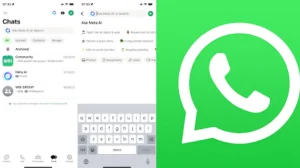
The European Union believes Meta’s attempt to charge competitors for WhatsApp access breaks the EU’s rules against monopolies. This is in response to Meta’s solution in March to an EU investigation which had found Meta had effectively barred outside programs from using the messaging app.
EU rejects Meta’s pay-for-access remedy
The European Commission says simply changing a ban to a pay-to-use system is still unfair competition. They’ve written that a price that has the same result of shutting out others does not change their initial opinion that Meta is wrongly using its power.
Teresa Ribera, at the Commission and in charge of competition, said this behavior could really hurt competition for AI assistants. She also said the EU intends to make Meta let those third-party programs use WhatsApp again, as a temporary solution.
Background of the EU investigation
The EU began its investigation in December because changes to WhatsApp’s terms made it harder for AI chatbots from other companies to talk to WhatsApp users. The regulators said these rules basically prevented competing assistants from working when AI is the main thing they do.
The investigation grew to include the entire European Economic Area, including Iceland, Liechtenstein and Norway. The authorities are worried that if access is restricted, more than three billion WhatsApp users could end up only using Meta’s own AI program, Meta AI.
Why the commission called the remedy unsatisfactory
Officials say the pay-for-access scheme has the same effect as a ban on the market. If competitors have to pay fees that stop them from launching their services, smaller businesses won’t be able to compete with Meta AI on a large scale.
The regulators are particularly careful about the risk of big platforms giving advantages to their own services. By controlling how other chatbots get to people and businesses in Europe, a platform owner can decide which AI assistants people use.
Meta’s response and its arguments
Meta says being made to give access for free would mean giving money to certain companies. They say that if the EU makes them do this, well-funded competitors could benefit while small businesses that pay to use WhatsApp for sales lose out.
In public, Meta used the example of a little bakery that pays to get orders through WhatsApp potentially giving money to a big AI company. Meta thinks the Commission’s approach will make the economic rules of the platform unsustainable.
Market impact and next steps
If the Commission orders this temporary fix, Meta will have to restore access to how it was before a policy change in October reinstated access to how it was before an October 2025 policy change. This would be in place while the full investigation continues and they come to a final decision.
This situation shows the EU making a big effort to control large tech companies and maintain competition in online markets. Regulators are working out how to use existing anti-trust laws with AI services that need access to a lot of users.
The decision will likely have a knock-on effect for both smaller AI startups and businesses that use messaging to connect with customers. Getting access restored will make it easier for competing assistants to become available and could encourage more new ideas in the field of conversational AI in the area.
The regulators will look at proof to determine if Meta’s actions were meant to and did exclude competitors. As the investigation moves toward a final decision, both sides will likely present detailed technical and economic information.
For companies and developers, this decision shows that the conditions for getting onto major platforms are being closely examined. Businesses making AI assistants should keep up with what regulators are doing and get ready for different platform policies depending on where they are.