The new season of House of the Dragon has been on our screens, but it is Thorn’s work as Lohar that has set social media alight. The complaints have been vociferous, the comebacks even more so, and if you wade through it all, you are left with one thing: do people have a problem with the acting or the person behind it?
Why the debate exploded
Things got heated in a hurry. A couple of days after the June 21, 2026 premiere, someone put up a post on the 23rd calling Thorn’s performance the worst HBO has put out and wondering what they were thinking. Then on the 24th, another chipped in to say the whole fuss was over once word got out she is trans.
It was like striking a match. In no time at all, the conversation had moved well past the merits of the scene and into the weeds of representation, fidelity to the source material, and what we are owed by a show of this calibre.
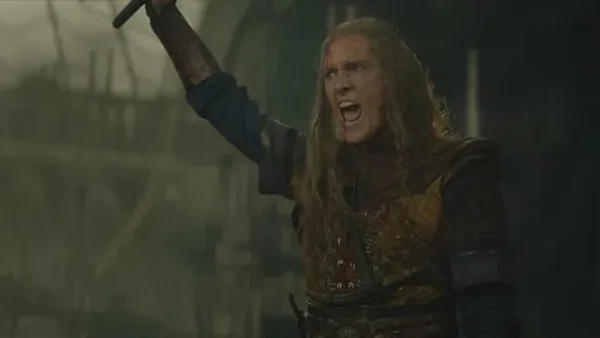
In the pages of Fire & Blood, Sharako Lohar is a man. The show put British trans actress and YouTuber Abigail Thorn in the role, kept the masculine pronouns and the Triarchy connections, and made sure the pirate had his moment in the sun during the Battle of the Gullet and on from there.
What viewers actually said
If you are on the side of the critics, you will hear some very pointed grievances. They talk about a stilted way of speaking, over-the-top mannerisms, and a kind of sketch-comedy feel that doesn’t fit the mood. Some will tell you it was enough to make them want to turn the TV off.
Then you get the culture-war types who think the network is more interested in ticking boxes than making good television. One put it down to "wokeness” and made a rather unkind comparison to a mobster to put down the casting. Another had a few words for her voice and the general aura of the part.
You can’t miss the other side of the coin, though. Her camp says she has an edge to her, a sort of headstrong quality befitting a pirate, and the odd line that lands. And why not? It is only been an episode; some say it is too early to write the character off.
One viewer put it plainly: the amount of heat being brought to bear on a trans actor in a high-profile part is nothing new, and the vitriol has little to do with the craft of it.
Support and scepticism
Oddly, many of the harshest reviewers will tell you identity has nothing to do with it. They’ll say they didn’t even know she was trans when they made up their mind and still thought the acting was a bit much. You see that argument over and over.
Defenders, for their part, will point to some of the more ugly responses online as evidence of a bias, and that the pummelling is disproportionate to what was on screen. As is the way of the web, both are of the opinion they are the ones seeing clearly.
How the character was adapted
And it is not just how she is playing it. The show has made a bold move with the adaptation. They have gender-swapped Lohar, but left the essence of him intact, turning a bit-part into something with more heft. It is a test of whether the fanbase is on board with that kind of liberty.
As we see it, Lohar is a pirate of the Triarchy with more than one wife and a vengeful streak. In the middle of the Gullet, he is the one with the profane orders to keep the oars moving and a promise of retribution for the Sea Snake, Corlys Velaryon.
It ends with a grim stranglehold. You can watch Thorn go from all bluster to fear and then to a kind of resignation. She has put in the work – bulked up, run with the stunt coordinators, put together a physicality for the role. People in the cast have said she has a way of taking over a scene, and the dailies back it up.
Who Abigail Thorn is beyond the discourse
Put the chatter aside and you are looking at a performer who did not take the usual path to Westeros.
You can put the date on Thorn’s birth certificate as April 24, 1993, but it was in 2013 that she made her mark, starting up Philosophy Tube. With UK tuition fees on the rise, she wanted to put some of the great ideas of philosophy within everyone’s reach. It didn’t take long for the channel to amass over a million followers, all for its no-nonsense way of tying thought to politics.
Then in January 2021, she put herself out there in a set of videos and came out as a trans woman. The response was huge. From that point on, she’s been vocal about the need for trans healthcare and freedom. She’s also been putting in work on the acting side, with a resume that now has The Acolyte and House of the Dragon on it.
Talking about her role as Lohar, she’s open about the process: the auditions, putting in some of her own spin, and the sheer pleasure of being unapologetically lighthearted in a dark setting. Even the PR has had a bit of levity to it – like when she put on display a Lego minifigure her niece put together. You could tell from her on the red carpet that she was in it for the joy of it.
Is the backlash about identity or about craft?
It’s hard to be tidy with an answer. What you see in the discourse is that both are at play. There are some who have very specific, well-reasoned gripes with the technique. They’ll talk to you about delivery and timing, and a good number of them will tell you they made up their minds before they knew she was trans.
But you can’t ignore the pattern. Put a high-profile trans actor in front of the camera and you’re going to get a certain kind of heat. The intensity of the reaction here is nothing new. Some will say a perfectly fine performance is being penalised for the person behind it.
Here is how the room looks:
– The naysayers zero in on tone and timing.
– You’ll see some jabs at her identity mixed in with the performance talk.
– Fans are riled up by the book changes and the extra screen time.
– Her fans are in it for the swagger and the lines worth repeating.
– Plenty of people are quick to say they were on the fence before the trans thing came up.
To write it all off as transphobia is to miss the point of some of the feedback. But to act like there isn’t some bias in the mix is to be willfully blind to how these things go online. The reality is somewhere in the middle: a head-on collision of art and politics.
Why Sharako Lohar became a lightning rod
She is written to be one of those characters you don’t forget. Lohar is not refined; she is chaos with a rudder. The look is meant to be a little intimidating. In the fleet scenes, you need to project authority and power. It’s a shift in the room for an episode that is already on edge.
That’s where you get the divide. Some are into the over-the-top pirate energy. Others want something more restrained. Toss in a gender change from the source material, a more masculine vibe in-universe, and more of her than the books gave us, and you’ve got a problem.
Thorn has called the part a gift, and you can see why her defenders are so fervent. In a story this hard-edged, it’s a rare opportunity to let loose. To her supporters, what some call excess is just character.
What the argument reveals about fandom
Make of it what you will, but there is a lot of feeling involved. The book loyalists are having none of the changes. The performance nerds are breaking down every eye-line. The pro-representation crowd is calling out the bad-faith stuff. And then you have the rest of us wondering why the internet is in an uproar over a single episode.
The bottom line is that when you tinker with a beloved property, people are going to put it to the test. Make the lead a trans woman and the microscope comes out. Take a tonal risk and you’ll have a chasm between the camps.
What comes next for viewers
Like it or not, the season is moving forward and so is the talk. Thorn has made her presence felt as Lohar, from the battlefield to the way she was written out, and we’ll be looking back on it as the story unfolds.
If you’re inclined to wade in with some substance, do yourself a favour: put on the episode, pay attention to the command scenes, and let your gut tell you where you stand.
You can catch the new House of the Dragon Season 3 on HBO and Max this Sunday at 9pm ET.