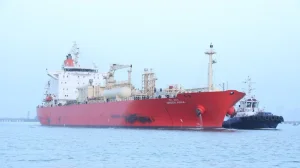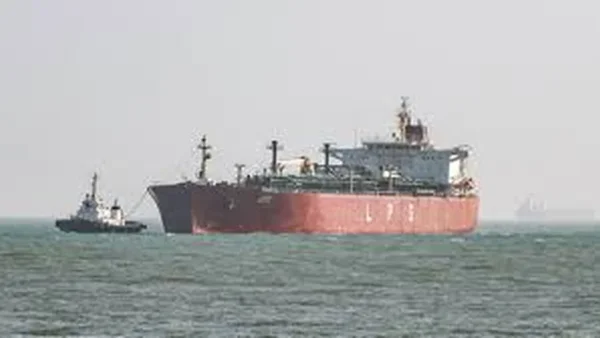
On Sunday, a liquid gas carrier from Texas, the Pyxis Pioneer, unloaded 16,714 metric tonnes of LPG at New Mangalore Port. India is adjusting to the fact that supplies are being interrupted because of the conflict in Western Asia. The Pyxis Pioneer left the Port of Nederland on February 14th and delivered the LPG to Aegis Logistics.
Arrival details and operational context
The fact that the Pyxis Pioneer arrived is another sign that we’re starting to depend more on longer, different ways to ship goods. This shipment came after several ships had to quickly change course and only a day after a Russian tanker with crude oil arrived at the same coastline, because it had to go a different way than it originally planned.
Port officials say there aren’t any jams or slowdowns. They’re watching where ships are and how quickly the cargo is being taken off. The timing of these arrivals emphasizes New Mangalore Port’s increasing ability to deal with both LPG deliveries and crude oil that’s been rerouted, to meet the needs of people in our country.
Port measures and storage capacity
New Mangalore Port decided to stop charging fees for cargo relating to crude oil and LPG from March 14th to March 31st. This is to make the logistics of getting the energy here easier and to lower the costs of handling it. The idea is to get the fuel unloaded quickly and to make it easier financially for the companies who’ve hired the ships and the people buying the fuel.
Mangaluru has the largest underground LPG storage in the country. It was opened in September 2025 and can hold 80,000 metric tonnes of LPG at 225 meters under the sea. This storage, along with the port’s facilities, helps to protect us from sudden supply problems and ensures a smooth flow of fuel to the areas around us.
Energy routing shifts amid the West Asia conflict
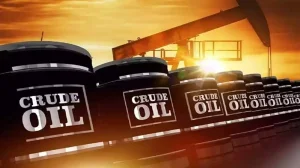
The Pyxis Pioneer’s arrival happened after the Russian tanker Aqua Titan had to change its route and brought around 770,000 barrels of crude oil to the Mangaluru coast. This crude oil is being taken off the ship using a pipe that goes into the sea and to a loading point approximately 12 nautical miles from the shore, then it goes to a refinery nearby.
Rajesh Kumar Sinha, Special Secretary, stated that all 22 Indian ships and 611 Indian sailors in the Persian Gulf are safe. Maritime authorities haven’t had reports of any problems in the last 24 hours. But authorities are still watching shipping routes and changing them as the situation in the Strait of Hormuz affects the normal routes for supplies.
Domestic supply, consumer behavior, and operational assurances
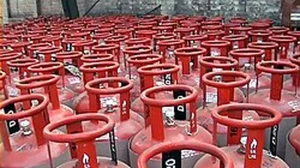
People aren’t rushing to fill their LPG tanks as much as they were, and approximately 5.5 million tanks have been booked recently, which is lower than the earlier large numbers. The Ministry of Petroleum and Natural Gas has told the public that there is enough fuel in the country and that stores aren’t running out.
The main thing now is to continue to unload the fuel from the ships, get it inland, and refill tanks steadily. The companies that move the fuel and the storage facilities are working together to turn the incoming amounts of fuel into tanks and deliveries to businesses without big delays.
Market implications and short-term policy moves
The problems in the Strait of Hormuz have caused a strong reaction in global markets, increasing the price of crude oil and making countries find fuel from different sources. Because of the restricted flow of oil, an agreement was made to release oil that was already on its way to the markets. This extra oil would help to immediately lower the pressure.
Prices have moved up and down a lot, going from about $70 a barrel before the conflict to much higher during the recent increases. The fact that the Pyxis Pioneer and the Aqua Titan arrived at New Mangalore Port one after the other shows how using good logistics, having enough storage, and having the right policies can lessen the impact in our area, even though there’s still uncertainty around the world.
If trade routes change for a long time, it will raise important questions about how much storage we need long term, how much to invest in ports, and how flexible our agreements with suppliers need to be. Right now, the deliveries to New Mangalore Port show a sensible approach: get fuel from different places, use the facilities we already have, and keep the fuel flowing to people while keeping an eye on what’s happening politically in the world.