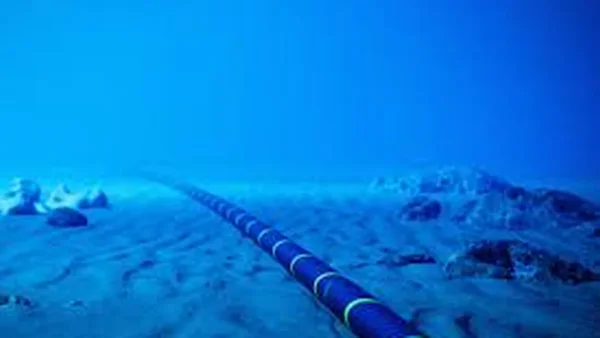
Google has said that new underwater cables will be set up in connecting its proposed artificial intelligence hub in India. The move is part of broader efforts to boost the fiber optic capacity of artificial intelligence in the capacity region. This announcement was made during a major artificial intelligence summit in New Delhi and follows earlier announcements that Google would invest $15 billion in its Vizag artificial intelligence infrastructure.
India-America Connect and Vizag the Gateway
India-America Connect is an initiative where a new fiber optic landing place is established in Vizag. Naturally, Google and the island nations will work together to route high-capacity traffic through the east coast landing, thereby considerably enhancing the capacity when compared with current landings in Mumbai and Chennai. Google has said that it is going to undertake various new underwater routes and strategic fiber optic lines-and right now that references the intent of the entire national
Maha Cable Initiative
Between India, the USA, and the Southern Hemisphere-to cement the planned creation of several gigs of wattage compute as a logical upshot of Google’s AI-hub investments in the region.
New subsea and fiber routes are to be opened
A route map drawn by Google further consists of three subsea connections from India to Singapore, South Africa, and Australia. As for four global fiber-optic networks to be established, the network supplies a boost for resilience and capacity linking the US and India to more points in the Southern Hemisphere. Mainly, the above networks will consist of a direct cable from Vizag to South Africa and from Vizag to Singapore. Mumbai will be wired to the Western Australia coast, setting up exciting new paths for cloud computing, AI training, and global data flows.
Redundancy and diversity and technology
A combination of Novel, Equiano, Nuvem, Bosun, and Tabua will work in redundancy with existing links to set up alternate pathways to the US between south and north and to avoid our 100-odd km passes altogether. The second combination allows rerouting of traffic across the West Coast of North America through Australia to Vizag to form a South Pacific course. A number of alternates avail in order to diminish the essence of a single point of failure and heighten the expectation of latencies orientation toward important AI undertakings and data transfers across international borders.
On the Economic and Strategic Aspect of India and AI Development
Making Vizag a subsea gateway would raise resiliency in India’s digital backbone and that way would lead to economic security of one billion along with people; It will also anchor big compute (power) locally that will edify AI R&D and commercial deployment within the country. Increased connectivity may quicken the adoption of cloud services and attract more data centers as well as provide jobs for a skilled AI-infrastructure. India has fared reasonably well in AI competitiveness, but pundits commonly argue that extensive infrastructure and skilling are indispensable for sustaining long-term growth.
Joint Investment, Partnerships, and Skilling Programs
Apart from these infrastructural initiatives, Google has proposed a series of pretty audacious plans for skilling, such as AI professional certificates in English and Hindi, especially for students and early-career professionals. The business further claims ambitions for partnerships with technical institutions, public bodies, and local programs in order to responsibly broaden AI accessibility by every margin. In addition, other industry peers have announced related investments, including partnerships for advanced processors to cloud data centers. Infrastructure, compute, and workforce development together should set the stage for a mature ecosystem capable of supporting large and responsible AI deployments. All said and done, the subsea and fiber roadmap is essentially a strategic bet on India as an AI powerhouse. Therefore, the idea is to create a blend of cable diversity, locally placed computing, and training projects to boost connectivities, diminish risks, and pave the way for India to join the wider array of AI innovation routes.