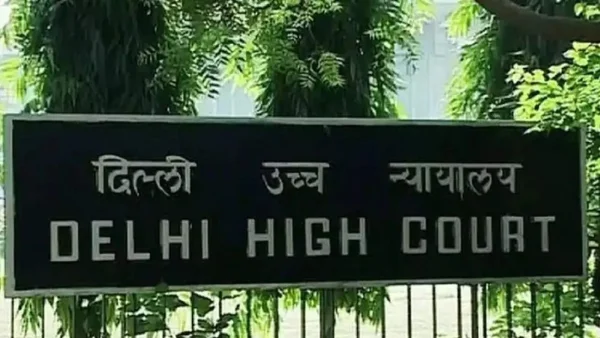
The court has made it clear: search engines are to be told to turn off any name-based results that bring up old news or court orders from cases that have been put to rest or were never meant for public consumption. To put a stop to any harm to one’s good name, the bench has instructed the relevant authorities, as well as the platforms and legal databases, to remove the petitioners’ names from the mix.
You can read about it in a 144-page order from Justice Sachin Datta, which was made public on Sunday after being delivered on May 29. His view is that if you can still find someone by name in a judicial record without limit, it is an overreach and a violation of their right to privacy. This applies to the big search engines like Google and to Indian Kanoon, for one.
To be clear, we are not talking about erasing judgments. What de-indexing does is make a person’s name no longer a way to get at the file. You can still get to the records if you have the case number, the citation, or the date, but the easy, name-driven lookup is off the table. Transparency is maintained, but on the court’s terms.
Operators of these search engines and others have been given a fortnight to fall in line. The court also made a point of saying this has to be done worldwide; the kind of privacy guaranteed by Article 21 doesn’t stop at the border.
Why it matters for privacy and open justice
According to the court, the 'right to be forgotten‘ is a natural outgrowth of what the Constitution says about privacy under Article 21. If you tie a person’s name to a closed case online in perpetuity, you are doing them a disservice and damaging their standing with no real benefit to the public.
Open justice means the records should be there for anyone with a proper reason to see them. It doesn’t mean a private citizen has to be a permanent hit on a commercial site. The judgment even points out that since search engines make money off these queries, they should be heeding the IT Rules, specifically Rule 3(1)(d), when it comes to takedown orders.
Who gets relief, who does not
This was the outcome for 38 petitions, some of them as old as 2016, from people who have been exonerated, were involved in a private tiff, or were just mentioned in passing in a record. Their case was that having their name come up on a site like Indian Kanoon is an ongoing injury to their reputation that the public has no stake in.
So the bench has come down in favour of those in the clear – be it through an acquittal, a discharge, a quashing, or a settlement of a matter that is strictly between the parties.
Here is what the court made clear: there is no law that gives Google or any other search engine a free pass to keep judicial records in their index at the expense of an individual’s right to privacy.
Put simply, here is what the court has held:
– There is no law that lets you index forever at the expense of privacy.
– An unbridled name-based search doesn’t hold up to scrutiny.
– The files are still there, you just have to use the case details to find them.
– De-indexing is a global requirement, not an Indian one.
– Intermediaries are to follow the orders per Rule 3(1)(d).
In one instance, the court turned down P.P. Madhva’s bid to be de-indexed following a settlement in a sexual offence matter; his public standing meant there was still an interest in the case. Likewise, it put the boot to a request from another public figure to have material on his repeated drunkenness taken down, making it known that the right to be forgotten isn’t for cherrypicking what you want the public to see.
That said, the court put up some hard and fast rules for when exceptions apply:
– Where there are convictions for crimes against women or children.
– In cases of a broken public trust.
– For offences by those in public service or elected office.
– Any proceedings with weighty allegations against a well-known figure.
On the flip side, if a case has come to an end because a party has died and the online record is a source of trouble for the family left behind, the court will consider de-indexing.
Masking option and what comes next
Petitioners can also go to the court that handed down the order and ask to have their names and other details masked in the original judgment. The court has even put in place some guidelines for how to handle such requests in the event of an acquittal or quashing.
The Delhi HC has stuck to the issue of de-indexing by name and the like. It hasn’t told anyone to wipe out judgments from Indian Kanoon or elsewhere; a more far-reaching takedown is something for the Supreme Court to sort out.
How the ruling will work for platforms
Going forward, search engines and legal databases will have to turn off the ability to look up these petitioners by name. Indian Kanoon, for one, has been told to put restrictions in place so you can only find the judgments by case number, citation or date, not the person’s name.
The court pointed out that the way commercial search engines are built has a way of shoving an arrest or an accusation to the front page, even after an acquittal, which muddies the waters of open justice. By not allowing a name-based query, you stop a casual user from being able to pull up someone’s old legal history in a click.
And de-indexing doesn’t mean less transparency. The records are all still there on the court’s site for accountability and as precedent. You just can’t use a private citizen’s name as a master key to get to them.
Justice Datta put it this way: in a world where a digital footprint is hard to erase, the right to be forgotten is a must. It’s an extension of the privacy we’re owed under Article 21, a shield against being put on display for things that are in the past.
The legal basis and the road ahead
With the global de-indexing order and a nod to Rule 3(1)(d), the court is tying constitutional rights to what intermediaries have to do. The onus is on the platforms to make the changes in the next couple of weeks.
So for the people involved, you can either ask for de-indexing or go to the originating court for masking. For the platforms, it’s a matter of retooling your search without deleting the record. As for the bigger picture of full takedowns, that’s in the hands of the Supreme Court.
The bottom line? Open justice is here to stay, but so is the right to put a resolved dispute behind you. The court has put a new line in the sand for what is and isn’t searchable.