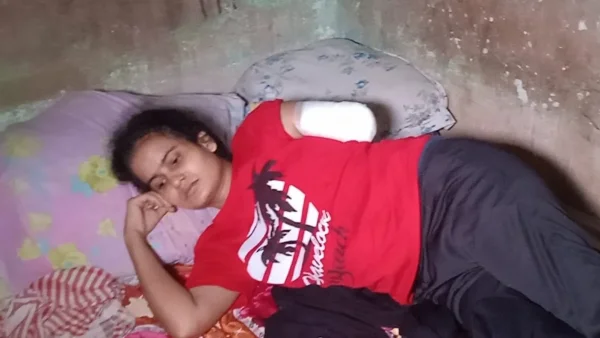
A case of alleged medical negligence from Bihar has sparked outrage after a 20-year-old woman claimed that a routine visit to a hospital for ear treatment ended with the amputation of her arm and the collapse of her marriage.
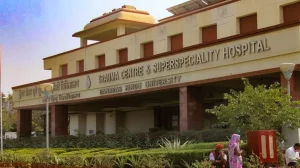
According to the allegations, Rekha, a resident of Sheohar district, had visited Mahavir Arogya Sansthan in Patna for treatment of ear pain. She was reportedly scheduled to undergo a minor procedure when she was allegedly administered the wrong injection, leading to severe complications.
The hospital has not publicly responded to these allegations at the time of writing, and the claims have not been independently verified.
What Rekha Alleges
According to Rekha’s account:
She visited the hospital seeking treatment for ear pain.
During treatment, she was allegedly given an incorrect injection.
Soon after, her hand allegedly began changing colour and she experienced severe pain.
She claims her complaints were initially ignored.
Her family then sought treatment at multiple hospitals.
Eventually, she was admitted to Medanta Hospital, where doctors allegedly informed the family that her arm could not be saved and had to be amputated above the elbow to prevent the condition from worsening.
She has further alleged that the incident also led to the breakdown of her marriage and that the police did not register an FIR despite her complaint.
These allegations are yet to be examined through official investigation.
Medical Negligence: A Serious Allegation
Medical negligence is among the most serious allegations that can be made against a healthcare institution.
It generally refers to situations where a healthcare provider is alleged to have failed to exercise the standard of care expected from a reasonably competent medical professional, resulting in harm to a patient.
However, negligence can only be established after investigation by competent authorities or judicial forums.
What Are Hospitals Responsible For?
Hospitals owe patients a duty of care throughout treatment.
That responsibility includes:
Correct identification of the patient.
Proper administration of medicines and injections.
Monitoring patients for adverse reactions.
Immediate intervention if complications arise.
Maintaining accurate medical records.
Informing patients and families about risks and treatment options.
If any lapse occurs, hospitals are expected to investigate the matter thoroughly and cooperate with regulatory authorities.
Could the Complication Have Been Prevented?
At this stage, it is not possible to determine what caused the reported medical complication.
Medical experts note that severe tissue damage following an injection can result from several causes, including medication errors, accidental injury to blood vessels, infection, or other rare complications. Establishing the exact cause requires examination of medical records, expert opinion, and, where necessary, an independent inquiry.
Whether there was negligence in Rekha’s treatment can only be determined through such an investigation.
The Human Cost Beyond the Hospital
For Rekha, the consequences extend far beyond a medical procedure.
According to her allegations, she has:
Lost her right arm.
Undergone multiple hospital visits.
Faced emotional trauma.
Seen her marriage fall apart.
Struggled to obtain legal action.
If these allegations are substantiated, the incident would illustrate how medical errors can have lifelong physical, emotional, and social consequences for patients.
Need for Accountability
Cases involving alleged medical negligence often raise broader questions about accountability within healthcare institutions.
Patient rights advocates argue that when serious allegations arise, there should be:
A prompt and impartial medical inquiry.
Transparent disclosure of treatment records.
Independent expert review where necessary.
Appropriate compensation if negligence is established.
Corrective measures to prevent similar incidents.
At the same time, hospitals and medical professionals are entitled to due process before responsibility is determined.
Police Action Also Under Scrutiny
Rekha has also alleged that despite approaching the authorities, an FIR was not registered.
Police have not publicly responded to this specific allegation.
If a complaint alleging a cognisable offence is made, the handling of that complaint is governed by applicable legal procedures. Whether the police acted appropriately in this case would depend on the facts and any official inquiry.
The Bigger Question
Hospitals are places where people go seeking relief, not expecting life-altering injuries.
Patients place enormous trust in doctors, nurses, and healthcare institutions. That trust depends not only on medical expertise but also on transparency, accountability, and a willingness to investigate when something goes wrong.
If Rekha’s allegations are proven, the case would represent more than an instance of alleged medical negligence—it would raise serious questions about patient safety, institutional responsibility, and access to justice.
As investigations proceed, one expectation remains common to every patient entering a hospital:
A treatment meant to heal should never leave someone fighting for their life or permanently disabled because of avoidable errors.