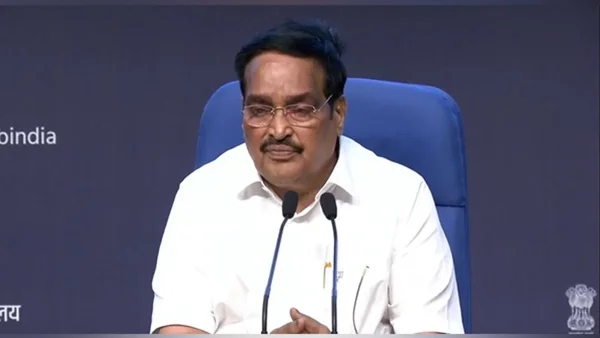
The Ministry of Jal Shakti is hosting the World Water Day Conclave 2026 in New Delhi on March 23rd. More than 700 people from the government, businesses, universities, new businesses, and public organizations will be at the event. It’s happening right after World Water Day is celebrated around the world on March 22nd, and it will focus on ‘Water and Gender’, as well as solutions coming from industry.
Event overview and purpose
The conclave will be at the Dr Ambedkar International Centre and will begin with C R Paatil, the Union Minister, at the opening. Those putting the event together say it’s a national place to talk, come up with new ideas, and work together on managing water in a way that can continue for a long time.
People coming to the conclave include those who make policies, leaders in business, small and medium businesses (MSMEs), young people with new ideas, and researchers. This variety of participants will create chances for people in different areas to work together to develop solutions that work on a large scale and are based on technology. How many people are participating shows that both the public and private sectors are focusing more on managing water well and making water supplies stronger.
Programme structure and thematic sessions
There will be four specific meeting topics to drive the more technical parts of the event and deal with real problems. They will discuss what to do with sewage sludge, how industries can be more efficient with water using artificial intelligence (AI) and the Internet of Things (IoT), mountain glaciers and how to deal with a changing climate, and using information from the water census to make plans.
These meetings are meant to connect what scientists are learning with what’s actually happening in the field. They’ll include looking at examples of how things have been done, technical talks, and discussions around a table to speed up the use of “circular” water practices (using water over and over) and ways to adapt to climate change in areas where rivers and streams collect water.
Data releases and policy announcements
One of the main things that will happen is the release of a number of national reports and technical publications. These include the 7th Minor Irrigation Census and the 2nd Census of Water Bodies. The new information from these will help farmers, people who make plans, and those who manage cities make more accurate predictions.
The conclave will also introduce the 1st Census of Springs and the 1st Census of Major & Medium Irrigation Projects, along with publications on specific topics. Also, officials will explain the National Water Data Policy, which is about making data standards the same and allowing decisions to be made on facts across different areas.
Industry role and technology-driven solutions
The event will emphasize moving from simply using water to taking care of water, and will push businesses to be much more efficient with their water use, and to clean and reuse it. People at the event should look at ways to make money that follow the rules and also protect water for the long term.
Technology will be very important. AI and IoT tools for watching water in real time, predicting when repairs are needed, and controlling how things work can lower how much water industries use. New businesses and MSMEs will show off small-scale projects where using digital tools has actually saved water.
Innovation recognition and collaborative outcomes
The conclave will also recognize the winners of the Jal Shakti Hackathon; these are new and able-to-grow solutions with a practical use in both the countryside and cities. The hackathon shows how competition to innovate speeds up the development of solutions for water problems.
The organizers are planning a Joint Industry Declaration at the end of the event. This will restate a commitment to managing water sustainably. The declaration should include specific goals for efficiency, reuse, investing in water systems, and working together on research.
Broader context and policy implications
World Water Day, which has been celebrated every March 22nd since 1993, calls attention to the 2.1 billion people who don’t have access to safe water, and supports Sustainable Development Goal 6, which is about water and sanitation by 2030. The conclave connects what is happening in the country to this world goal.
By sharing data, making policy clear, getting businesses involved, and showing off technology, the conclave aims to go beyond just talking and actually do something. Those who organized it hope the event will create money, clear rules, and local partnerships that protect our freshwater for future generations.