Just one day after the president of Iran said Iran would not attack countries nearby, attacks continued all over the Gulf – Kuwait International Airport was one of the places hit, and Saudi Arabia said it had stopped a large number of drones. The quick series of attacks has put a strain on the defenses of the area, stopped air travel, and caused many governments to act in emergencies.
Attacks Across the Gulf Are Getting Wider
In the last few days, attacks that are thought to come from Iran have grown to include several Gulf countries, hitting both military and civilian places. Authorities say that many ballistic missiles – dozens – and hundreds of drones have been sent toward places in Kuwait, Saudi Arabia, the United Arab Emirates, Qatar, and Bahrain.
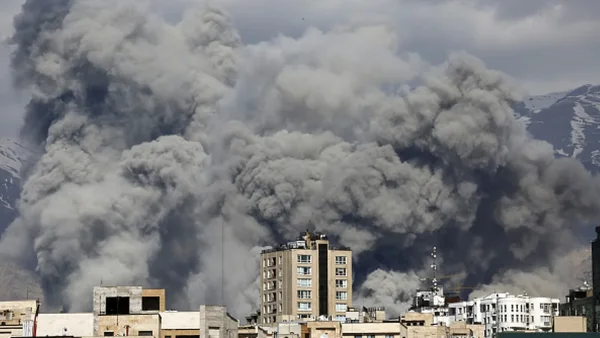
The defense departments in the area say that many of the things coming in were stopped, but falling pieces and direct hits have caused things to be broken and people to be hurt or killed. The number of launches has made airspace closed and emergency plans used at major travel centers.
Kuwait Airport and Other Places Hit
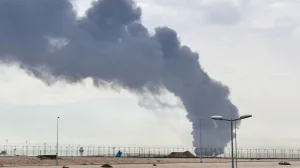
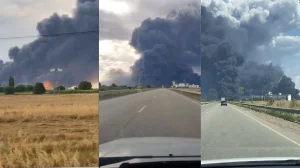
Kuwait’s military said that enemy drones got into its airspace and targeted fuel storage at Kuwait International Airport, starting big fires. Fire crews worked to put out the fires at the fuel storage areas and at the main office of the Public Institution for Social Security.
The country’s oil company announced a temporary cut in how much crude oil was being made while people who investigate looked at the damage. Authorities also said that things were broken by falling pieces after the stopping actions, and the social security office sent people who came to visit to other offices for the time being.
Saudi Arabia’s Stopping of Attacks and Defense Plans
Saudi Arabia said it had stopped a number of ballistic missiles and shot down many drones over its land, including over the Shaybah oil field and near Prince Sultan Air Base. Military leaders said three ballistic missiles that were going toward the air base were destroyed; this base has foreign military people on it.
The number of Saudi Arabia’s stopping of attacks shows how much more important it is to have layered air defenses and the ability to react quickly. Officials say that many drones were made harmless before they could reach places that were known to be very important, but pieces and second effects still put people in civilian areas in danger.
How Civilians Are Hurt and People Killed
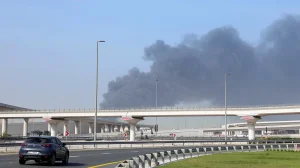
In a number of Gulf cities, the lives of people who don’t fight have been stopped by explosions, airports closing for a short time, and pieces falling. Dubai International Airport briefly stopped working when people who were traveling took cover in the tunnels of the underground train system after an event that was said to be related to stopping an attack. Authorities later said the event was not very serious, but it still made flights late and made people worry about safety.
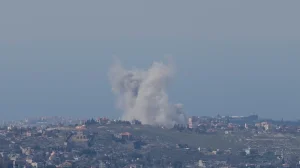
Reports say that at least one person died in Dubai when pieces hit a car, and attacks in Lebanon have killed and hurt many people who don’t fight. The number of people hurt shows the large risk to people who aren’t involved when attacks from the air are stopped over areas where many people live.
What the Attacks Say About Politics and How Tense the Area Is
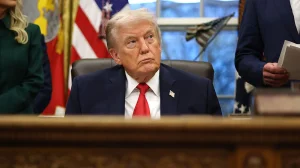
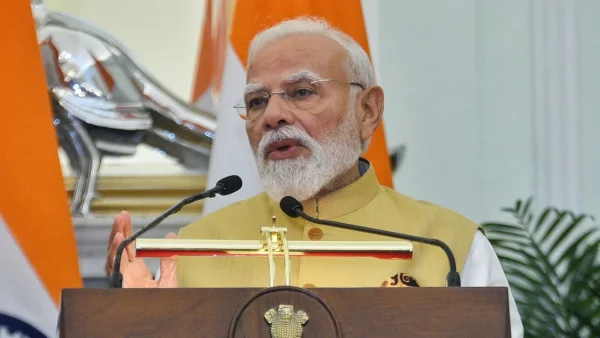
The attacks came one day after the president of Iran said publicly that Tehran would not attack countries nearby, which makes a strong difference with what was happening on the ground. Later, the head of Iran’s courts said that attacks would continue against places that were ‘at the service of the enemy,’ a statement that could mean that leaders in Tehran don’t all agree.
Governments in the area have reacted by making security tighter and talking to countries around the world. Kuwait, Saudi Arabia, and other Gulf countries are being pushed to find a balance between strong defense actions and keeping people who don’t fight from being hurt and making sure energy and travel continue.
What the Attacks Mean for the Economy and Strategy
The attacks and what people did because of them have had effects on the economy, including less crude oil being made in Kuwait and problems at major airports. The markets for energy around the world still react to the risk of not having enough oil in the Gulf, and insurance companies and companies that move things are looking at the risks of travel and what they do again.
In the long run, the growth in drone and missile attacks could make people invest more in better air defenses and places that are made stronger. Governments might also look for new ways to talk to each other to lower the level of fighting, even as military actions continue to guard important things and people who don’t fight.
What people think now is still changing as officials check the damage and count the losses. For now, the situation shows how easily the systems people who don’t fight use can be hurt in places where fighting is happening and how hard it is to guard cities where many people live from groups of attacks from the air.