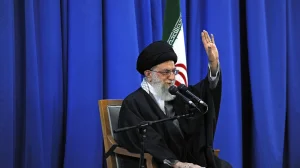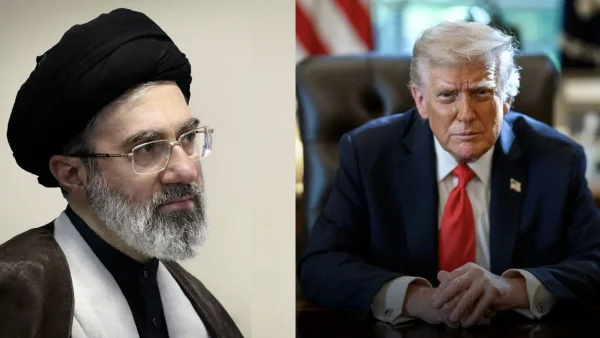
For Iran, this was a way to put its mettle to the test. Khamenei has been clear: if we’re at odds with one another, it only gives the Americans and the Israelis an opening. He put them in their place as a ‘malicious enemy’ that has ‘failed on the battlefield,’ and says they’ve had to resort to a different kind of campaign to rattle us from the inside.
Khamenei’s warning and the stakes
During a recent commemoration, Khamenei put it in writing: the US and its ‘oppressive system’ can’t stand an Iran that is strong and on its own. As for Israel, he called it a ‘made-up outpost’ of that very system. His point was simple – be one, because anything that sows cynicism or hopelessness is just what the other side wants to see.
He made no bones about the fact that his opponents have been humbled. ‘The malicious enemy has been put in its place in its run-in with the Armed Forces… it’s a deep, meaningful humiliation,’ he said in a post on X.
Now the hybrid push is on the society and the people in charge in Tehran. Khamenei has called for ‘steadfastness, clear-sightedness and unity’ to be the answer, and has put a fine point on how doubt and fear are being used to make trouble.
It’s a two-way street of pressure, on public feeling and on those in office. To make his case for holding the line, he pointed to these moves and how to meet them:
– Sowing some doubt to break up consensus
– Letting despair in to wear you down
– Stirring up fear to tie your hands
– A call for unity to put a stop to division
Rare pushback in Washington adds pressure
Things are in flux in the US, too. The House put through a 215-208 resolution to put a stop to military action with Iran, with a few Republicans in the mix with the Democrats. It was the first time they’d made headway after four tries, and there was some hand-wringing on the floor when the numbers came in.
‘We’ve had enough,’ put it Rep. Gregory Meeks of New York, the one who put the effort together. He has no patience for the ‘suffering at the gas pump, at the supermarket’ he says is the result of a war of choice. It’s all part of a more heated discussion over how to handle Iran while the talking heads are at work.
A low-profile leader, an active negotiating track
You don’t see much of Mojtaba Khamenei since he became supreme leader, but he’s been at it behind the scenes to put some shape to a possible deal. This time around, a prayer leader at the mausoleum of Ayatollah Ruhollah Khomeini read out his words on the 37th anniversary of the old man’s passing.
If you ask the officials in Tehran, any kind of agreement is contingent on what’s happening with the Israel-Hezbollah situation in Lebanon. They also want to see the ‘liquid cash’ from the billions in frozen assets come back to them, something they say is table for the first phase of any framework.
There have been days of back-and-forth with intermediaries, but it’s come to a standstill over Iran’s hard line on the money in Phase A. Washington won’t budge on any financial give-and-take without some sort of common ground on the nukes or the Strait of Hormuz. For now, they’re both going over what’s been put on paper.
Even with the talk of regular contact, there are still bumps in the road. The president will tell you they were in conversation as recently as today. But an official will say there was nothing on Tuesday because Iran wanted a ceasefire in Lebanon before they would even sit down to it.
Regional flashpoints widen the risks
Then you have the new strikes on Bahrain and Kuwait, which have set off some nerves in the region. The former prime minister of Qatar called them ‘unjustifiable’ and ‘astonishing,’ and wondered if it was all premeditated.
Bahrain has already put 15 in custody for their alleged ties to the IRGC. With all this, the chances are good that the haggling over money and maritime security could be put to the side by a wider conflagration.
What comes next
The men in charge in Iran are counting on a story of success in the field and a show of solidarity to put the wind out of the sails of those putting them under a microscope. But with the House vote and the trouble in the region, the crisis is heading in more than one direction.
It will be up to whether the message of unity in Iran can outmaneuver the tactics coming from the outside to decide how the next round of talks goes, and if a peace plan can make it through the latest upheaval.