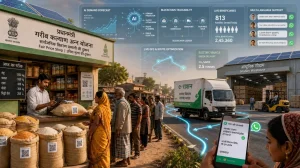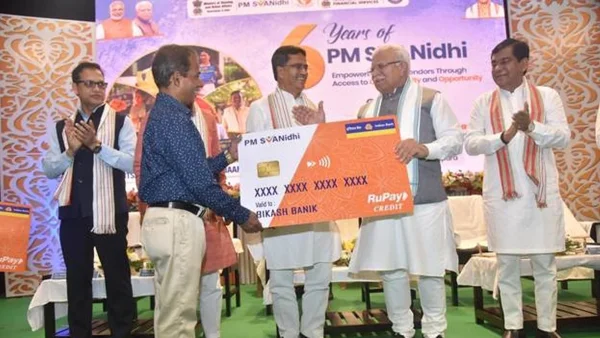
The government puts it as a show of faith in the city’s small-time business: in six years, PM SVANidhi has handed over that Rs 17,800 crore to street vendors. Since its post-pandemic start, the programme has been key to making credit a reality in India’s urban markets for over 7.55 million people. You can think of PM SVANidhi as a way to make inroads on the informal lender. It works in stages, with working capital at Rs 15,000, 25,000 or 50,000. There are interest subsidies and a credit guarantee to back it up, which eases the risk for the bank and the borrower alike and opens the door to bigger sums down the line.
A scale play in urban livelihoods
According to the ministry, you’ll find 75.5 lakh of these vendors in towns and cities across the country. Women make up almost half of them, and 70% are from marginalised groups. It’s a case of inclusion done right, with credit, digital payments and social security all in one package.
Even in the Northeast, where Manohar Lal, the housing and urban affairs minister, says there has been good uptake. Over 259,000 loans have gone out there, amounting to more than Rs 430 crore. He also noted that for many, this was their first time in the banking system.
Digital rails reshape vendor finance
It wouldn’t be the same without the digital side. The ministry has 55 lakh-plus beneficiaries on its platforms. They’ve put through 841 crore transactions running to nearly Rs 8.96 lakh crore, with some Rs 800 crore in the form of cashback and other incentives to keep them in the loop. Repay your dues and you can move up. Vendors who clear the second tranche can get a UPI-linked RuPay Credit Card with a limit of Rs 30,000. For 95% of them, this was their first foray into institutional credit; some 30% have since taken on more loans on their own.
Impact, extension and targets
Some 2023 and 2025 studies have put the average income gain for a beneficiary at around 20%. You see it in better housing, health and schooling. Of course, a lot of these vendors are still at the mercy of the economy and the cost of living. But the policy is set in stone. The Union cabinet in August of last year reworked the numbers and gave the scheme a run until 31 March 2030. We’re talking an outlay of Rs 7,332 crore to cover 11.5 million, 5 million of them being new to the fold.
How PM SVANidhi is positioned
In a sense, it’s an on-ramp to the formal world for the hawker and the micro-retailer. The tranches of 15, 25 and 50 thousand are meant to instill some discipline and give banks a record they can work with, as an alternative to the kind of expensive credit you’d get on the side. Then you have the UPI and the RuPay card if you pay back what you owe. It’s a nudge toward using the digital tools that will build up your profile. For a group that doesn’t usually get a seat at the table with the big institutions, it means a more stable business.
What applicants must check
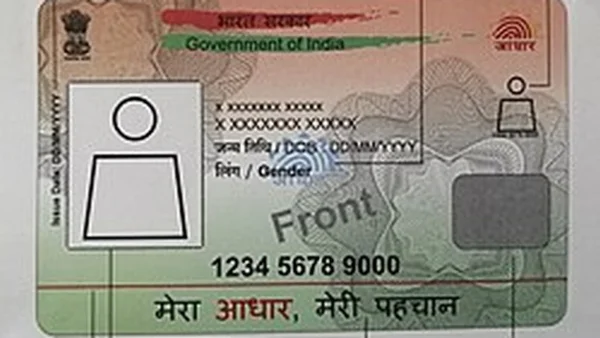
If you plan to apply, the portal is clear on what you need to have in order: – Your mobile number has to be the one on file with the bank – Surname or last name in order at the bank – Name, gender and date of birth as per Aadhaar and the bank – A full, valid home address, no special characters – Don’t put in S/O, D/O or W/O in the address field – An active bank account with a linked Aadhaar – No defaults on any loan accounts You can put in your application on the PM SVANidhi Portal or head to a Common Service Centre in your area. Now comes the test of whether it can be done at this level. With the green light to 2030 and higher numbers to hit, we’ll see if the scheme can hold its ground and give these vendors some real security in an uncertain market.