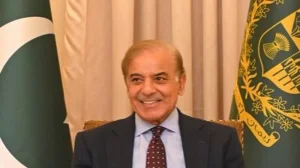
The new prime minister has made it no secret that Kathmandu’s stance on its thorniest issue with India is one of de-escalation. Since the March elections, Shah has used the floor of the house to indicate a fresh start, saying the border matter will be handled with an eye on cooling things down but not at the cost of any claims.
What Shah signalled in Parliament
According to Shah, the formalities are already in motion. He told those in the house that a note has been put in to New Delhi and one has come back, which he sees as the prelude to some proper negotiations.
“We will see the border issue with India settled at the table,” he put it. “Both of us will be putting in some technical people.” He went on to lay out how they plan to put their historians and surveyors to work, to have a good hard look at what the ground and the archives have to say about these opposing claims.
It is a question of method as much as anything. The PM was insistent that when you are dealing with a sensitive neighbour to the south, you do it with some respect and an open line of communication, even if you don’t always see eye to eye.
Why bring in the UK?
Shah can trace the trouble in the western sector back to the time of the British, and he said they have had words with the government in London. When you get into the nitty-gritty of the Lipulekh-Limpiyadhura file, the history of how the boundary was drawn is going to be what it is all about.
India’s consistent position
New Delhi has let it be known it is up for a discussion, though it won’t be giving in on Nepal’s wider demands. They have said as much in the last few weeks: we are here for some constructive give and take on all fronts, including the bits of the border we haven’t yet ironed out.
On the subject of the Kailash Manasarovar Yatra, Randeep Jaiswal of the Ministry of External Affairs was blunt: “Lipulekh has been the way in since 1954. People have been making the journey this way for decades. It is nothing new.”
Jaiswal was also firm on the territorial side of things. “Any claim like that is not justifiable, nor is it in the historical record. You can’t just make up a larger territory and expect it to hold water.” This is the same line they took over the 2020 map from Kathmandu, which they saw as a one-sided move that ran counter to the understanding that such matters are for the negotiating table.
What is at stake
You have an open 1,751-km border and a lot of history and commerce between the two. But there are still rub points, in Susta to the south and the Kalapani-Limpiyadhura-Lipulekh area in the west.
You can find the source of the disagreement in how each side reads the 1816 Treaty of Sugauli. Things got heated in 2020 once India opened up a road from Dharchula to the pass. Nepal’s answer was to put out a new map with Kalapani and the rest in its own colours, and later to enshrine it in the constitution.
Signals for the next round
If you listen to Shah, the way forward is one of process and some de-escalation, with a focus on the facts. They have chatted about boundaries before, so there is a format to work with; no need to start from scratch.
He was specific about it: “We have sent our diplomatic note to India and we have had a reply. We have an accord to let our historians and surveyors have at it and resolve this over the table. And because the problem has been with us since the British left, we have put in a word with them as well. It will be a diplomatic fix.”
As the talks get under way, here is what to keep in mind:
– An in-principle yes to ‘table talks’
– The note has gone out and come back
– Historians and surveyors will be on the case
– A word with the UK, for old times’ sake
The reason for all this is plain: the man in charge in Kathmandu has made dialogue the name of the game. New Delhi is saying the same, that any loose ends should be tied up the proper way. Even with their maps at odds, the two capitals are in agreement on how to proceed. Now it is a matter of making it happen.