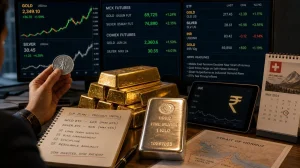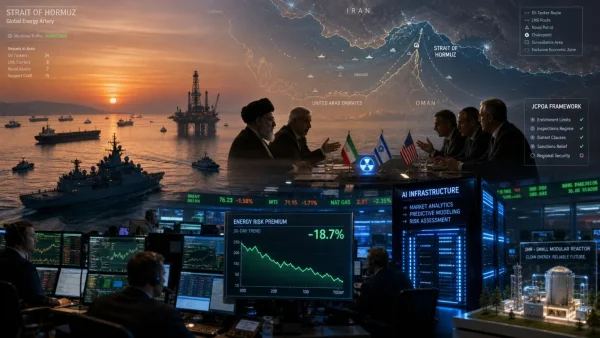
You could say the new framework with Iran has put risk back on the table for global markets, quieting some of the nerves around energy and hot-button politics. William Lee of Global Economic Advisors, however, is cautious: he says the current upturn is only as good as the nuclear guarantees we don’t have yet and the delicate way of doing business in the region. The Strait of Hormuz is still where it all comes down to.
You can see the let-up in places where the energy lines are most in the open, the Strait of Hormuz for one. But traders are not putting too much stock in it just yet; they’re waiting to be sure of the fine print and whether this will hold up before they commit to the move.
Why there was a rally and what could put an end to it
There’s been less of a risk premium on energy because de-escalation makes a supply hiccup in the near term less of a worry. Lee figures the most of the breathing room will be in areas with the heaviest reliance on what comes through the Hormuz, since any break in shipping is felt right away.
Then again, this could all go the other way in a hurry. “If the Strait of Hormuz is in the crosshairs once more, you won’t see that kind of cheer any longer,” says Lee. He notes that the nations with the most at stake in that corridor will be the first to feel it if the going gets rough.
The nuclear issue at the heart of the deal
All eyes are on Iran’s nuclear work. “That is the crux of it. We haven’t had them put in writing that they won’t have nukes, and so now we have to make a case for that.”
Lee sees some financial leverage in play. “The West is ready to put in the work to help them get with the times, to give their people the economic upside the rest of us have.”
It is muddied by the state of play in Tehran, though. “You have to ask who is calling the shots. The Revolutionary Guard or someone with a different agenda?” That is the hurdle. It will be the deciding factor in whether you can get any hard security from these economic overtures.
What the Strait of Hormuz means for the market
How things are moving in the Hormuz is your best read on the market. According to Lee, you have to have that route clear to keep the momentum, and a spark in that area would put a damper on the mood before anything else could happen.
Israel’s side of the equation
Everyone is looking at Iran, but for Lee, Israel is the one that will have the last word on how this plays out.
“Netanyahu has put it on the record: the strategic aims are in line. It’s the tactics we’re haggling over at the moment,” one source says. And that fine line between the two is what will set the pace for any verification.
You can expect the talks to get more involved as the parties try to find some upper hand. “We are watching the kind of tactical posturing you see around the periphery of where the new borders will be.” Even with a shared end game, that sort of jockeying can drag things out.
AI: the other trade in play
Then there is the investment side of the equation, and for that, you have to look at artificial intelligence. “The AI trade is coming of age. You have certain companies that are putting up numbers because they make you more productive, and they are the ones that are flying,” an analyst observes. In short, the market is in the mood for hard results, not a good story.
As the theme has developed, so has the selectivity. “If you look at the outliers, you see how investors are zeroing in on the firms that can show you higher output today or tomorrow.”
Where India goes from here on energy
The lesson for India after the latest supply jitters is plain. “They have been shown how exposed they are to a cutoff,” says Lee. He adds that when the next shock comes, you can’t just put a band-aid on it; you need to make some structural changes.
A case in point is the small nuclear reactor. “There is a chance India will learn from this and start to put in place a more varied grid.” Less reliance on imports means you are better off if prices or shipping lanes get rough.
So for anyone trying to figure out the next move, there are five things to keep an eye on:
– Any firm nuclear pledges from Iran
– Ongoing security in the Strait of Hormuz
– How Israel and its counterparts line up on the details
– The AI names that are actually moving the needle on productivity
– What India is doing to spread its energy risk
All the good feeling in the market is predicated on the idea that geopolitics will take a back seat to getting things done. But you have to de-risk the bottlenecks and make sure the handshakes hold up.
Lee is hopeful, but with a caveat. “Sure, there are economic reasons to make reforms and come to the table, but you still need a steady hand in Tehran to make it stick. Otherwise, it’s tough to put in place any outside guarantees.”
Take the current rally for what it is: a test of confidence. As long as the water is calm and the dialogue is making headway, you can let your guard down a bit and put your money where the productivity is. If that doesn’t happen, the market will correct in a hurry.
At this point, the peace deal has taken some of the edge off the fear of a supply crunch. But as Lee puts it, whether that sentiment holds is something that will be worked out in the room and on the waters of the Hormuz.