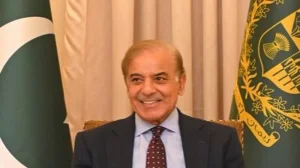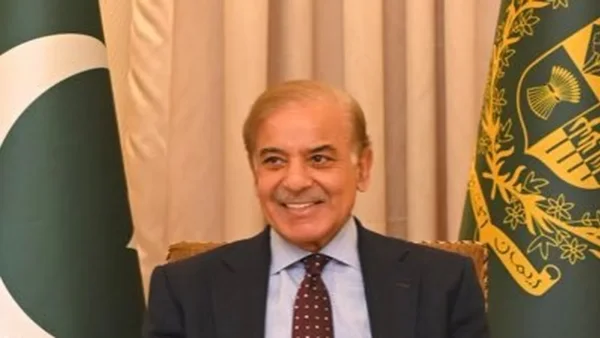
It was on Saturday that Pakistan made its case as a peacemaker in the region. Sharif put it plainly: after helping to open a door between the U.S. and Iran, the country has put in its work. He made sure to connect that kind of diplomatic success to how Pakistan sees its own security and where it stands internationally.
Roadmap talks and the stakes for West Asia
According to the Prime Minister, it was high-level talks in Switzerland last week – with some mediation from Qatar and Pakistan – that put Washington and Tehran on a path to a 60-day roadmap for a final deal.
He put it down to the Islamabad Memorandum of Understanding, which the U.S. and Iran put their names to on June 18. In doing so, Sharif made a point of showing this wasn’t just talk; it was a process with a structure and a deadline to it.
Message delivered from a military stage
You could hear the weight behind his words at the Pakistan Naval Academy in Karachi, where he was speaking at a cadet passing-out parade. It was a deliberate choice of venue to show that for him, this is national security, not just a foreign policy soundbite.
Sharif spoke of the multi-layered security issues Pakistan has to wade through, a mix of what’s happening inside the country and out in the world. The subtext was to link up what is being done in the diplomatic arena with the kind of resilience needed back home.
In one go, he wove together the three main lines of his government’s story:
– We are the ones making peace in West Asia
– The Americans and Iranians are following a 60-day roadmap
– And then there is the matter of India and its proxies in Pakistan
Why Islamabad sees momentum
For Sharif, the fact that the Iranian president, Masoud Pezeshkian, has been in town is proof enough. He said the visit is an admission by Tehran of the part Pakistan plays in keeping the region in line. That gives the government something to point to as it reaps the rewards of its back-room work.
There is political value in that kind of recognition, whether you are in a room in Islamabad or dealing with a neighbour across the border.
Allegations against India, without evidence
Then there is the claim that India is employing 'proxies‘ to rattle Pakistan. Sharif offered no hard numbers to back it up, but the accusation is there, adding a bit of friction to an otherwise de-escalatory tone.
Mentioning India in the same breath as the U.S.-Iran file was his way of driving home the point that your internal and external problems can be one and the same. On one hand you have a push for dialogue, on the other, claims of troublemaking right next door.
An attempt to redefine Pakistan’s role
The rhetoric was more about what it means than how it looks. Mediation, in his view, is a way to handle risk and put some heft behind the country’s diplomacy. It’s not enough that the talks are on; he wants it known that Pakistan made them happen.
He didn’t go into the nitty-gritty of the roadmap, though. He let the framework and the timetable do the talking, with the clear message that Islamabad is no longer on the sidelines when it comes to what Washington and Tehran decide.
The timeline to watch
The figures are set: 60 days to get to a final agreement. He put the start of the clock at those Swiss discussions, all under the terms of the MoU from June 18.
What this signals next
If you are a stakeholder, there are three things to make of Sharif’s version of events. One, Islamabad is looking for its due credit. Two, the process is formal – you can put a date and an MoU to it. Three, the naval academy setting was no accident; it was to put the diplomatic and the defence side of things in the same frame.
It will be up to the U.S. and Iran to see if they can turn a roadmap into a deal in the time given. But Sharif’s intent is unambiguous: he wants Pakistan viewed as a state that is in the game, not just one on the front line.