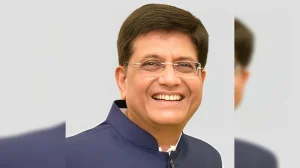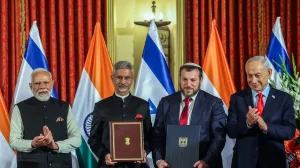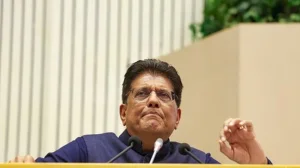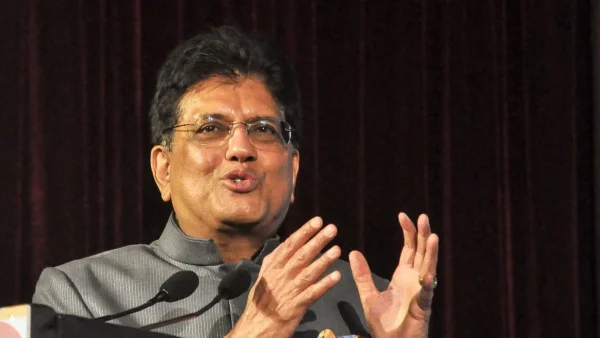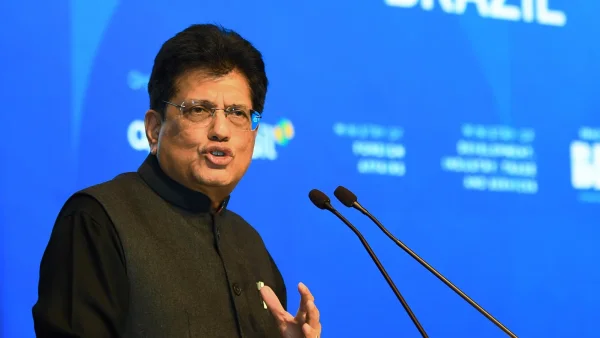
Piyush Goyal, who is the Minister of Commerce and Industry, said that at the fourteenth WTO Ministerial Conference in Yaounde, everyone should have a fair chance to use new ideas and benefit from opportunities. He wants a many-country trading system where all members are treated fairly. He emphasized that India will be involved in a helpful way, and he pointed out that the WTO is at the center of how trade is managed around the world.
Goyal’s message at the 14th WTO Ministerial Conference
Goyal used social media to repeat his message. He explained that a many-country trading system needs to make sure that members all share equally in new ideas, progress and opportunities. He presented India as a country that’s actively looking for fair rules that help progress and the spread of technology.
He repeated that India will participate constructively so the WTO stays central to global trade. This shows that developing nations in general are pushing for trade rules that understand different countries have different abilities and will help growth happen in all areas of the economy, including factories, making things, and online services.
On-the-ground diplomacy and bilateral meetings
While at the Ministerial Conference 14, Goyal had many one-on-one conversations with ministers and trade officials to help business relationships grow. These meetings were to make sure each country’s own plans fit with the wider plans of many countries, and to speed up work on particular trade deals.
Goyal said they should look at trade talks that are happening now and also find new ways to trade and invest. He used careful negotiation with actual steps to follow up, and he designed this to turn what was talked about at the conference into real trade results and easier access to other countries’ markets.
Engagements with Canada, Jamaica and Caribbean partners
Goyal talked with Maninder Sidhu, Canada’s Minister of International Trade, to review how the India-Canada CEPA (Comprehensive Economic Partnership Agreement) talks are going and to discuss what was on the agenda at the Ministerial Conference and during the Yaounde meeting, they discussed how to strengthen trade and business cooperation between the two countries.
He also spoke with Kamina Johnson Smith of Jamaica (Foreign Affairs and Foreign Trade Minister) and Dwight Fitzgerald Bramble of Saint Vincent. These conversations showed they share the same goals regarding the Ministerial Conference 14 agenda and showed India is reaching out to smaller and medium-sized economies in the Caribbean.
Talks with Morocco and Oman on trade and investment
His discussion with Omar Hejira of Morocco confirmed their long-standing relationship and explored how to increase trade and investment between the two countries. Both countries want to improve connections between their industries and their foreign trade departments.
With Oman, Goyal reviewed how the recently signed India-Oman CEPA is being put into practice and talked about other chances to increase trade and business relationships. These meetings showed a push to make the promises of the free trade agreement lead to actual business and trade.
India-US bilateral trade agreement and global tariff context
Goyal met with Jamieson Greer, the US Trade Representative, to discuss the next steps in the trade agreement negotiations between India and the US. The two leaders discussed each other’s views on the agenda at the Ministerial Conference 14 and ways to make business relationships and trade between the countries stronger.
The India-US talks are happening as they try to finish a short-term trade deal after agreeing on a plan for it. However, people negotiating the deal are running into practical problems because of changes to the US’s worldwide tariffs and the timing of finalizing the legal wording of the agreement has been moved back.
Recently, the US Supreme Court made a decision that changed the previous tariff system and led to the US President putting a 10% tariff in place for 150 days. This has delayed the planned meetings of the main negotiators and the expected signing of the short-term agreement until the new worldwide tariff system is made clear.
Implications for the multilateral trading system
Goyal’s actions at the Ministerial Conference 14 demonstrate the connection between agreements between two countries and a many-country system based on rules. Fairly sharing innovation and growth can lessen disagreements and encourage countries to open their markets to each other, even though they are different.
As the countries that are members of the WTO negotiate with each other, India is saying that we need realistic solutions that balance the transfer of technology, building up abilities and opening up markets. The results of the Ministerial Conference 14 will be important for trade policies in the future, how goods move around the world, and growth that includes everyone.