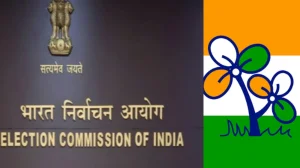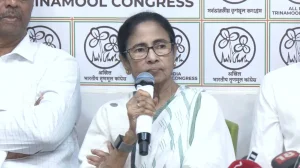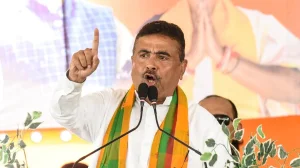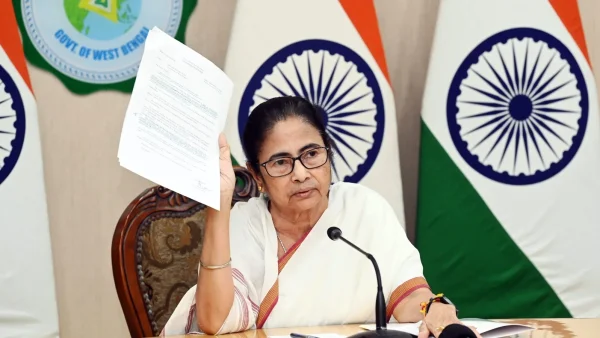
Mamata Banerjee stepped up her criticism of the Election Commission by saying a document that was made public shows a political party is influencing the Commission. She said that the 2019 Election Commission letter with the BJP Kerala stamp on it means the truth is now known and she doesn’t trust the Commission to be neutral as the election in her state gets closer.
The BJP seal row and Mamata’s charge
The problem is with a communication from March 2019 from the Election Commission which just this week showed up with what appears to be a stamp from the BJP in Kerala. Banerjee says this stamp shows the Commission is being told what to do by a particular party, and in Kolkata she told reporters it shows which party is secretly in charge.
She won’t accept the idea that the stamp was simply a mistake by someone doing paperwork. She says the communication wasn’t only for Kerala. It went to the top election officials in every state and territory in the country, which makes the party stamp even more worrying.
The Election Commission has supposedly said the stamp might have been put on there by a person by accident. But Banerjee doesn’t believe this explanation, and thinks it was done on purpose for political reasons. This disagreement has restarted the larger discussion of the Election Commission’s fairness, which is a frequent problem during election time in India.
Transfers, reshuffles, and the Nandigram-Bhabanipur link
Banerjee has also connected the stamp issue with a number of changes in the administration of West Bengal. She’s criticized the Election Commission for moving important government officials and police leaders, specifically the chief secretary, the home secretary, the Director General of Police (DGP), and the head of the Kolkata police, before the election.
She also pointed to the fact that 73 returning officers were changed and the Nandigram Block Development Officer (BDO) was moved to Bhabanipur, a district where Suvendu Adhikari (her main political opponent) is expected to be very involved. The Chief Minister says these changes are obviously part of a political plan and show the Election Commission isn’t fair.
The Election Commission usually moves officials around during elections to stop them from favoring people in their own area and to make sure the election is managed fairly. However, when and how many officials were moved in West Bengal are now part of a very tense political situation, with the party currently in power in the state saying the Commission is biased and their political rivals saying closer supervision is needed.
Dispute over voter rolls and late-night lists
The Chief Minister also has questions about how the Election Commission has handled the voter lists. She complained about the first additional list being released late at night, and then said people couldn’t check if they were still on the list or had been removed because the paper copies hadn’t gotten to offices in the district, the block, or at the polling stations.
The main issue is a large process of checking information. About 60 lakh (6 million) names were previously marked as “being looked at” in the voter lists published on February 28 after something called SIR. The new additional list reportedly has around 29 lakh (2.9 million) voters whose positions on the list have been decided by judges. Banerjee claims the Election Commission isn’t being open enough, and she thinks names might have been removed from or carefully added to the voter list. She’s suggesting something dishonest is happening and says we’ll only understand what’s going on when we can actually look at the complete list of voters in the area. The Election Commission says they are doing everything correctly, and fixing the list is a normal part of managing the voter roll.
She also mentioned how upset people are because of the changes to the voter list, and referred to news stories about people who have died by suicide because of stress related to SIR (likely a system for voter information). While it’s hard to confirm those stories, they show how much people care about being correctly listed as voters in this very close election.
If you or someone you know needs help with difficult feelings or is in a crisis, please get help right away from a doctor, someone you trust, or a qualified counselor.
Call for a united opposition and claims of one-party push
Aside from the issue with the voter list and people being moved to different voting areas, Banerjee asked all the political parties in the country to unite against what she believes is an attempt by one party to be in total control. She asked parties of all types, on the left or right, to work together to "protect democracy” and to be sure the election is both fair and free.
This request is part of a larger plan: she’s changing a fight within the state into a test of whether the election authorities can operate without outside influence. She says the problem with the BJP’s symbol (the “seal” on the voting machines) isn’t a single event, but one piece of a pattern that a united opposition needs to oppose.
Why EC neutrality matters and what the rules say
The Election Commission is, by the Constitution, meant to run elections without being told what to do by anyone. People must believe they are fair and unbiased, work in a way that is open to the public, and enforce the rules equally for everyone. It’s typical for staff to be moved, voter lists to be updated, and for the Commission to communicate with state government officials, but these things can easily cause conflict if parties think there is prejudice.
The Election Commission can move officials, add to the voter list, and give instructions to the whole country. Mistakes happen in any large government system, but they need to take responsibility and quickly fix things. In this situation, the Commission hasn’t given a thorough explanation publicly, other than saying it was a human error. The way politicians have responded shows that the Commission might need to explain more clearly to get people to trust them again.
What to watch as Bengal heads to the polls
Voting for the 294 seats in the West Bengal government will be on April 23 and 29, and the votes will be counted on May 4. The next few weeks will show whether the Election Commission can convince people involved that the process is open and isn’t being unfairly affected.
We can expect court cases, requests for detailed information about the voter list, and more attention to the movement of officials. Discussion on social media has become more heated, and the police have reportedly taken down at least one post about the seal. Arguments on the internet are likely to keep the public focused on what the Election Commission says and does.
For the party currently in power in West Bengal, the main point is that the government is treating everyone fairly and the voter list is accurate. For the opposition, it’s about making sure the rules are followed more strictly and preventing dishonest changes at the local level. For the Election Commission, the most important thing is to prove they are neutral, to be as open as possible with the public, and to make sure the focus is on a smooth and trustworthy election.
As West Bengal gets closer to the end of the election period, this issue with the BJP’s symbol has become a way of measuring how much people trust the election. Whether it’s seen as a simple mistake or a sign of deeper unfairness, what the Election Commission does next will likely affect how the campaign goes and how much the public believes in the results.