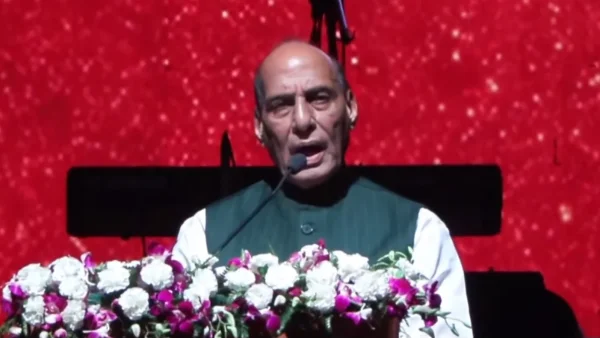
In a hardening of the line on cross-border terror, Singh said India won’t be having it if the waters of the Sindhu are to be used by the patrons of terrorism. The threat to put a hold on the Indus Waters Treaty, he said, is a matter of resolve, and he made no bones about the link to what happened in Pahalgam.
At a get-together with some of the city’s intellectuals in Hyderabad, Singh put it this way: water is a tool you can use when a country is propping up violence. The government has already put it on the table that should the attacks on us not cease, the grain and water flowing to Pakistan will be restricted.
It is all part of a larger story he was telling about how we stand on the world stage, from self-reliance in defence to our diplomatic clout. And then there is Operation Sindoor. “We will speak in a language they understand,” he said of those who don’t get the idea of peace.
Water as leverage after terror strike
You could see the shift in tone when Singh put the Pahalgam attack front and centre. He said the suspension of the Indus Waters Treaty was to let it be known that India’s water is not for those who have run out of tears.
He was talking about the kind of people who back terrorists and are, in his view, at odds with humanity. By making the connection between water and our security, he was trying to put a price on the act of sponsoring terror.
The earlier position, he reiterated, is still the one we are on: no more attacks, or we stop the supplies. He had a few words for the opposition for second-guessing the response and the men in uniform who put their lives on the line.
Operation Sindoor and the government’s posture
When you look at Operation Sindoor, you can see that India doesn’t mince words with its adversaries. Singh pointed to it as proof that we know how to react. Restraint is fine until a point, but only so far.
He put the blame on some in the opposition for chipping away at the forces’ morale with their doubts. When it comes to the security of the nation, he is sure the government will back up its talk with deeds.
Defence push, budgets and exports
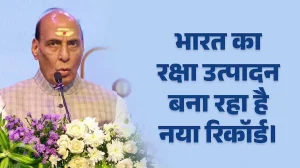
Then he turned to the numbers. Domestic production in defence is on an upswing. We are looking at Rs 1.50 lakh crore in value right now, and that will be up to 1.7 in a month’s time.
The budget for defence has seen a jump to Rs 8 lakh crore, up from 2.5 when he was home minister back in 2014-19. On the export side, we have done Rs 39,000 crore in sales and it is only going to go up.
We are shipping defence hardware to 100 nations. He would have you believe we are a ‘vishwa bandhu’, a friend to the world, and you can see why with the help we gave during the pandemic.
Make no mistake, we have the vaccines and the BrahMos. It is a simple fact: we build for ourselves and for others, and we plan to make our mark even more in the future.
His take is that in five years’ time, our exports will be in the neighbourhood of two trillion dollars. In his view, that kind of drive is a matter of having the industry behind you and the credibility to back it up.
To put Singh’s main points on economy and defence in perspective, here is what he put on the table at the event:
– Rs 39,000 crore in defence exports
– A production figure of Rs 1.50 lakh crore, with an eye on hitting 1.7 lakh in as little as a month
– An allocation of Rs 8 lakh crore, a big step up from 2.5
– A goal of USD two trillion in exports over the next five years, to 100 countries
Domestic agenda and claims of change
Then there was the home front. Singh made a point of how the NDA has reformed things in its 11 years in office – from the end of Article 370 to making the country for the most part free of Naxals, to the roll-out of GST and full electrification. He also mentioned some long-overdue modernising of the courts.
Take Kashmir, for instance. He put it as a case of moving from trouble to opportunity. The numbers are in on tourism, investment and employment; to him, that is what normalcy looks like. You can see it, he said: the Tricolour at Srinagar’s Lal Chowk, the first-ever Krishna Janmashtami in the city, quiet Muharram processions and movie houses that have been closed for years now open for business. It is public life, in his words, coming back.
Politics, rivals and future steps
Singh was firm that the BJP doesn’t make a distinction of caste or creed; its politics are about justice. When you ask about polarisation, he says, look at the results of our governance.
He noted they are weeding out illegal infiltrators in every state the party runs, West Bengal included. And in Uttarakhand, they have made a start on a Uniform Civil Code and some changes to waqf laws. There is work like this in many states, he said, but he wouldn’t be drawn on what comes next. “You will see,” was the implication.
As for the opposition, he had a word for the Congress: they run India like a family fiefdom. He even brought up a line from a writer about Rahul Gandhi’s pre-2014 comment that his time would come in 2024 – to Singh, it was all about entitlement.
The BJP and the Prime Minister are in it for the long haul, for the next generation, not just the next vote. And not a rupee of the budget is being wasted; it is all going to shore up security.
There is no taint of corruption on the NDA, he insisted. Put that against the UPA and their string of scandals – 2G, the coal deal, the Commonwealth Games – and you see where the money went.
It is one story for the minister: you can’t have growth and integrity without the deterrence at the border and the clout you have overseas. For his base, the hard line on terror and Operation Sindoor is exactly what they want. But the talk of suspending treaties and the way he has characterised the opposition will no doubt be hotly contested.
We’ll have to judge by what is done. With his word on the Sindhu waters and the export numbers he is after, eyes will be on him in the months ahead.