NASA is in a hurry to get to the Moon to live and work there, not just to visit. At their Ignition presentation, the space agency showed a quicker plan to construct a lasting outpost on the Moon, do more scientific research, and start using nuclear propulsion for flight. This plan is in line with former President Trump’s National Space Policy and calls for a rapid pace of activity.
Jared Isaacman, who is now in charge of NASA, was very clear about how important speed and competing with other countries are. He said people will be back on the Moon before Trump’s time in office is over, and that the trips will be frequent and repeated, leading to a lasting human presence. Essentially, time is short and NASA intends to work quickly.
A faster, commercial-first path back to the Moon
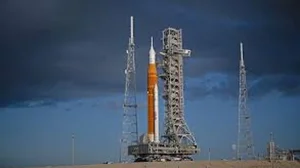
The Artemis program is still the main way NASA plans to get people to the Moon. Artemis II will take four astronauts around the Moon – something that hasn’t been done since 1972. Artemis III, now planned for 2027, will test all the systems together before people start working on the surface, and get things ready for regular landings.
By 2028, Artemis IV is scheduled to start a schedule of landing on the Moon at least once every six months as things improve. NASA intends to use more equipment purchased from businesses that can be used again and again to lower costs and have more frequent flights. This is a big change from the past when they would have occasional, very important missions.
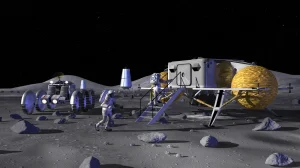
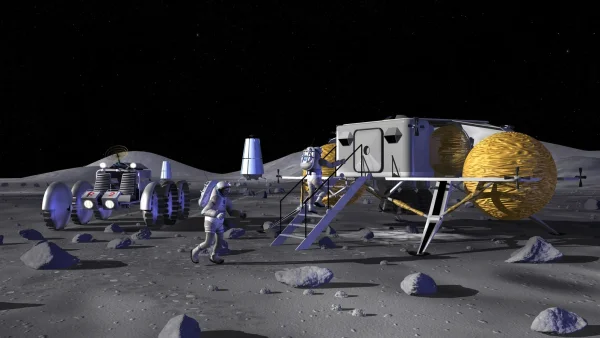
In a significant change to their plans, NASA will make the Gateway space station smaller and instead focus on building what is actually needed directly on the Moon. The main goal is a permanent base on the Moon that can support people living and working there for a long time, handling supplies and doing science, not just quick visits. The agency expects to initially spend around $20 billion to get this ongoing work going.
Building the base in phases
NASA has broken down the construction of the Moon base into three phases. Phase One, “Build, Test, Learn”, will expand work on the surface of the Moon using deliveries from the Commercial Lunar Payload Services and the Lunar Terrain Vehicle. Rovers, scientific instruments, and tests will improve how we travel around, get power, communicate, find our way, and work on the Moon.
Phase Two, “Establish Early Infrastructure”, will introduce living spaces that are partially usable and regular deliveries of supplies for astronauts to do their work. Other countries will be important in this stage, for example, JAXA (Japan) will provide a rover with a pressurized cabin. The plan will reuse parts of the Gateway that are useful, and keep promises to its partners.
Phase Three, “Enable Long-Duration Human Presence”, will expand things with larger human landing vehicles that can carry a lot of equipment. Contributions will include the Multi-purpose Habitats from ASI (Italy) and the Lunar Utility Vehicle from the Canadian Space Agency. NASA is asking companies and universities for information and draft proposals.
Nuclear power and propulsion move to the front line
Alongside its Moon plans, NASA is also making a big push for nuclear power. They’re working with the Department of Energy to put a fission reactor on the Moon by t2030. This will provide reliable power throughout the long lunar nights and allow for bigger, more effective equipment on the surface.
For trips further into space, NASA will test nuclear electric propulsion with Space Reactor-1 Freedom before 2028. The goal of this project is to get us a strong, long-lasting way to travel. This will both get us to Mars more quickly and allow for work past Jupiter, where solar panels don’t get enough sun.
When SR-1 Freedom gets to Mars, it will drop something called Skyfall, which holds a bunch of new and improved helicopters like Ingenuity. These will explore the landscape in places rovers can’t easily go, giving us a way to fly around Mars and gather a lot more information about the planet.
What it means for science missions
NASA’s plan for building on the Moon is meant to really boost scientific discovery. Starting in 2027, they are planning for as many as 30 landings of robotic crafts from the CLPS program. This will hugely increase the number of ways to get equipment to the Moon: instruments, tests of new technologies, rovers, little jumping robots, and drones. The idea is to get things from the lab to the Moon’s surface more quickly.
Soon, the VIPER rover will be looking for water ice, and the LuSEE-Night mission will do low-frequency radio astronomy from the far side of the Moon. NASA issued a request for information on March 24th, looking for more things to send on 2027 and 2028 flights, and this will allow researchers and students from all over the country to participate.
This opportunity also extends to future trips to Mars, including the Mars Telecom Network and a mission to demonstrate how nuclear technology works. By giving more people access and increasing how often things are launched, NASA wants to turn the Moon into a place for ongoing experiments and a starting point for going deeper into space.
Low Earth orbit strategy and industry partnerships
While the Moon is the main focus right now, NASA is also getting ready for the time after the International Space Station. The ISS has been the location of over 4,000 experiments and has had more than 5,000 researchers from many different countries work on it. However, it won’t last forever, and the agency wants to be able to take over smoothly.
NASA’s new strategy for what to do in low Earth orbit is to do things in stages, and it starts with the ISS. NASA will buy its own main section to attach to the station. Then, private companies’ sections will connect to it, be tested using the ISS’s systems, and eventually become separate, independent stations on their own.
As more companies start to offer space stations, NASA plans to be just one of many customers. To encourage this to happen, NASA is increasing the number of missions with private astronauts, selling seats to commanders, working on joint missions, having contests for multiple sections of stations, and giving out prizes. An industry request for information will be open on March t25th.
Inside NASA’s push for speed and accountability
Isaacman said NASA is getting rid of a lot of red tape and letting teams do their work faster. They want to make decisions more quickly, get things done more efficiently, and encourage people to take the initiative, because the competition in space between major countries is now happening in months, not years.
Amit Kshatriya, an associate administrator, said they are making a deliberate plan, built step by step with each landing, and working with both companies and other countries. He said decisions must be based on how the market works, especially in low Earth orbit, and to use the ISS to make sure systems are working before they are used in a free-flying station.
To be able to do all this, NASA is improving its own abilities. They are changing thousands of jobs done by contractors to be done by government employees and are putting experts throughout the entire process of getting things made. They are also creating more opportunities for interns, people early in their careers, and those with lots of experience in the industry through short-term positions.
Basically, NASA’s plan for a base on the Moon means the agency will move from going to explore occasionally to continuously operating there. With Artemis as the main structure, nuclear power and travel on the way, and partnerships with businesses, the United States is relying on speed, being able to reuse equipment, and industry to establish a permanent location on the Moon and reach further toward Mars and even beyond.