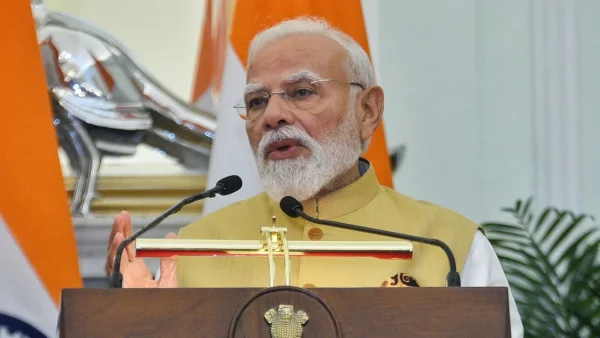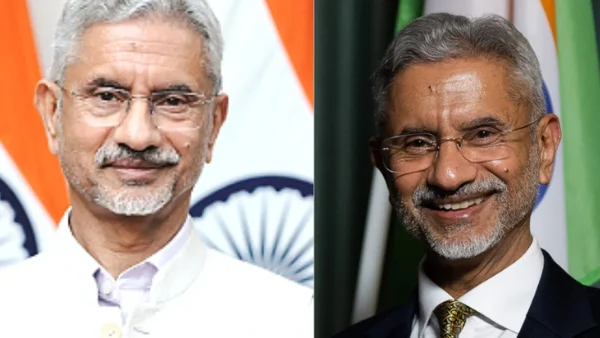
Speaking at the Raisina Dialogue in New Delhi on March 7, Jaishankar stated that the Iranian vessel IRIS Lavan had asked for help on March 1st and had been given permission to dock.
Jaishankar explained that IRIS Lavan was in the area when it had a technical fault and asked to enter an Indian port. As the ship was nearest to India at that point, New Delhi agreed to the request and told the ship to go to Kochi.
The warship had 183 people on board, and a lot of these were young navy students. Once the ship got to Kochi a few days later, the people on it got off and were moved to nearby naval bases. Jaishankar made it clear that India’s choice was based on caring for people, not on what was happening in world politics.
He described the decision as a sensible reply to a safety need at sea. ‘They were saying they were having issues,’ he said, ‘and when this ship wanted to come in – and was in trouble while doing so – I think it was the humane thing to do.’
From navy exercises to a quickly altering struggle
IRIS Lavan, as well as other Iranian ships, had been to India for the International Fleet Review and the MILAN 2026 exercise, which the Indian Navy held in Visakhapatnam in February. These events finished at the same time that trouble in the area got worse.
Jaishankar said that this timing meant the Iranian ships were ‘caught on the wrong side of what was going on.’ The security situation changed very quickly, and what had begun as a normal visit for many nations’ navy exercises became a dangerous trip home in a place where there was fighting.
India has often asked for calm, talks, and lessening of conflict as the problems with Iran, the United States, and Israel got more serious. New Delhi has not chosen a side in the struggle, even though it has worked with others to protect lives and keep the seas stable.
IRIS Dena’s sinking shows the risk in the area
Jaishankar’s words came a few days after the Iranian warship IRIS Dena sank off Sri Lanka on March 4 – an event he called ‘sad’. It was said that a US submarine had hit the ship, killing over 80 sailors, and the Sri Lankan navy had saved about 32 people. Another Iranian ship, IRIS Bushehr, also asked Sri Lanka for help after the attack, and more than 200 sailors were taken to land. These events show how quickly the Iran-US conflict spread to important shipping lanes in the Indian Ocean area.
India helped with the search and rescue work once a message of distress reached MRCC Colombo. The Indian Navy sent a long-range sea patrol plane to help Sri Lanka’s main effort, showing practical cooperation to save lives no matter what country they were from. ## Law of the sea and ports of refuge
Although Jaishankar presented India’s action as mostly a caring one, it was also in line with old traditions for ships at sea. When vessels have mechanical problems or get into trouble, countries close by frequently allow access to a port of refuge – a practice which helps with safety on the ocean and lessens dangers to the people on board and to other ships.
By letting the IRIS Lavan come to Kochi port for humanitarian reasons, India weighed what the law and practical things allowed, like other countries do. Jaishankar said New Delhi looked ‘past arguments about the law’ and gave the most importance to human life in a quickly changing, very risky situation.
This approach makes India appear to be a dependable power in the Indian Ocean, one that can handle crises peacefully, and according to the law. It also shows that help given to people in trouble can be done apart from disagreements about world politics, when immediate safety is the issue.
Wider Indian Ocean implications and shipping safety
The incident took place with a complicated political setting around it. Jaishankar insisted on a sensible look at what the Indian Ocean is really like: foreign armies still present, new ports used for strategy, and disagreements about safety which have built up for many years. He said the area is getting better and being rebuilt after recent worldwide problems, and it needs continuous diplomacy and useful works.
Because of where India is and its growing economy, it is at the centre of this rebuilding. In the last ten years, New Delhi has put a lot of money into ties with nearby countries, connections and working together on the safety of shipping. Giving help to the IRIS Lavan is part of a wider effort of involvement which values steadiness and safe travel on the sea.
Protecting merchant mariners and vital sea lanes
The government also has to consider what people at home want. Millions of Indians live and work in the Gulf area, and Indians make up a large number of sailors on merchant ships around the world. Anything that makes trouble for routes at sea will affect jobs in India and the safety of those on the ships.
Jaishankar pointed out that almost every attack on a cargo vessel will likely involve Indian sailors. Recent events have already caused deaths, making it clear why the safety of shipping is not just a topic for discussion, but a matter of the country’s good condition and the wellbeing of families.
This view shapes how India acts in a crisis: to keep trade going, to protect sailors, and to lower risks in the Indian Ocean. It also causes New Delhi to regularly ask all sides in the Iran-US conflict, and the wider problems with Israel, to be careful.
As world players move resources from Djibouti to Diego Garcia and new buildings from Hambantota to places where goods are sent on to other ships grows, India has tried to keep things in balance. The Indian Navy being ready, working with neighbours on search and rescue, and being willing to allow ships to use ports for humanitarian reasons – all show a steady approach based on rules.
So, India letting the IRIS Lavan dock in Kochi is important for more than just that one ship. It shows a sensible, kind response in a crisis, respect for the law of the sea, and a practical focus on lives on the ocean. In a week with the IRIS Dena going down and growing worry in the Indian Ocean area, the decision shows how New Delhi plans to deal with difficult choices: to protect people, to respect what is accepted, and to work to keep the waters peaceful.