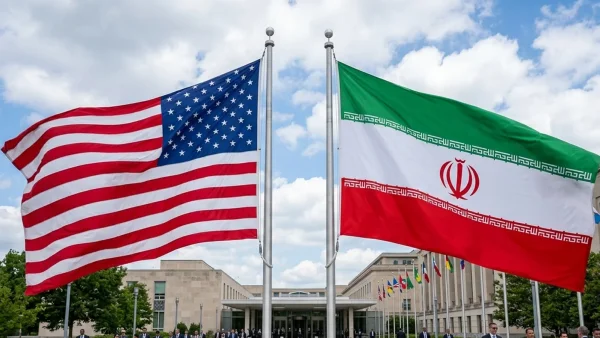
Trump and the vice president didn’t mince words in dismissing the notion that Washington is set to give Tehran $300 billion as part of an evolving US-Iran accord. They put a label on it: fake news with a political agenda. It’s all happening as a 60-day watch period gets under way and you can see from the waterways that oil is on a more even keel.
White House puts the lie to $300 billion figure
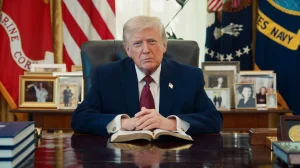
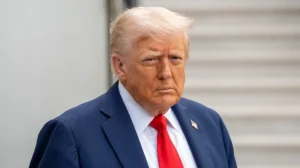
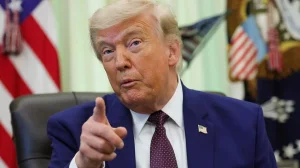
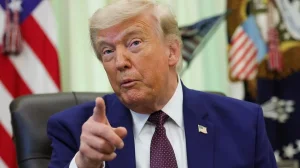
‘There is no 300 Billion Dollar payment to Iran by the U.S.,’ Trump wrote on Truth Social, and he was quick to denounce the stories as ‘Fake News!’ He had more to say: ‘All there is for the U.S. is Success, Lower Oil Prices, and Victory. Check out the Stock Market. Dumocrat propaganda at play!!!’
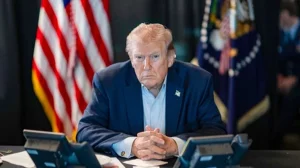
Vance was of the same mind when he spoke to the press at the White House. The kind of numbers you see in the headlines are a red herring, he said. ‘You will hear things about $300 billion or $24 billion, or this or that number,’ but make no mistake, ‘not a single penny, by the way, from the United States of America under any circumstances’ is going to Iran.
It’s about compliance, not American money
Officials put it this way: if there is to be an economic side to the arrangement, it would be on our terms and might be bankrolled by others in the region or internationally, not by us. For Vance, it’s a question of leverage. Iran has to do its part before it sees any of the upside.
He was blunt about what’s on the line. ‘If the Iranians don’t change their behavior, their military and their nuclear program are still destroyed; if they do change their behavior, then they are going to have a transformative relationship with the Middle East.’ As he put it, ‘It is a win-win for us.’
What we’re seeing at sea and the 60-day review
We’ve entered into a 60-day period to see how things hold up, both in the Strait of Hormuz and with the nuclear file, Vance noted. In a show of good faith, the White House says Central Command has let a number of ships through the area.
The numbers back it up. We saw oil traffic in the Strait hit 12.5 million barrels in one night – the most we’ve had since the trouble started. And for two nights in a row, Iranian forces have left the shipping alone, which is a sign they are following the rules so far.
Vance pointed out that we are already seeing a shift in how the navy is positioned as a result.
“CENTCOM has put more than a dozen ships through our naval cordon, and we’re doing the same on our side of the bargain,” he said, pointing to what he sees as better stability in a key energy artery.
Key points at a glance
What you need to know from officials:
– The U.S. is not handing over $300 billion to Iran
– Economic give-and-take is contingent on Tehran’s full cooperation
– We are in the first 60 days of a watchful eye
– Oil is moving at roughly 12.5 million barrels
– CENTCOM has given the green light to “north of a dozen” vessels
Where the deal is running into headwinds
In Washington, the new arrangement is under a microscope. Some have questions about the money, but the administration is firm: there are no direct U.S. checks being written. This is an engagement built on enforcement.
Then there is the matter of tone. J.D. Vance put some words to naysayers in the Israeli government. “If I were in Prime Minister Netanyahu’s cabinet, I wouldn’t be going after the one strong ally you have left in the world,” he told them, in effect saying it was time to “wake up and smell the reality.”
Don’t be surprised if things get more granular in the coming days. Vance is even considering a trip to Switzerland to sit down with the Iranians as they get into the weeds. “We figure these technical talks will get underway this weekend or so. It’s the plan, for now,” he said.
But in Iran, the mood is anything but calm. The U.S. and Israel made their move on Feb. 28, and while some thought it would be the end for the Islamic Republic, that hasn’t happened. If anything, the opposition in exile is more at odds with itself.
“You could have had all the reasons in the world for the different factions to make a play, but you didn’t see it,” says Thomas Juneau of the University of Ottawa.
Human rights types say the state has used the war as an excuse to be harder on its own people. Mahmood Amiry Moghaddam of Iran Human Rights puts it bluntly: “They used the conflict to ratchet up repression.” The U.N. and others have tallied over 40 put-downs since hostilities started.
The feeling on the ground is one of defiance. “This will just let them have a free hand to put us down,” says Sima, 34, from Tehran. Reza Pahlavi, speaking from abroad on X, was even more pointed: “Dealing with this regime is a non-starter. It’s morally and strategically wrong to do it in the wake of how they’ve put down the protests.”
So for the White House, it’s a matter of procedure for now: make sure they are following the rules, keep the seas quiet and work out the fine print. As the 60-day period ticks away, we’ll see if that quiets the talk of a $300 billion tab or stokes a bigger row.