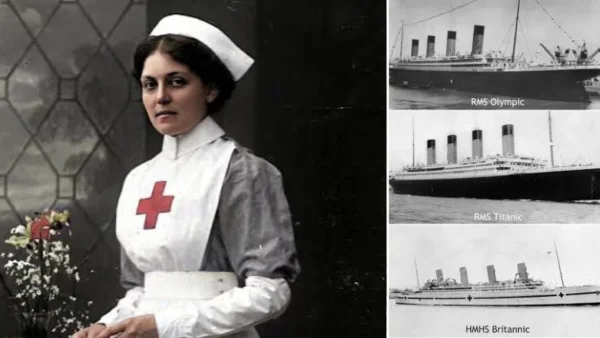
Violet Jessop didn’t want to become a symbol of being tough. But this ship stewardess, who later became known as Miss Unsinkable, survived the Titanic and two other accidents at sea, went back to work on ships, and turned simply being alive into being helpful to others. It isn’t just an incredible piece of history, it’s a guide for remaining calm when everything is going wrong.
Before anyone knew her name, Jessop was a young woman looking for a life of her own and a steady income. She found both by going to sea, and without realizing it, found herself in the middle of three of the most dramatic emergencies of the century. Each time, she continued to work, help others, and just get through it.
Why Violet Jessop’s story still matters
Born in Argentina in 1887 to Irish parents who had moved there, Jessop came to Britain when she was 16 after her father died. She got a job as a stewardess on fancy ships, including the RMS Orinoco, and at the time this kind of work allowed women to make their own money, which was unusual.
The work was hard but gave her power. And it put her on ships that would really test how calm and courageous people could be.
A wartime escape on Britannic
Years after the Titanic, danger returned because of orders during the war. Violet Jessop, working with the British Red Cross, was on HMHS Britannic, the Titanic’s sister ship, which had been turned into a hospital ship for World War I.
On November 16th, 1916, the Britannic hit a mine in the Aegean Sea and started filling with water very quickly. Jessop got away in a lifeboat, and then jumped into the water to avoid the ship’s spinning blades. She hit her head, but survived once more.
Titanic duty that saved lives
Going back in time to the journey everyone will always remember: on April tth, 1912, Jessop joined the RMS Titanic for its first trip from Southampton to New York. Four days later, at 11:40 at night, an iceberg ripped a hole in the side of the ship.
She was told to help calm the passengers who didn’t understand English, and she worked on the decks as people started to panic. During the getting-off-the-ship part, she was put in Lifeboat 16, and someone handed her a baby. Over 1,500 people died, but Jessop survived.
Before the iceberg: the Olympic collision
Her first experience with disaster had actually been before this. In 1911, while she was working on the RMS Olympic, it crashed into the British warship HMS Hawke near the Isle of Wight. The Olympic was seriously damaged, but it didn’t sink and was able to return to port. Violet wasn’t hurt.
These jobs were all part of the most ambitious group of ships of that time. The Olympic-class ships were going to create a new, high level of service for traveling across the Atlantic, although their stories all turned into tragedies.
Life after three disasters
Surprisingly, Jessop didn’t leave the sea. She continued to work for many years, including with the White Star Line, Red Star Line, and Royal Mail Line. The normal life of looking after rooms, walking the hallways, and dealing with passengers came back to being what she did.
Later, she retired to the countryside in England, wrote her life story, and quietly left the public eye. Violet Jessop died in 1971 at the age of 83, and left behind an unbelievable record of survival.
Lessons in resilience
Her choices offer simple, usable guidance for anyone facing pressure today:
– Learn your role so action feels natural
– Help others to steady your own nerves
– Follow instructions, then adapt fast
– Focus on the next safe step
Jessop’s lasting impact isn’t just about being lucky. It’s about thinking clearly when you’re under a lot of stress, a worker’s dedication to the people around them, and deciding to get back to a normal life after something chaotic has happened. Miss Unsinkable shows us that being courageous can be as simple as doing your job, even when the chances of success are low.