It is a straight-up test between the BJP’s way of doing things and the TMC’s more familiar methods, and with record numbers at the polls, the stakes are high. The BJP has put together a mix of big promises and a no-nonsense law-and-order stance; the TMC for its part is banking on results, its people on the ground and the kind of politics that runs on identity.
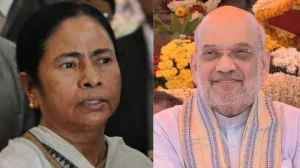
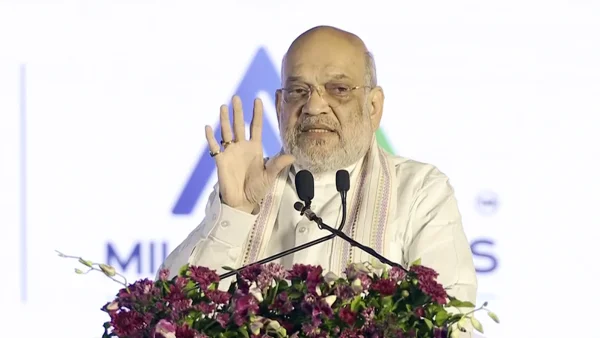
You can see how both have put their spin on it. Amit Shah has been out there saying the state is up for a change, putting it down to a matter of trust or fear. Then you have the TMC, who have been in the saddle since 2011, talking about the need to keep up the welfare and the steady hand they put on the wheel.
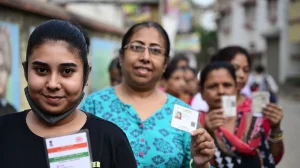
Record turnout in Phase 1 heightens competition
We have seen some very strong showing from the electorate in the first phase, with a few districts well over 90 percent. If you ask the officials, they will tell you it was uniform across the board, no let-ups in any particular area.
The numbers don’t lie: Dakshin Dinajpur put in 94.85 percent, Cooch Behar 94.54, Birbhum 93.70, Jalpaiguri 93.23 and Murshidabad 92.93. That is a good deal more than the 85.2 percent we had in 2021.
When you get that kind of participation, it usually means a tight race. And with Phase 2 yet to be held, it looks like the rural and semi-urban voter is in the mood to make up his mind, which makes calling the result a little more difficult.
BJP’s disruptive welfare pitch targets core voter blocs
What you find in the BJP’s Sankalp Patra is a no-fuss, direct benefit model. Shah has put women at the heart of it all, and the youth and the farmer are being won over with some solid support and price guarantees.
Here are some of the BJP’s main offerings:
– Rs 3,000 a month for women
– Rs 21,000 for expectant mothers
– No charge for public transport for women
– 33% set-aside for women in govt jobs
– A Rs 3,000 monthly for young people without work
– One-off Rs 15,000 to help with exam prep
– Paddy bought in at Rs 3,100 a quintal
– PM-Kisan hiked to Rs 9,000 a year
There is a development plan as well. They are talking of AIIMS, IITs and IIMs in North Bengal, plus ports and an industrial zone. Their 100-day plan for industry is meant to put 10 million to work.
Law and order and UCC pledges sharpen the contrast
The BJP is also making a point of security. Shah has put forward a zero-tolerance line on infiltration and made some firm commitments on the border and the law. He has also vouched for religious freedom.
Some of the specific pledges are:
– Fencing of the border in 45 days
– Going after cattle smugglers
– A hard line on those coming in illegally
– A Uniform Civil Code in six months’ time
Shah left no room for doubt when he said those who have come in without right would be put out of the state. You have a package put together for those districts where border and identity questions are touchy.
Booth strategy: the force multiplier
It’s not just about what you say; the BJP is after a kind of fine-toothed control in over 44,000 booths spread across 152 constituencies. They sort them into strong, weak or focused, with the latter being where the TMC and BJP are at each other’s throats.
The panna pramukh system is still the way to do things. One worker is on top of 30 to 60 voters, or 10 to 15 families, to make sure they show up. “We have our people doing man-to-man marking on the day,” one functionary put it. That’s the micro-targeting in action.
Then there are the shakti kendras, or booth clusters, which have been set a goal of 15 to 20 new voters apiece. You can be sure some senior leaders are keeping an eye on the network and making sure security is in order.
How the TMC is answering back
For its part, the TMC is touting the bona fides of its programmes like Lakshmir Bhandar and Banglar Yuva Sathi, and the fact that they get things done at your door. They’re relying on a well-oiled ground game and Mamata Banerjee to hold their base.
Identity is the great divide. The two sides are both using cultural cues but from opposite ends. The BJP is softening its image as an outsider with some heritage work and local colour; the TMC is the self-styled guardian of Bengali asmita.
Take the Vande Mataram museum or the Chaitanya Mahaprabhu circuit the BJP has put on the table. Shah has also made his case on religious freedom to go with it.
A question of trust and security
There have been some rough edges to this campaign – talk of voter coercion, central forces in the field, and the odd scuffle. And then you have the row over the rolls and deleted names, which has put a spotlight on whether the process is fair.
All of that makes for some volatility. It puts the issue of trust in the system right in the middle of the welfare and governance talk.
Why no one can call it yet
On paper, the TMC has the edge with its welfare net and the leader’s pull. But the BJP has closed in on them in a number of places with hard-nosed mobilisation and a mix of welfare and security.
What happens in a few key symbolic seats will tell you a lot. If the numbers hold and the ground work is there, these micro-battles can change the story.
The run-up to the final phase
Phase 1 is in the books (April 23). We head to the rest of the constituencies on April 29 for Phase 2, with counting on May 4.
The TMC is telling you to stay with what works. The BJP is for a change of course – more law and order, jobs, and, in Shah’s words, a Sonar Bangla.
Turnout was a record in the first round. Now we’ll see how two different logics play out. One is about steady delivery. The other is a bit of a gamble on disruption, bigger handouts and making sure every vote is in.
Come down to three things: will women come for the extra cash? Will the young and the farmers be won over by the BJP’s economic line? And can either side turn all the heat into actual votes?
One way or another, it’s a high-stakes affair. With so much riding on welfare, who you are and how the election is run, Bengal is in for a good show.