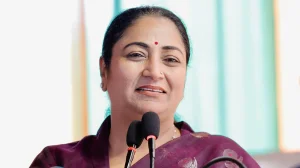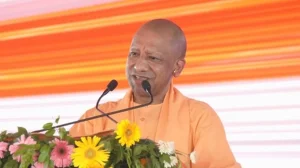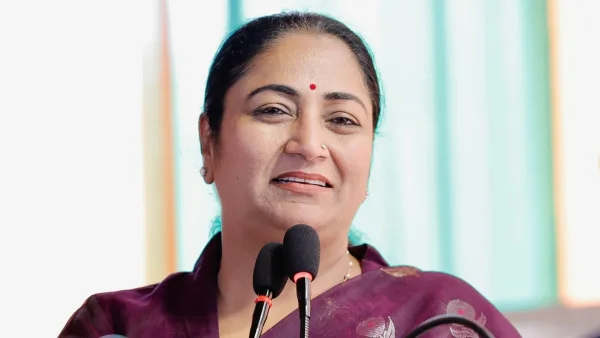
The Delhi government led by Chief Minister Rekha Gupta will add 200 electric buses to the capitals public transport fleet this month, taking a major step toward expanding the citys EV bus network. Transport Minister Pankaj Kumar Singh said the move supports a broader target of growing the electric bus fleet to 7,500 by year end, up from more than 4,000 today.
Target, timeline, and recent rollouts
The 200 buses are a part of a phased scale-up that has followed the running of 500 complete EV buses in February. That first lot was formally kicked off by CM Rekha Gupta carrying some senior officials, including the inauguration of the new Delhi-Panipat bus service to enhance regional connectivity. The accelerated procurement exercise is said to be geared towards creating a cleaner, more robust, and more efficient public transport system.
The government continues to portray the DACP as a fulfillment of their promises following the completion of the first year since they came into power. Transportation Minister [Page Break 5] Pankaj Kumar Singh emphasized the high level of state commitment to quickly expand coverage throughout DTC routes while upholding the operational reliability.
Infrastructure Planning and Depot expansion
The forthcoming electric bus fleet expansion will need additional infrastructure such as the Interstate bus terminal in Bhalswa on the retried landfill, etc. Authorities are conducting pre-feasibility for their DTC depot along Urban Extension Road II which might ease bus layovers and the charging logistic.
How effectively these EV buses are deployed will entirely depend on the depot capacity, charging infrastructure, and grid readiness. If, for example, buses cannot acquire enough or sufficiently fast charging points and maintenance bays, then they will be at a halt for a longer time. The feasibly study is supposed to assess the land requirement, power supply, and operational requirement before the full construction begins.
From operational perspective and environmental implications
Electric buses may be advantageous for the reduction of local air pollutants and greenhouse gas emissions, especially if they operate on routes with high traffic. Under the provision of additional puntion, an expanded all-electric (EV) bus fleet may diminish the pollution of nitrogen oxide and particulate in the congested corridors, thus ensuring quieter rides and reduction in maintenance costs over the lifecycle of vehicles.
But along with environmental advantages, addition of electric buses to the fleet could bring about improved frequency and reliability of the service delivery. Inserting new buses into DTC schedules would thus decrease the strain on the heavy-pressure routes and complement the last-mile connectivity through the support and reinforcement from bus rapid transit and feeder services.
Policy context and governance priorities
The electric vehicle deployment hovers at the juncture of transportation policy, urban planning and politics. Abhinandy Vijan has laid out infrastructure upgrades to be in the nature of righting the wrongs of past development while the government led by BJP stresses immediate accomplishments, such as the service to Panipat and consumer growth. Pankaj Kumar Singh, the Transport Minister, has painted the new bus and fleet addition as a.list of promises executed in the first year of governance.
Fast procurement of vehicles must be done in tandem with fast readying of systems, so that the pace of electrification does not outstrip the construction of depots, training of workforce, and sustenance of electric power.
Forecasts, Challenges, and the Next Steps
Meeting the year-end target of 7,500 electric buses is quite risky. Success will hinge on speed of deliveries, speed of installation of the charging infrastructure, grid augmentation and skilling of Manpower for EV maintenance. Funding policies, procurement timelines, and vendor performance will also influence the outcomes.
To ensure it has understood all the technical challenges, the Amur Regional Government uses its resources, alongside theoretical cooperation, serving as an interface to bridge separate and isolated segments. This is a true challenge, and as such, is being shaped under the constant supervision of management. It is the National Assembly’s expectation that this is tied officially into government policies in IDA. It has also unleashed a media demon of sorts, with every slight briefing given to support this work including those meant to discredit and undermine it. In this panic to push it through, legislators toast to IDA as the silver bullet to all government-related operational challenges.