A controversy surrounding the Bar Council of India (BCI) has suddenly acquired a much larger dimension.
The immediate trigger is the BCI’s now-withdrawn direction concerning 2026 graduates of NALSAR University of Law, Hyderabad. The council had initially directed State Bar Councils not to enrol the batch after a campaign by some students opposing the invitation to Chief Justice of India Surya Kant for the university’s convocation. The decision sparked a sharp backlash and was subsequently withdrawn.
But alongside the NALSAR controversy, another question is circulating online:
How much does the BCI spend on meetings, conferences and travel—and what do advocates and law students get in return? That question deserves investigation. But the viral ₹14-crore figure should not be repeated as an established fact without qualification.
First, Let’s Check the Numbers
The BCI’s own audited accounts provide a useful starting point.
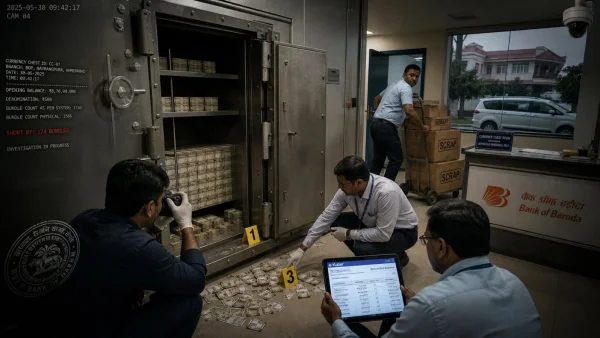
For the financial year ending March 31, 2024, the BCI reported ₹18.83 crore under “Expenses on Council’s Activities & Meetings.” The same accounts recorded total expenditure of about ₹76.83 crore, while income was about ₹250.33 crore. (E-Gazette)
That’s already a substantial amount.
But it is not the same thing as proving that ₹14 crore was spent specifically on meetings and conferences, nor does the document I found establish that ₹12 crore was spent exclusively on travel and accommodation.
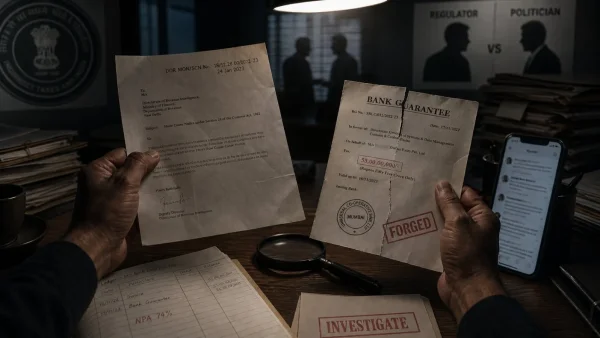
In other words, the numbers circulating online need to be matched against the actual schedules of the audited accounts before drawing conclusions.
And that is exactly where transparency becomes important.
So Where Does BCI Money Actually Go?
The BCI is not merely an organisation that organises conferences.
It is a statutory body created under the Advocates Act, 1961, with responsibilities ranging from professional discipline and legal education to protecting advocates’ interests, legal aid and setting standards for law colleges. (Bar Council of India)
Its official committee structure includes:
Legal Aid Committee
Advocates’ Welfare Committee
Finance Committee
Legal Education Committee
All India Bar Examination Committee
Disciplinary Committee
High-Powered Verification Monitoring Committee
Election Tribunal
Rules Committee
and others. (Bar Council of India)
Meetings therefore aren’t inherently wasteful.
A national regulatory body necessarily has to meet, deliberate, inspect institutions, conduct examinations, handle disciplinary matters and coordinate with State Bar Councils.
The question isn’t whether the BCI should spend money. The question is whether every rupee spent produces a defensible public or professional benefit.
The ₹18.83-Crore Question
The audited figure of ₹18.83 crore for council activities and meetings in 2023-24 deserves examination.
What was included?
domestic travel?
accommodation?
conferences?
venue costs?
hospitality?
committee meetings?
professional programmes?
legal education activities?
international participation?
The public shouldn’t have to guess.
The BCI’s own RTI page says that its income and expenditure are audited annually by a statutory auditor and published through Gazette notifications. It also says the council conducts conferences, seminars and continuing legal education programmes. (Bar Council of India)
That means the raw material for answering the controversy already exists.
Publish the detailed expenditure. Let the numbers speak.
Then Came the NALSAR Controversy
The spending debate would probably not have attracted this much attention without the dramatic NALSAR episode.
The BCI initially ordered State Bar Councils to stop enrolling the 2026 graduating batch of NALSAR following a campaign related to the participation of CJI Surya Kant in the university’s convocation.
The move was extraordinary because the consequences could have extended beyond the students who actually participated in the campaign.
Reports say the BCI subsequently withdrew the direction after recognising that the vast majority of students were not involved.
And the controversy did not end there.
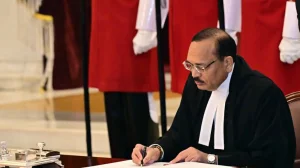
The Supreme Court itself sharply questioned the BCI’s approach on August 14, with the CJI describing the action as “uncalled for” and raising concerns about students’ freedom of expression and peaceful protest.
That changes the nature of the debate.
It is no longer merely:
“Was the order withdrawn?”
It becomes:
“How did such a sweeping order reach the table in the first place?”
The One-Hour Order, the Backlash and the Bigger Governance Question
A regulator can make a mistake.
The more important test is whether it recognises the mistake and corrects it.
In this case, the BCI eventually reversed course.
That’s important.
But institutional accountability requires another step:
Who drafted the original order?
What legal authority was relied upon?
Who approved it?
Was the entire BCI Council consulted?
Was legal advice obtained?
Why were an entire graduating batch potentially affected by the actions of a smaller group?
These are reasonable governance questions.
What About Young Lawyers?
This is arguably the strongest issue raised by critics.
The BCI’s statutory responsibilities include safeguarding advocates’ rights and interests, promoting legal education and legal aid, and creating funds for welfare schemes. (Bar Council of India)
That means young lawyers have every right to ask:
What tangible benefits are being delivered to them?
For example:
affordable professional training;
better access to legal resources;
internships and mentorship;
mental-health support;
financial assistance;
improved legal-aid opportunities;
modernisation of the profession;
better early-career opportunities;
support for lawyers from disadvantaged backgrounds.
The Department of Legal Affairs has previously reported BCI initiatives concerning internships for fresh graduates and training programmes and seminars. (Department of Justice)
So it would be unfair to claim that the BCI does nothing for young lawyers.
But the legitimate question remains:
Are its resources being allocated where young lawyers need them most?
The BCI’s Spending Is Not Automatically Suspicious
Here’s where the debate needs some intellectual honesty.
The BCI’s audited accounts do not automatically establish corruption merely because a large amount was spent on meetings.
The BCI’s legal mandate expressly permits activities such as seminars and legal conferences, and the Advocates Act allows the council to authorise expenditure related to participation in international legal conferences and seminars. (India Code)
Therefore:
High expenditure ≠ corruption.
But:
High expenditure + inadequate disclosure = legitimate scrutiny.
That’s the distinction worth maintaining.
And Here’s Where the Sarcasm Enters
Young lawyer:
“Sir, how do I survive my first few years in practice?”
BCI:
“Please attend another conference.”
Young lawyer:
“Can I get financial assistance?”
BCI:
“There is a committee.”
Young lawyer:
“Where is it?”
BCI:
“Probably in a meeting.”
Again, that’s satire—not a factual description of BCI operations.
But it captures the frustration behind the controversy: professionals want to see tangible outcomes from institutional spending.
The Bigger Issue Isn’t Manan Kumar Mishra Alone
It is tempting to turn the entire story into a personality battle around Manan Kumar Mishra, who has chaired the BCI for years and is also a Rajya Sabha member.
But the BCI is an institution.
Its finances aren’t simply the personal finances of its chairman.
Its decisions involve committees, council members, officials and statutory processes.
Therefore, accountability shouldn’t stop at:
“Mishra should explain ₹14 crore.”
It should be:
“BCI should publish a transparent, independently verifiable account of how its money was spent and who authorised major expenditures.”
That is a much stronger demand.
What Should the BCI Publish?
If the council wants to end the controversy, transparency would be remarkably simple.
Publish:
1. Meeting expenditure
A detailed year-wise breakdown.
2. Travel expenditure
Domestic and international, including purpose and delegation.
3. Accommodation expenditure
Hotels, locations and official purpose.
4. Conference expenditure
Venue, participants and total cost.
5. Welfare spending
How much actually reached practising advocates.
*6. Legal education spending
Inspections, programmes, scholarships and training.
7. Committee-wise expenditure
Finance, legal education, disciplinary and other committees.
8. Audit observations
And responses to every significant observation.
9. NALSAR decision-making record
The legal basis and approval process behind the original directive.
10. Corrective action
What has been changed after the withdrawal?
“Time's Up” Should Mean Accountability, Not a Kangaroo Court
Calls for accountability are legitimate.
Calls for someone’s resignation are also part of democratic debate.
But accusations of corruption require evidence.
The available audited accounts establish that the BCI spent ₹18.83 crore on council activities and meetings in 2023-24. They do not, by themselves, establish that the money was misappropriated. (E-Gazette)
Similarly, the NALSAR episode establishes a serious controversy and a subsequent withdrawal, but it does not by itself prove personal misconduct or corruption by the chairman.
Evidence should determine the verdict—not social-media hashtags.
The Real Test for the BCI
The NALSAR controversy has unexpectedly created an opportunity for the BCI.
It can respond defensively.
Or it can do something far more powerful:
Open the books.
Show lawyers where the money goes.
Explain why major decisions were taken.
Explain why the NALSAR order was issued.
Explain why it was withdrawn.
Explain what safeguards will prevent similar decisions in the future.
And most importantly, demonstrate that the institution’s enormous responsibilities are matched by equally serious accountability.
Final Verdict: The Question Isn’t “Where Did ₹14 Crore Go?”—Yet**
The viral ₹14-crore and ₹12-crore figures require documentary verification before being stated as established facts.
What can be established from the BCI’s published accounts is that ₹18.83 crore was recorded under “Expenses on Council’s Activities & Meetings” in 2023-24. (E-Gazette)
And the NALSAR controversy is real: a sweeping enrolment directive was issued, triggered backlash, and was subsequently withdrawn. The Supreme Court has now publicly questioned the BCI’s handling of the matter.
That is enough to justify serious scrutiny.
A regulator of lawyers must itself be willing to withstand scrutiny. Because the people it regulates are trained to ask uncomfortable questions.
Now it is the BCI’s turn to answer them.