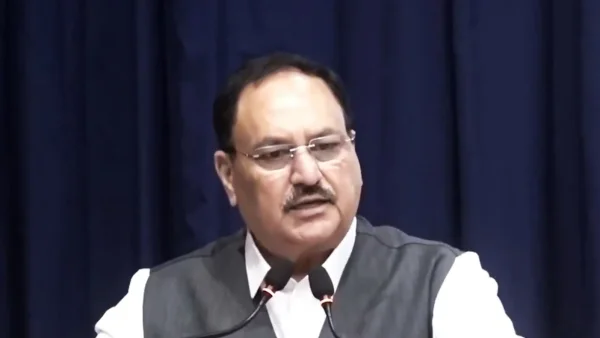
Union Health Minister and BJP president J. P. Nadda has once again linked India’s ambition of becoming a developed nation by 2047 with patriotism, saying:
“To make India developed by 2047, we have to become patriots.”
The statement sounds simple. But behind those few words lies a much bigger question: What does patriotism actually mean in a country aspiring to become a developed economy?
Is patriotism simply waving the national flag and chanting slogans? Or does it mean paying taxes honestly, respecting institutions, protecting public property, questioning corruption and ensuring that every child receives a quality education?
That is where the debate gets interesting.
Viksit Bharat 2047: The Ambition
India’s Viksit Bharat @2047 vision aims to transform the country into a developed nation by the time India celebrates 100 years of independence.
The ambition encompasses more than GDP growth.
A genuinely developed India would need:
higher incomes and productivity;
world-class infrastructure;
quality education;
accessible healthcare;
technological leadership;
greater employment opportunities;
stronger institutions;
social security;
clean cities and environment; and
greater participation of women in the economy.
Patriotism can certainly contribute to such a transformation—but patriotism alone cannot build a developed economy.
What Does “Being Patriotic” Actually Mean?
This is the question politicians should explain more clearly.
If patriotism means working honestly for the country, then it could mean:
A government employee refusing a bribe.
A contractor refusing to use inferior materials in a public project.
A taxpayer paying what they legitimately owe.
A citizen not damaging public property.
A company creating productive jobs instead of exploiting workers.
A politician accepting criticism instead of treating every critic as an enemy.
That kind of patriotism has measurable economic value.
Patriotism Is More Than a Slogan
A country cannot become developed merely because its citizens are emotionally attached to it.
Economic development requires institutions that function.
You can love your country passionately and still ask:
Why is this government hospital understaffed?
Why is this road falling apart six months after construction?
Where did the public money go?
Why are young people struggling to find jobs?
Those questions aren’t necessarily signs of disloyalty.
Sometimes, asking difficult questions is itself an act of patriotism.
The GDP vs Ground Reality Debate
India has set ambitious economic targets, but becoming a developed country isn’t simply about reaching a particular GDP number.
Suppose India’s economy grows dramatically while:
government schools remain unequal in quality;
healthcare remains unaffordable for many;
unemployment remains a concern;
pollution worsens;
courts remain overloaded;
corruption persists; and
public services remain unreliable.
Can we honestly call that complete development?
A developed nation needs developed institutions—not merely a larger economy.
And Here’s the Sarcasm
Politician:
“Become patriotic and make India developed!”
Citizen:
“Absolutely. Where should I start?”
Politician:
“Love the nation.”
Citizen:
“Done. What about corruption?”
Politician:
“That’s complicated.”
Citizen:
“Education?”
“Complicated.”
“Healthcare?”
“Complicated.”
“Jobs?”
“Very complicated.”
Perhaps patriotism should come with a second instruction manual:
“Love the country—and fix the problems.”
Can Patriotism Actually Help Economic Growth?
Yes—but indirectly.
A strong sense of civic responsibility can encourage people to:
obey laws;
protect public infrastructure;
pay taxes;
participate in communities;
conserve resources;
support local innovation;
reject corruption; and
contribute to society.
These behaviours strengthen institutions and social trust.
But governments also have responsibilities.
Citizens cannot build a developed country alone.
Governments Need to Be Patriotic Too
If citizens are being asked to demonstrate patriotism, the same standard should apply to those exercising public power.
A patriotic government should:
Spend public money responsibly.
Fight corruption.
Deliver quality healthcare and education.
Create an environment for businesses and workers to prosper.
Protect constitutional institutions.
Accept legitimate criticism.
Ensure equal treatment under the law.
In other words:
Patriotism should be a two-way contract. Citizens contribute to the nation.
The state must deliver for its citizens.
What About Criticism of the Government?
This is perhaps the most important part of the debate.
A citizen can be deeply patriotic while strongly opposing a government policy.
India is the country.
The government is temporary.
Governments change.
The nation remains.
Therefore, disagreement with a political party or government should not automatically be equated with disloyalty to India.
A healthy democracy needs both supporters and critics.
The 2047 Test
If India genuinely wants to become a developed nation by 2047, perhaps patriotism should be measured differently.
Not by:
“How loudly did we praise India?”
But by:
“How much did we improve India?”
Not by:
“How many slogans did we repeat?”
But by:
“How many children received a better education?”
Not by:
“How many flags did we wave?”
But by:
“How responsibly did we treat the country we inherited?”
The Bigger Message Behind Nadda’s Statement
Nadda’s statement touches on something important: national development ultimately requires citizens to participate in building the country.
But patriotism cannot substitute for policy.
India’s 2047 ambition will depend on a combination of:
economic growth + human capital + innovation + good governance + institutional strength + civic responsibility.
Patriotism can be one ingredient.
It cannot be the entire recipe.
Conclusion: Make Patriotism Practical
If becoming patriotic means working honestly, rejecting corruption, protecting public resources, respecting fellow citizens and demanding better governance, then perhaps India does need more of it.
But if patriotism becomes merely a slogan used to silence questions, then it loses much of its meaning.
India doesn’t need citizens who only say “Bharat Mata ki Jai.”
It needs citizens and governments willing to make Bharat better.
And perhaps that is the most meaningful interpretation of the 2047 dream:
Love the country enough to celebrate its achievements—and love it enough to question its failures.