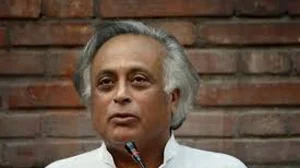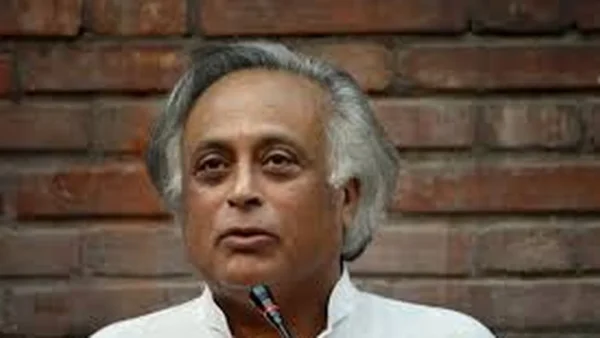
It has been 54 years since Gandhi made her case for some common sense on the environment in Stockholm, and Congress’ Jairam Ramesh is putting that in perspective: we can’t look the other way. In a piece on June 14, 2026, he put it to us that her 1972 words are a landmark of history and they still inform the way the world discusses the planet.
Why this remembrance matters now
Ramesh points out that when she spoke at the first UN Conference on the Human Environment, which got under way on June 5, 1972 (what we now call World Environment Day), it wasn’t for show. It was a hard-nosed intervention at a time when the chips were down.
For one thing, she was just one of two heads of government there. You don’t get many chances like that to put India on the map in a room that was setting the terms for a whole new kind of talk on development and how far we can go with our planet.
A speech among four global milestones
In Ramesh’s view, you can make a strong case that what Gandhi said is one of the four or five things that have turned the tide in modern environmental thinking. The rest of the list, he says, is made up of Rachel Carson’s Silent Spring (1962), Paul Ehrlich’s The Population Bomb (1968) and the MIT/Club of Rome’s The Limits to Growth from earlier in 1972.
He is making a point to tell policymakers that India had something to say then and we need that same kind of moral compass today. As he put it, her speech is one you will find quoted and in print to this day.
But before he gets to the nitty-gritty, Ramesh also put forward a bit of an aside from the record. In a post on the 54th anniversary, he observed that on the day in question, Gandhi gave her most unforgettably worded speech and was in the company of very few of her peers.
This is what he has put forward for us to consider:
– A mere two heads of government were on the dais in Stockholm.
– Her words mark a milestone in the global conversation.
– She put a warning on the table about the kind of devastation war brings to the land.
– The text that was around at the time had Ashoka’s Major Pillar Edict in it.
– And it was wrapped up with a verse from the Prithvi Sukta.
Philosophy, policy, and the weight of history
Then there is the matter of the edicts. Ramesh notes that the version of the speech in play at the Conference had the full text of Ashoka’s Major Pillar Edict – the first of its kind by any ruler, he says. That wasn’t an afterthought; it was a way of tying present-day policy to a civilisational way of being.
He also refers to the Rock Edict, in which Ashoka laments the butchery of his conquests. Gandhi used that to make a contemporary point, zeroing in on the mess being made in Vietnam, Laos and Cambodia.
A verse that still unsettles
To wind up, she went with Verse 35 of the Prithvi Sukta. Ramesh has it in translation: ‘What of thee I dig out, let that quickly grow ever, /Let me not hit thy vitals or thy heart’. It’s a no-nonsense statement of duty and restraint even by today’s standards.
What Ramesh wants remembered
There is a detail in the archives that tends to be overlooked, he says. The one that was in Stockholm, with the Edicts, isn’t in the official volumes of her speeches as PM or in later print. He has put the link to the original out there to clear up any confusion.
It is as much a call to action as it is a history lesson. Ramesh is using Gandhi’s voice to open up a dialogue on what it means to be a leader, from the hard realities of war and use to the deeper side of things.
The immediate takeaway
If you read between the lines, you come away with three things: India was heard in a room where it counted; she put stewardship in a line of thought that goes back to Ashoka and forward to the scientists; and she was blunt about the toll of war on the people and the land.
With the climate bearing down on us, the Stockholm speech is more than a relic. It is a way of bringing together the evidence, the state and the right way to do things, and Ramesh would have us have another look at it.